Boureima Amadou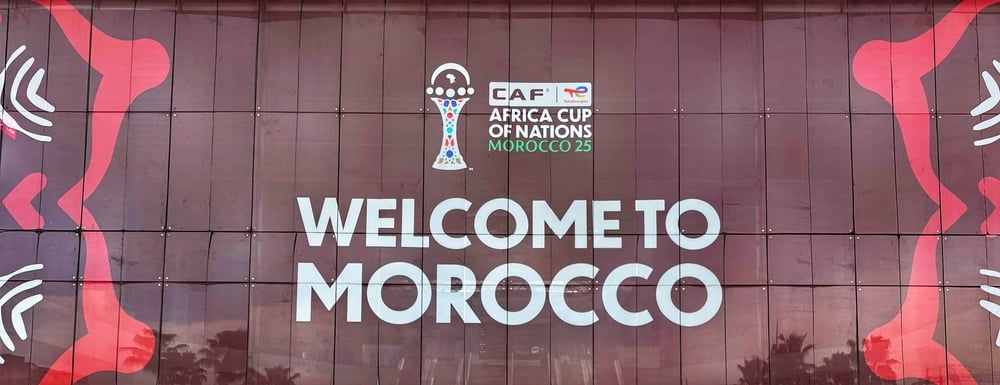
Senegal’s CAN 2025 title loss: a legal battle with the court of arbitration for sport
The Confederation of African Football (CAF) controversially revoked Senegal’s Africa Cup of Nations championship, reassigning the title to Morocco after an appeal. This decision prompts significant questions: how can the outcome of an already-played competition be reversed, and what are the potential repercussions of the appeal filed with the Court of Arbitration for Sport (TAS) on March 25, 2026?


Why did CAF decide to declare Senegal forfeited and award the title to Morocco?
On January 18, 2026, following a particularly dramatic final, the Senegalese national team emerged victorious against host nation Morocco in the Africa Cup of Nations final. The entire tournament, especially the final match, took place amidst a general atmosphere of suspicion regarding officiating and, more broadly, the governance of the Confederation of African Football (CAF). Some stakeholders accused the body of showing partiality towards the host team. These allegations prompted the CAF’s governing body to issue a denial and reiterate its commitment to principles of fairness, transparency, and strict adherence to its regulations. This forms part of the broader African current affairs surrounding sports and African governance.
It was within this highly charged environment that the final witnessed a sequence of controversial incidents. Firstly, Senegal had a goal disallowed in the 92nd minute due to an action deemed irregular by the referee. Subsequently, a penalty was awarded to the Moroccan team in the 98th minute following a foul within the penalty area. In protest against this refereeing decision, members of the Senegalese team (technical staff and players alike) refused to continue the match, left the field, and mostly retreated to the changing rooms. This withdrawal led to a suspension of the game for nearly a quarter of an hour. Not only did Morocco miss the subsequent penalty, but Senegal then managed to score during extra time and ultimately clinch the final.
However, this form of protest against refereeing decisions appears to contravene the Africa Cup of Nations Regulations. Specifically, Articles 82 and 84 stipulate that “if, for any reason, a team […] refuses to play or leaves the field before the regulatory end of the match without the referee’s authorization, it shall be considered to have lost” and “it loses the match 3-0.” Acting on this, the Royal Moroccan Football Federation (FRMF) lodged a complaint with the CAF Disciplinary Jury to enforce these articles. In a decision dated January 28, 2026, just 10 days after the final, the Disciplinary Jury initially rejected the claim, prompting the Moroccan Federation to appeal to the CAF Appeal Jury. The Appeal Jury’s decision was then rendered on March 17, 2026, two months after the final match. In this ruling, the Appeal Jury concluded that “the Senegalese Football Federation, through its team’s conduct, violated Article 82 of the Africa Cup of Nations Regulations.” Consequently, it applied Article 84, declaring “the Senegalese team forfeited for this match, with the result recorded as 3-0 in favor of the Royal Moroccan Football Federation.” In response to this Africa breaking news, Senegal chose to appeal to the Court of Arbitration for Sport (TAS).
On what grounds will the Court of Arbitration for Sport rule in this type of dispute?
The appeal brought before the TAS operates within the regulatory framework established by the CAF Statutes and the Code of Sports-Related Arbitration. According to Article 48.2 of the CAF Statutes, when confronted with a challenge to a CAF Appeal Jury decision, the TAS primarily applies the various rules enacted by CAF and FIFA, and subsidiarily, Swiss law. This principle is reaffirmed by Article R58 of the Arbitration Code. This reasoning was previously applied in a similar case involving the South African Football Association and CAF (CAS 2020/A/6907). In that instance, the Appeal Jury had deemed the withdrawal of the South African futsal team from the Futsal AFCON a violation of Article 74 of the competition’s Regulations. The TAS panel then stated it “would therefore apply Article 74 of the Regulations” as that was the provision in question. In the current case, the contested decision explicitly relies on Articles 82 and 84 of the CAN Regulations. It will therefore be up to the TAS, which in a communiqué on March 25, 2026, declared itself “perfectly equipped to resolve this type of dispute, with the assistance of specialized and independent arbitrators,” to determine if the Appeal Jury’s decision aligns with the text and spirit of the aforementioned provisions. The TAS might also draw upon Articles 9 & 16 of the FIFA Disciplinary Code or Law 5 of the FIFA Laws of the Game, concerning the finality of referee decisions and the consequences of a team’s conduct on a match’s definitive stoppage, or other relevant provisions based on the full reasoning of the Appeal Jury’s decision or the arguments put forth by the Senegalese Federation in its brief. This is a critical aspect of African governance in sports.
What can be concretely expected from Senegal’s appeal in the coming weeks?
Firstly, it is crucial to understand that, under Article 48.7 of the CAF Statutes, an “appeal to the TAS does not have a suspensive effect. The decisions subject to appeal remain enforceable until the final decision of the TAS.” Therefore, Senegal’s appeal will lead to a re-examination of the CAF Appeal Jury’s decision, but the current ruling stands until then. This is significant for English Africa news and continent news followers.
Procedurally, questions regarding the admissibility of the request may arise. Indeed, in its appeal, Senegal requested the suspension of the deadline for submitting its appeal brief until CAF’s reasoned decision is officially notified. This indicates that the litigation is still in a preliminary phase.
Substantively, Senegal’s appeal is likely to revolve around two main legal arguments: first, the classification of the events in light of Articles 82 and 84; and second, the interplay between the authority of the referee’s decision, which is generally considered final, and the disciplinary sanctioning power of CAF bodies.
Regarding the first point, the TAS will need to determine whether the Senegalese team’s actions can legally be equated with a “refusal to play” or an abandonment of the field. This is a central issue, given that these provisions stipulate an automatic sanction of forfeiture. Senegal will likely contend that the Appeal Jury interpreted these concepts excessively broadly, by equating a temporary, protest-driven interruption with a definitive abandonment.
Concerning the second point, the appeal could draw upon principles derived from FIFA law to argue that the management of the incident primarily fell within the referee’s purview, as the sole authority competent to assess the continuity or interruption of the match in real-time. From this perspective, Senegal could argue that the CAF Appeal Jury’s *a posteriori* reclassification of the event as a forfeit undermines the logic of immediate game regulation and the legal certainty of the competition. This aspect of African governance will be closely watched by The African Tribune.
Ultimately, while Senegal’s appeal primarily challenges the Appeal Jury’s interpretation of Articles 82 and 84 and its consistency with FIFA legal principles, the outcome cannot be predicted. It will depend on the discretionary assessment of the TAS, whose decision will be final. As it has done in the past, the TAS may either annul CAF’s decision (CAS 2019/A/6483) or uphold it (CAS 2020/A/6907).


 Mariama Hamani