Mariama Hamani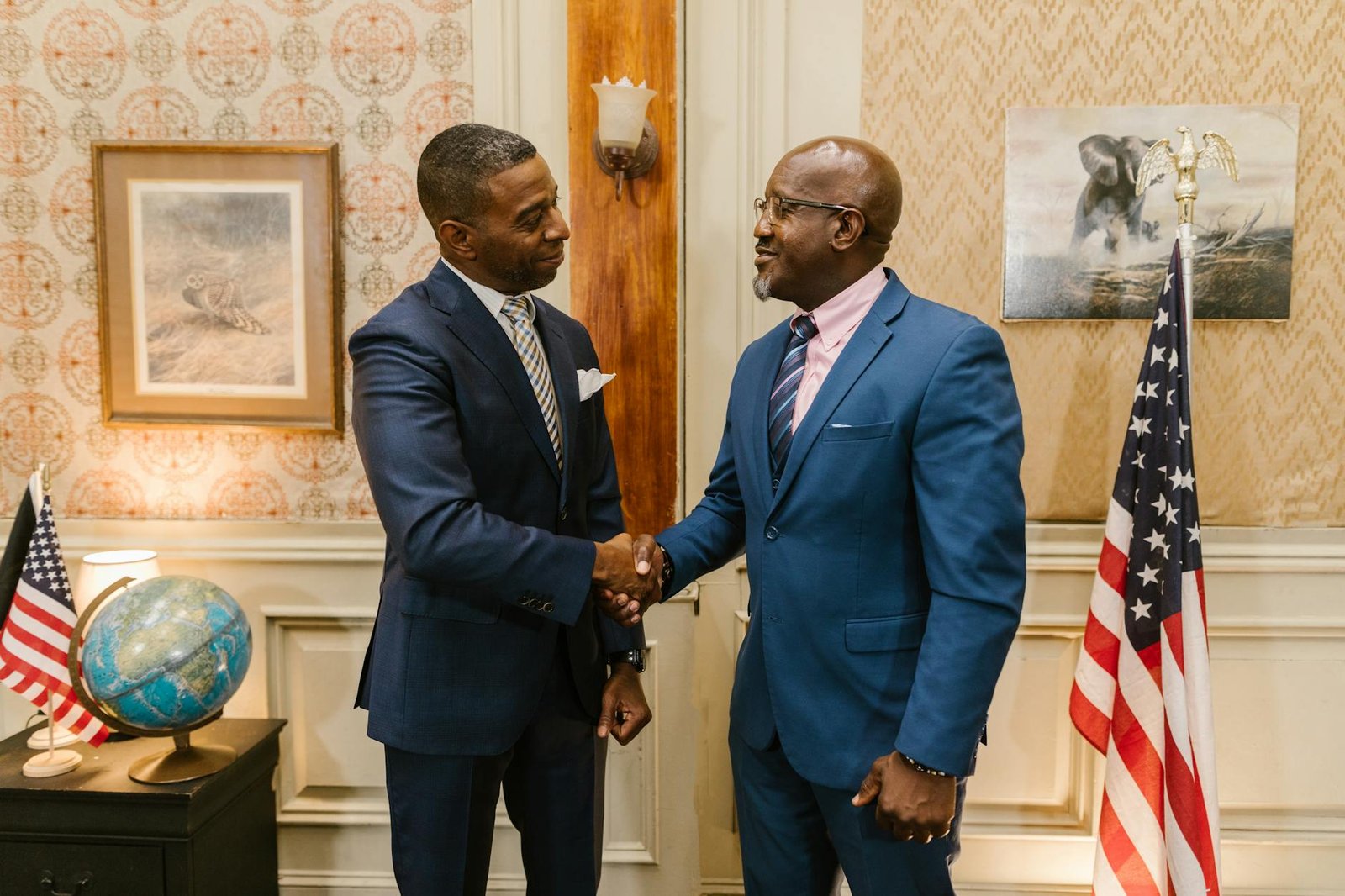
Senegal and Botswana are entering a fresh chapter in their bilateral relations, marked by a high-level diplomatic engagement between Bassirou Diomaye Faye and Duma Boko. The two leaders, who ascended to power within months of each other following political transitions, share a united vision on continental challenges and a commitment to strengthening economic sovereignty.
Strengthening South-South cooperation
Trade flows between Senegal and Botswana remain minimal today, hindered by vast geographical distances and separate regional integration blocs—the Economic Community of West African States (ECOWAS) for Dakar and the Southern African Development Community (SADC) for Gaborone. No direct preferential trade agreements exist, and cross-border investments are virtually non-existent.
The African Continental Free Trade Area (AfCFTA), launched in 2021, now provides a legal framework to bridge this gap. Faye and Boko aim to leverage this initiative to boost trade, facilitate the movement of goods, services, and expertise, and create new economic opportunities between their nations.
Industry synergies waiting to be unlocked
While their economies differ markedly, Senegal and Botswana hold strong potential for collaboration. Botswana, a global leader in diamond production, has long relied on mining revenues but now seeks to diversify its economy through local processing and reduced dependency on a single sector.
Senegal, meanwhile, is advancing its hydrocarbon ambitions with projects like Sangomar and Grand Tortue Ahmeyim, while reinforcing its agricultural, fisheries, and financial services sectors. Gaborone could benefit from Dakar’s expertise in digital innovation, higher education, and francophone financial services. Additionally, both nations can exchange best practices in managing extractive revenues, as Botswana has managed its diamond wealth through a sovereign wealth fund for decades.
Diplomacy driving a new economic agenda
For Senegal’s president, this partnership aligns with a broader diplomatic strategy. Since taking office in April 2024, Diomaye Faye has prioritized collaborations with African partners outside traditional West African and Maghreb circles. Botswana, recognized as one of Africa’s most stable democracies, offers a compelling model for an administration advocating systemic change.
Duma Boko, a former opposition leader who assumed office in late 2024 after ending the Botswana Democratic Party’s six-decade rule, shares this reformist outlook. His rise signals a broader demand for political renewal across Africa, giving the two presidents a shared narrative to elevate their partnership beyond mere economic cooperation.
Yet translating intent into action will require tangible steps. Diplomatic teams must identify priority sectors, address logistical hurdles—such as the absence of direct flights—and establish a supportive legal framework for mutual investments. Without concrete mechanisms, declarations may remain symbolic, echoing countless memoranda of understanding signed across the continent. Establishing a joint commission or bilateral business forum could serve as a first step toward credibility.
Further reading
- Nairobi 2026: Dakar rolls out investor attraction strategy
- Macron extends African tour with stop in Addis Ababa
- How Senegal’s agricultural sector is reshaping regional trade

 Boureima Amadou