Boureima Amadou
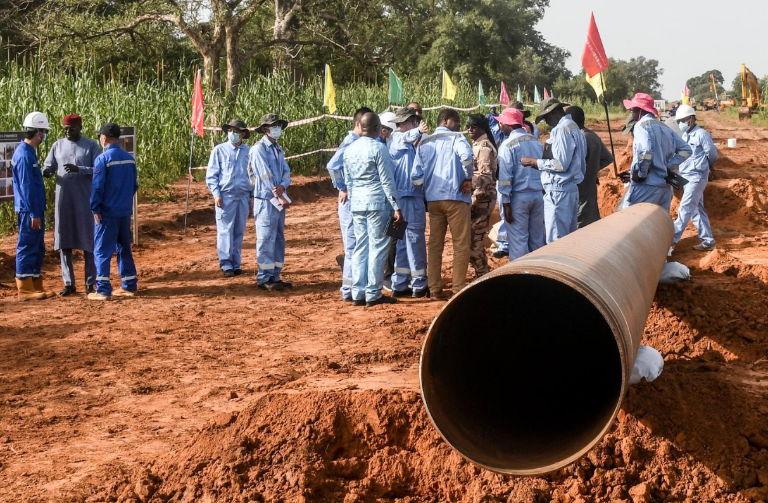
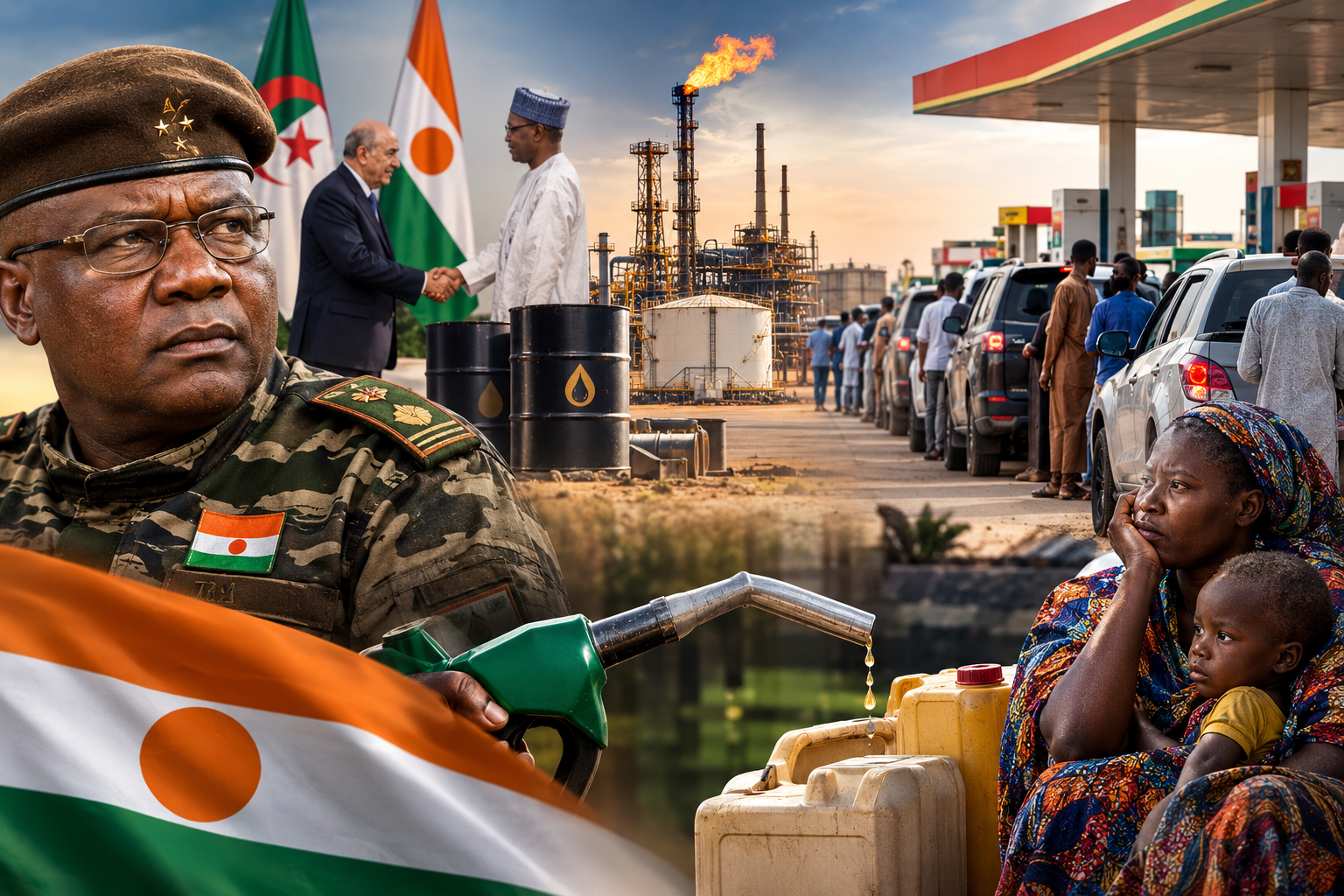
A sudden oil eruption, environmental alarms, disputes over foreign expert intervention, and an ultimatum to Chinese partners—Niger’s Goumeri W8 incident has evolved far beyond an industrial mishap. It now exposes deep fractures in a strategic oil partnership, as Niamey pushes to reclaim control over its natural resources.
This crisis signals a decisive shift, forcing a reckoning between economic ambition, technical accountability, and diplomatic strain.

From industrial emergency to a crossroads for Niger’s oil sector
In the Agadem basin, where CNPC Niger Petroleum operates, the September 25th eruption at Goumeri W8 triggered a chain reaction of industrial, financial, and diplomatic pressures. What began as a well blowout quickly spiraled into a test of control: who manages the response? Who bears responsibility? And how can Niger prevent an industrial accident from escalating into a lasting rift with its foreign partners?
The immediate priority was clear—contain the eruption, secure nearby facilities, and stop the hydrocarbon spill. Yet, as teams worked to stabilize the well, another battle unfolded: one of authority and coordination. The arrival of Algerian experts, alongside Chinese operators, turned a technical challenge into a geopolitical puzzle.
The struggle for command: who leads when stakes are highest?
By October 12, Niger’s Ministry of Oil acknowledged the severity of the incident. Two workers, exposed in the early hours, were hospitalized. The situation was partially under control—but far from resolved.
In high-pressure oil operations, precision is non-negotiable. A misstep in coordination, a delay in execution, or an underestimation of risks can turn a crisis into a disaster. Yet questions linger: Who was in charge? Were Algerian technicians brought in against CNPC’s wishes? Did their involvement complicate efforts? Without verifiable operational records or independent accounts, these claims remain unconfirmed—but the tension they reveal is undeniable.
What is clear is that in emergencies of this scale, leadership cannot be ambiguous. Decisions must be guided by technical expertise, not diplomatic maneuvers.
Algeria’s role: expertise or escalation?
Niamey’s request for Algerian support was not unusual. Sonatrach, Algeria’s state-owned energy giant, brings regional expertise in hydrocarbon management. In theory, additional technical input should aid resolution.
Yet context matters. Prior disagreements over operational parameters at the SORAZ refinery had already strained trust. While uncorroborated, reports suggest earlier concerns about hydrocarbon circulation adjustments. Such history adds weight to the question: Can external expertise coexist with contractual hierarchies?
On a CNPC-operated site, Algerian specialists must integrate into a defined command structure—one where safety protocols and roles are explicit. Anything less risks turning assistance into interference.
Environmental containment: a surface-level fix?
Beyond damaged infrastructure, the crisis threatens Niger’s land, water, and communities. Efforts to contain the spill included earthworks—bulldozers constructing sand barriers around affected zones. While these may limit surface spread, they do not address subsurface pressure or contamination risks.
Oil buried under sand is not oil removed. Hydrocarbons can persist, seeping into groundwater or releasing toxic vapors. For local herders, farmers, and residents, the concerns are immediate: Is the water safe? Are the soils contaminated? Who monitors health risks?
As of October 20, authorities claimed the spill was contained, with secularization ongoing. Plans for a relief well, Goumeri W-8R, were underway—scheduled between October 24 and December 26. Yet containment does not equal resolution. Independent sampling, pollution mapping, and transparent reporting are critical to ensure genuine remediation, not just the illusion of it.
The $400 million catalyst: why Goumeri W8 is more than a spill
The incident’s significance extends beyond the wellhead. China’s role in Niger’s oil sector is foundational—from Agadem’s production blocks to the Zinder refinery and export pipelines. This integration has created deep economic interdependence, where operational disputes carry financial and diplomatic weight.
In April 2024, Niger secured a $400 million advance from CNPC against future oil revenues—a loan to be repaid over 12 months with a 7% interest rate. Such agreements underscore the sector’s complexity: cooperation is not just technical but tied to strict commercial terms.
With cumulative investments in Niger’s oil sector reportedly hitting $8.34 billion by June 2026 (per national agency figures), the stakes are immense. For Niamey, ensuring fair revenue distribution is paramount. For Beijing, contractual compliance and operational continuity are non-negotiable.
Balancing these interests demands clarity—on finances, on responsibilities, and on long-term viability.
Niamey’s ultimatum: a warning shot across the sector
On October 13, 2026, Niger issued a 45-day ultimatum to CNPC, WAPCO, and SORAZ, demanding answers on alleged breaches: unremitted export revenues, underemployment of local workers, and unfulfilled contractual obligations.
Foreign Minister Bakary Yaou Sangaré cited unremitted exports exceeding 3 trillion CFA francs since April 2024, alongside a 17.4 billion CFA franc shortfall for public coffers. These are serious accusations—but their validation requires contract reviews, financial audits, and corporate responses.
The ultimatum marks a hardening stance. Niger is no longer content with passive partnership; it demands accountability. Yet the path forward is uncertain: Will companies comply? Will negotiations bridge gaps? Or will deadlock lead to further action?
Goumeri W8 has become the flashpoint in this broader confrontation.
China’s test: adapting to a more assertive Niger
Niamey’s push for sovereignty is reshaping its relationship with Beijing. The government seeks greater control over oil revenues and stricter adherence to agreements—a reflection of broader economic nationalism.
Yet sovereignty is more than issuing ultimatums. It requires operational oversight, financial transparency, and enforceable contracts. CNPC remains indispensable to Niger’s oil ambitions. Prolonged conflict could disrupt operations, erode partner confidence, and hinder crisis resolution at Goumeri W8.
This does not mean Niger should compromise its demands. But their implementation must rely on verifiable data, clear procedures, and a strategy that safeguards long-term interests—ensuring that economic gains do not come at the cost of industrial stability.
Algeria’s delicate position in a three-way tug-of-war
By involving Sonatrach, Niger signaled trust in regional expertise. Yet in a climate of heightened scrutiny, every action risks misinterpretation.
There is no public evidence that Algeria seeks to replace China in Niger’s oil sector. However, the coordination questions are valid: Who approves operations? Who bears liability? How are expert recommendations integrated?
Clarity on these points is essential to prevent diplomatic speculation from overshadowing safety imperatives. Algeria can provide expertise, CNPC must retain operational authority, and Niger must ensure oversight—each role distinct but interdependent.
Beyond rivalries: the need for verifiable facts
In this crisis, suspicions abound—but answers cannot rely on anonymous claims or political inference. Niger’s announced independent investigation must establish:
- The eruption’s root causes and initial response decisions
- Each party’s responsibilities and actions
- Environmental damage and remediation requirements
Transparency is the only path to restoring trust. All parties—CNPC, Sonatrach, and Nigerian authorities—must present their evidence. The severity of the incident demands rigor, not assumption.
A pivotal moment for Niger’s oil sovereignty
Ultimately, Goumeri W8 forces Niger to confront a fundamental question: How can it assert control over its resources without compromising safety or partnerships?
The $400 million advance, billions in infrastructure investments, financial demands, and Algerian involvement each tell part of the story. Together, they reveal a relationship where economic, technical, and diplomatic interests are inextricably linked.
Yet oil does not respect geopolitical rivalries or contractual negotiations. Until the well is secured and contaminated land remediated, the risks persist.
For Niger, the dual priority is clear: demand accountability from partners while ensuring the crisis leaves no lasting harm to people or the environment. For China and Algeria, the challenge is proving that cooperation with Niamey can be transparent, equitable, and results-driven.
At Goumeri W8, the real test is not who prevails in this standoff—but whether Niger can turn its oil wealth into a driver of development, not a source of deeper division.

 Mariama Hamani