Boureima Amadou
Diplomatic showdown: Niamey calls out EU for overstepping boundaries
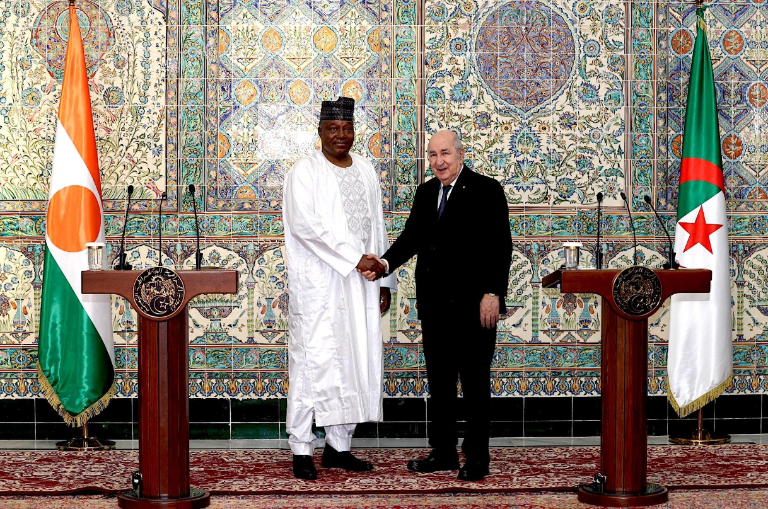
The Nigerien government’s decision to summon the European Union’s chargé d’affaires in Niamey marked a pivotal moment in the ongoing debate over sovereignty and diplomatic transparency in the Sahel. Triggered by what authorities described as “condescending and unacceptable” remarks from a Brussels spokesperson regarding Algeria’s military deployment in Niger, the move underscored a fundamental tension: where does legitimate inquiry end and interference begin?
Sovereignty under scrutiny: what the Nigerien government pushed back against
On November 9, the EU’s representative was summoned to the office of Nigerien Prime Minister Ali Mahamane Lamine Zeine. The catalyst? A public statement questioning the scope, objectives, and legal framework of Algeria’s troop presence in Niger—a cooperation agreement the EU had no part in negotiating. While Niamey insists on its full authority to shape its own security partnerships, the EU argued that transparency is essential in a region plagued by transnational threats, fragile regional cooperation, and the risk of insecurity spilling across borders.
But did Brussels overstep its role? The answer lies in the nuances of international law and diplomatic norms. The UN Charter’s principle of non-interference, enshrined in Article 2(7), prohibits coercive actions that undermine a state’s sovereign decisions. Merely asking for clarification or expressing concern does not meet that threshold. Instead, it falls under the ordinary exercise of diplomatic communication—a tool as old as the nation-state itself.
Sovereignty vs. scrutiny: where the debate gets complicated
The Nigerien government’s reaction raises a critical question: can international actors question sovereign decisions without crossing a red line? The answer is nuanced. While Algeria and Niger are undeniably free to forge bilateral military agreements, the geopolitical ripple effects of such moves are fair game for external observation. The EU, a key regional partner, has a vested interest—and arguably a responsibility—to assess how such developments might impact broader stability.
Consider the context: the Sahel remains one of the world’s most volatile regions, with armed groups, trafficking networks, and weak governance fueling insecurity. When two neighboring states engage in a military partnership, the implications extend far beyond their borders. Questions about command structures, mission duration, and legal justifications are not frivolous; they reflect legitimate concerns about regional security architecture.
What the EU got right (and where it may have erred)
The EU’s right to voice concerns is protected under international norms, but the delivery matters. A public statement that omits context or uses language perceived as dismissive risks being dismissed as an overreach—even if the underlying intent is benign. Diplomacy thrives on reciprocity: for every question posed, there must be space for explanation, dialogue, and mutual respect. Niamey’s decision to push back was not an attack on transparency; it was a demand for diplomatic etiquette.
From confrontation to collaboration: can dialogue prevail?
History shows that sovereignty and scrutiny are not mutually exclusive. States regularly defend their autonomy while engaging in frank discussions with partners who challenge their decisions. The key lies in how those challenges are framed. An accusation of interference is not the same as a request for information. A demand for accountability is not the same as an attempt to dictate policy.
The Niger-Algeria military cooperation, like all bilateral agreements, is a sovereign choice. But the EU’s right to ask how it might affect regional stability is equally valid. The challenge now is for both sides to move beyond symbolic gestures—such as diplomatic summons—and toward substantive engagement. Transparency must be a two-way street: clarity from Niamey, and a willingness from Brussels to listen without preemptively judging.
The path forward: balancing sovereignty and shared responsibility
This episode is not just about one statement or one summoning. It is a reminder that in an interconnected world, sovereignty does not mean isolation. States retain the final say over their alliances, but they cannot ignore the reactions of those who share their continent—or their continent’s challenges. The EU’s concerns, whether about legal frameworks, regional stability, or unintended consequences, are not unfounded. Similarly, Niger’s insistence on its autonomy is not inflexible.
The solution lies in reinforcing mechanisms for dialogue. Joint briefings, shared assessments, and predictable communication channels could prevent future misunderstandings. After all, the goal is not to determine who is right or wrong, but to ensure that every decision—whether made in Niamey or Brussels—serves the interests of stability, security, and mutual trust.
A turning point for Sahel diplomacy
This diplomatic standoff may well be remembered as a turning point—not for what it broke, but for what it could build. It has forced both sides to clarify their positions, reaffirm their principles, and, ideally, find common ground. The Nigerien government’s assertiveness and the EU’s right to inquire are not contradictions; they are two sides of the same coin. The challenge ahead is to ensure that this coin doesn’t become a wedge—but rather a bridge toward stronger, more transparent cooperation in the Sahel.


 Mariama Hamani