
 Mariama Hamani
The commercial landscape between Algeria and Niger is undergoing a significant shift as another massive shipment of goods departs for Niamey. This latest initiative—positioned as a major breakthrough in trade relations—could redefine the balance of power between imported products and local industries.
On November 7, 2026, a caravan of 25 heavy-duty trucks rolled out from Adrar, Algeria, carrying 1,050 metric tons of goods destined for the Nigerien market. Featuring dried dates, detergents, packaging materials, and salt, the shipment represents a bold step in Algeria’s strategy to expand its non-oil exports and penetrate African markets. But while the move strengthens trade ties, it also raises critical questions about the future of Niger’s local producers.
From local pride to market pressure: the date industry’s balancing act
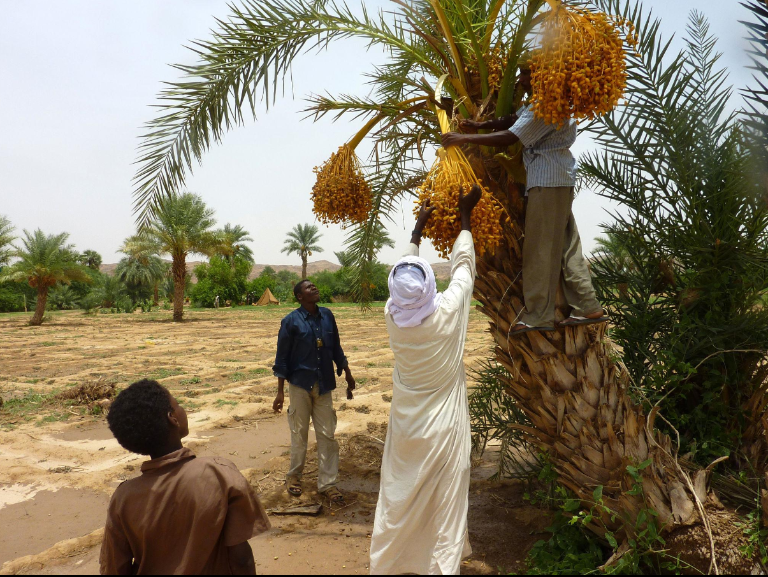
The dunes of Kawar in Niger have long been a hub for date cultivation, with Bilma, Fachi, Dirkou, and Djado producing a variety of high-value fruits. These regions boast generations of expertise and a rich tradition of date farming. Yet despite their cultural and economic significance, local producers face persistent challenges: limited water access, low yields, high transport costs, and inadequate storage and packaging infrastructure.
Even before this latest shipment arrived, Algerian and Libyan dates were already competing in Nigerien markets, often undercutting local products in price and availability. The introduction of an additional 1,050 tons of Algerian dates risks further squeezing the Kawar producers, whose products struggle to reach shelves in competitive conditions. The issue isn’t just competition—it’s about fair access to distribution channels and the ability to match the pricing and presentation of imported alternatives.
Small industries under siege: detergents, packaging, and the cost of local production
Beyond agriculture, Niger’s small and medium-sized industries—particularly those producing detergents and packaging materials—are feeling the heat. Structural constraints such as expensive raw materials, unreliable supply chains, and high transportation costs already weigh heavily on local manufacturers. Reports from late 2024 indicated that several local processing plants had shuttered due to the unrelenting pressure from cheaper imported goods.
If Algerian imports continue to dominate in these sectors, the consequences could ripple across the economy. Reduced market share for local firms may lead to lower investments, job losses, and slowed industrial growth. While consumers may benefit from lower prices in the short term, the long-term cost—economic fragility and diminished self-sufficiency—could far outweigh the gains.
Regulation as a shield: can Nigeria’s quality controls level the playing field?
Recognizing the risks, Nigerien authorities launched a product inspection and compliance verification program on August 1, 2026. Overseen by the Ministry of Commerce and Industry, the initiative aims to protect consumers from substandard or hazardous imports while preventing unfair competition that could stifle local producers. But regulatory measures alone won’t solve structural weaknesses in Niger’s industrial base.
To truly thrive amid increased imports, local industries need more than just protection—they require investment in modern infrastructure, access to financing, technical training, and streamlined supply chains. Without these supports, even the most well-intentioned policies may fall short in helping Nigerien businesses compete on equal footing.
Trade as a two-way street: the risk of becoming a consumer market
The surge in Algerian exports to Niger highlights a broader question: what does the future of their economic partnership look like?
On one hand, increased trade can diversify supply chains, reduce logistical bottlenecks, and improve product availability. On the other, if Niger remains primarily a consumer of imported goods without developing its own production capacities, it risks becoming overly dependent on external suppliers. A balanced trade relationship would not only facilitate the flow of goods but also foster joint ventures, technology transfer, and local value addition.
The 25 trucks that departed Adrar are more than a cargo—they symbolize a turning point. For Algeria, this is an opportunity to expand its commercial footprint. For Niger, it’s a test of resilience and strategy. The real challenge isn’t whether imports should enter the country, but how both nations can shape this trade relationship so that it uplifts, rather than undermines, local industries.
The path forward: can Niger’s producers turn the tide?
To counter the influx of imported goods, Nigerien producers must act decisively. This could involve:
- Enhancing product quality and packaging: aligning with consumer expectations and modern market standards.
- Investing in cost-efficient production: adopting new technologies to reduce waste and improve yield.
- Strengthening supply chain networks: improving transportation and storage to cut expenses and speed up delivery.
- Leveraging government support: accessing subsidies, training programs, and export incentives to boost competitiveness.
The future of Niger’s industries isn’t set in stone. With the right mix of innovation, policy support, and strategic partnerships, local producers can not only survive but thrive in a more open market. The question now is whether they can seize this moment—and whether the broader economic environment will enable them to do so.



 Boureima Amadou





