Mariama Hamani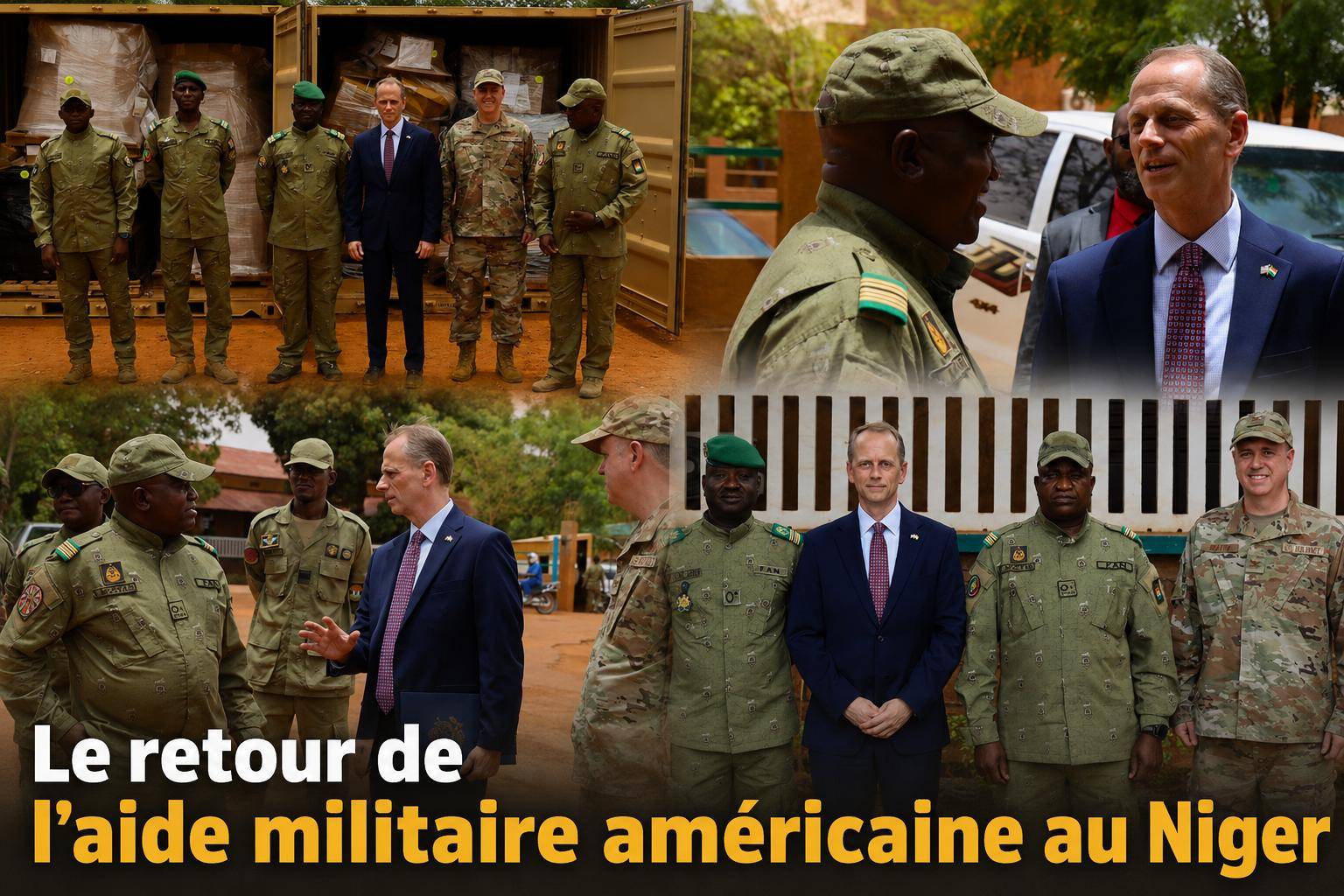
The Nigerien Armed Forces (FAN) logistics center in Niamey recently marked a significant milestone in the country’s defense strategy. On May 26, 2026, nine large shipping containers filled with advanced military equipment arrived from the United States. This delivery represents a strategic shift in Niamey’s foreign policy, signaling a pragmatic re-engagement with former Western partners after a period of strained relations.
Enhancing operational readiness for Niger’s armed forces
At the heart of this initiative lies the Nigerien Armed Forces logistics center in Niamey, where military leaders gathered to oversee the official handover. The shipment included a range of critical assets: tactical communication systems, spare parts for vehicles and weapons, personal protective gear, and first-line maintenance tools. These resources are designed to boost the operational efficiency of frontline units battling asymmetric threats across the country.
For soldiers deployed in remote and high-risk zones, such as the volatile border regions and the vast Sahelian terrain, rapid repairs, secure communications, and reliable supply chains can mean the difference between mission success and failure. The new equipment is expected to significantly reduce downtime and improve response times in critical operations.
Combating terrorism and securing national borders
This military aid package is part of a broader security cooperation effort between Niger and the United States. It arrives at a time when the country faces persistent threats from armed groups operating near the “three borders” region—shared with Mali and Burkina Faso—and along the Lake Chad basin. The Nigerien Ministry of Defense confirmed that the equipment will be deployed immediately to support counterterrorism operations, disrupt transnational crime networks, and reinforce border security.
The timing of this delivery is crucial. With insurgent groups growing bolder and cross-border criminal networks exploiting weak points in national defenses, the need for robust logistical support has never been more urgent. The U.S. donation addresses these gaps by providing the FAN with tools to maintain mobility, communication, and operational continuity in hostile environments.
Diplomatic pragmatism in a shifting security landscape
The arrival of American military equipment in Niamey underscores a remarkable evolution in Niger’s diplomatic posture. Just two years ago, authorities had demanded the withdrawal of foreign troops, including U.S. forces, as part of a broader push for national sovereignty. The closure of the Agadez drone base was a symbolic move, reflecting a desire to reduce external influence on Nigerien soil.
Yet the harsh realities of the security crisis have led to a recalibration of priorities. The current administration has recognized the need to balance sovereignty with practical security imperatives. This shipment of U.S. military supplies—without the presence of foreign troops—demonstrates a nuanced approach: accepting targeted assistance while maintaining control over operational decisions. It’s a clear sign that Niamey is willing to rebuild selective partnerships where mutual benefit aligns with national interests.
Balancing alliances in a complex geopolitical environment
Niger’s security strategy is increasingly characterized by diversification. While maintaining close cooperation with new partners such as Russia, Turkey, and Iran, Niamey is also seeking to restore channels with traditional allies like the United States. This dual approach allows the country to hedge its bets in a volatile region where no single partner can guarantee long-term stability.
Washington, for its part, appears equally pragmatic. Despite a temporary pause in direct assistance following political changes in 2023, the U.S. has signaled its intention to maintain a presence in the Sahel—albeit in a reduced and more discreet form. The delivery of military logistics equipment, rather than troops or large-scale infrastructure, reflects a shift toward supporting local forces without imposing heavy political conditions. This strategy allows both sides to rebuild trust incrementally, focusing on tangible outcomes rather than ideological alignment.
“In defense, the only rule that matters is operational effectiveness on the ground.” — Internal FAN logistics report
A strategic compromise for national survival
The reception of these nine containers at the FAN logistics center in Niamey is more than a logistical update—it’s a statement of resilience. By accepting U.S. military support without relinquishing sovereignty, Niger has shown that strategic partnerships can evolve in response to pressing threats. In a region where insurgency and organized crime threaten state stability, the ability to adapt and secure diverse sources of support may well determine the country’s future.
As Niamey continues to navigate the challenges of the Sahel crisis, this pragmatic turn in defense policy highlights a key lesson: absolute sovereignty is a noble ideal, but in the face of existential threats, strategic compromise can be the surest path to survival.


 Boureima Amadou