
 Mariama Hamani
In a landmark gathering that signals a decisive turning point for the Sahel’s education crisis, Niamey today hosts the inaugural ministers of education conference of the Alliance of Sahel States (AES). The high-stakes event, led by Niger’s Prime Minister Ali Mahamane Lamine Zeine alongside regional leaders, aims to reverse the devastating effects of school closures and teacher shortages that have left millions of children without access to learning.
From crisis to collective action: the school reform agenda takes shape
The AES summit brings together education ministers from Niger, Mali, and Burkina Faso to lay the groundwork for a unified, resilient educational system—one that can withstand the dual pressures of insecurity and systemic underfunding. This gathering isn’t just symbolic; it represents a strategic pivot toward sovereign, integrated schooling that prioritizes both access and quality for every child across the confederal space.
The urgency is undeniable. Across the Sahel, armed violence has shuttered thousands of schools, while chronic teacher shortages undermine the very foundation of education. Without bold reforms, the region risks losing an entire generation to illiteracy and economic stagnation.
Teacher shortages: the silent engine of educational collapse
Underlying the education crisis is a severe shortage of qualified teachers. In Niger alone, the 2023–2024 school year saw 69,636 educators serving over 3 million primary students—an average of 43 pupils per teacher. Yet this imbalance pales in comparison to the broader issue: the lack of rigorous teacher training and professional development.
In 2026, Niger’s education minister Élisabeth Shérif admitted that 78.5% of public school teachers were contract workers, many without formal pedagogical training. While the country has nearly 106,000 teachers across all levels serving nearly 4 million students, the system remains dangerously underprepared to deliver quality instruction.
Mali and Burkina Faso face similar crises. Insecurity, remote terrain, and targeted violence against educators have forced many teachers to abandon posts, leaving remote communities with little to no access to schooling. The result? A growing reliance on underqualified substitutes and persistent gaps in learning outcomes.
Armed conflict extinguishes the right to learn
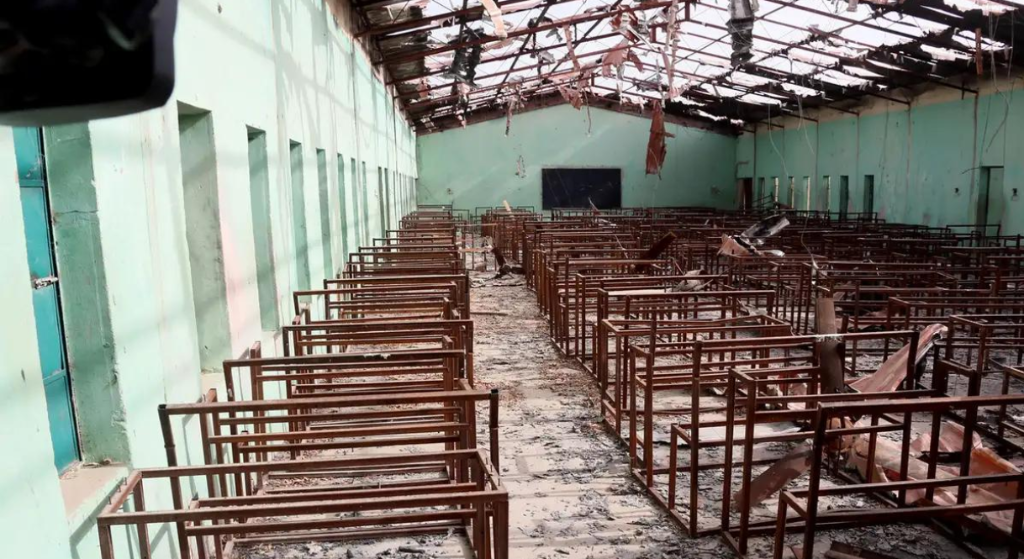
Violence has become the most destructive force in Sahelian education. In Burkina Faso, 5,336 schools were closed as of February 2024, displacing over 820,000 students and 24,000 teachers. Despite government efforts to reopen institutions, many areas remain inaccessible due to ongoing threats.
Mali’s education system is equally strained, with 2,444 schools non-functional in mid-2026, affecting 733,200 children and 14,604 teachers—over one in five schools nationwide. In Niger, 1,097 schools were closed by the end of 2025, impacting 93,676 students, nearly half of them girls, with the Tillabéri region bearing the brunt of disrupted education.
These numbers tell only part of the story. Behind them lie shattered classrooms, abandoned textbooks, and a generation of children whose futures hang in the balance—deprived of the skills needed to build a better tomorrow.
Displacement deepens the learning gap
Forced migration exacerbates the crisis. Families fleeing violence often leave behind schools, homes, and livelihoods, relocating to areas already struggling to accommodate new arrivals. By 2026, Burkina Faso hosted over 2 million internally displaced persons, Mali nearly 415,000, and Niger over 548,000.
These movements place immense pressure on host communities, where schools are overwhelmed by sudden enrollment surges. Many displaced children face prolonged or permanent school dropout—a tragedy that threatens not only individual futures but the long-term stability of the Sahel.
Building sovereign schools: from vision to classroom reality
The AES summit in Niamey is not merely a diplomatic exercise. It is a call to action. The proposed reforms include harmonized curricula, shared teacher training programs, and mutual recognition of diplomas—all designed to create a cohesive, high-standard education system across the three nations.
But vision alone is not enough. The roadmap must include concrete measures: reopening closed schools, securing learning environments, recruiting and retaining teachers in high-risk zones, and implementing alternative learning solutions for displaced children. The goal? To ensure that every child—regardless of geography or circumstance—receives a quality education.
Niger’s minister of education revealed a stark figure: nearly five million children remain out of school in the country. This statistic underscores the magnitude of the task ahead. The AES education summit must do more than declare intent—it must deliver a transformative plan capable of rebuilding classrooms, restoring hope, and securing the Sahel’s future through education.
What’s at stake: sovereignty through education
The true measure of a nation’s sovereignty lies not in its borders, but in its ability to educate its people. A robust, resilient education system empowers youth, fosters innovation, and builds the human capital needed to overcome adversity. In Niamey, the challenge is clear: turn policy declarations into tangible progress. The Sahel’s future depends on it.



 Boureima Amadou





