
 Mariama Hamani
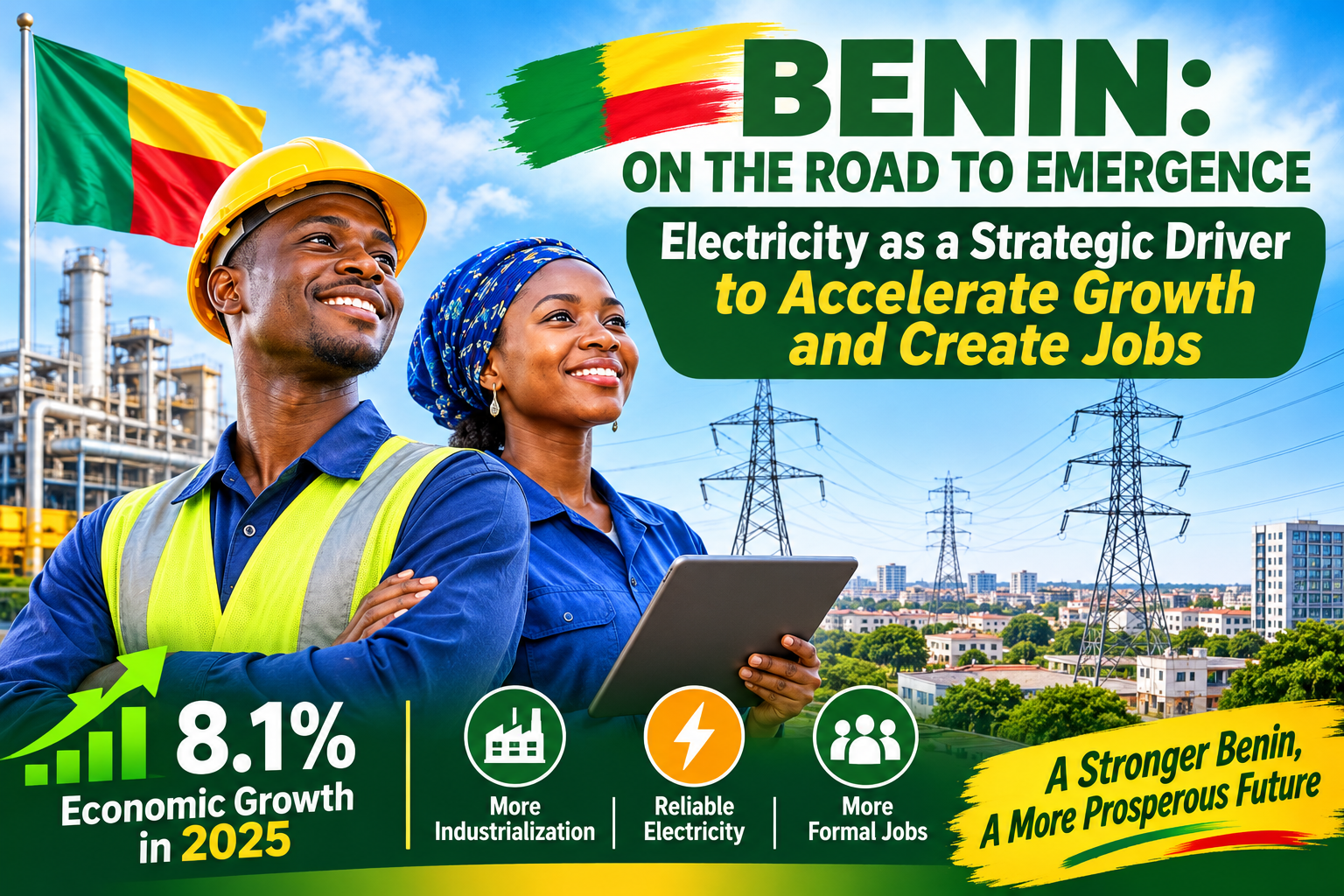
With an 8.1% economic growth rate in 2025, Benin stands out as one of the fastest-growing economies in West Africa. This expansion, part of a five-year average growth of 7.1% between 2021 and 2025, reflects substantial investments in infrastructure, industrialization, and economic modernization. Yet, despite these positive indicators, a critical challenge persists: translating growth into formal, stable, and well-paying jobs.
From GDP growth to productive employment: the missing link
The paradox was highlighted in a recent economic outlook report, which revealed that 96.3% of Benin’s workforce operated in the informal sector in 2022. Even more telling, eight out of ten new jobs created were in self-employment. By 2024, only 19.8% of workers held salaried positions, a figure that dropped to just 9% among young people.
This disparity underscores a fundamental issue: while Benin’s economy is expanding, the labor market remains dominated by precarious, low-productivity work. Entrepreneurs and small-business owners often lack the stability, contracts, and social protections enjoyed by formal employees. Artisans and traders, though vital to the economy, struggle to scale their operations or hire additional staff due to limited resources and financial constraints.
The industrial sector, particularly the Glo-Djigbé Industrial Zone (GDIZ), offers a promising solution. By 2025, the zone employed 22,798 workers, an increase of 28.8% compared to 2024. This growth demonstrates how industrial investments can generate higher-quality jobs, especially in sectors like textiles, manufacturing, and local raw material processing. However, scaling this success across the broader economy hinges on one critical factor: reliable electricity.
Power outages: a direct threat to business competitiveness
Nearly half of Beninese businesses cite electricity access as a major obstacle to their operations. The situation is dire: 86.1% of firms report frequent power cuts, disrupting production, increasing costs, and undermining competitiveness. For an agribusiness processing unit, a sudden outage can mean lost raw materials, missed orders, and damaged equipment. Small manufacturers, forced to rely on expensive diesel generators, face inflated operational costs that erode their margins and hinder growth.
The challenges extend beyond supply. In 2024, electrical grid losses reached 24.7%, with half of the country’s transmission lines and substations over 25 years old. Compounding the issue, natural gas supply shortages have forced reliance on heavy fuel oil, a costly and environmentally unsustainable alternative. The energy crisis is not merely a question of production it is a systemic problem requiring upgrades to transmission, distribution, and cost efficiency.
Mission 300: a turning point for Benin’s energy and labor landscape
The Mission 300 initiative, a collaboration between the World Bank and the African Development Bank, aims to connect an additional 300 million Africans to electricity by 2030. For Benin, this presents a historic opportunity to modernize its energy infrastructure, attract private investment, and align economic growth with job creation. The National Energy Compact, a cornerstone of this initiative, outlines a roadmap to expand generation capacity, refurbish aging networks, and improve service reliability.
Several flagship projects are already underway. Four solar plants in Natitingou, Djougou, Bohicon, and Parakou, with a combined capacity of 50 MW, mark a significant step toward diversifying energy sources. The planned 128 MW Onigbolo thermal plant further bolsters national output. But the most transformative impact lies in the economic ripple effects. According to projections, successful implementation of Mission 300 could generate or enhance nearly 159,000 jobs in Benin by 2030.
Realizing this potential will require more than just infrastructure. It demands robust governance, reduced technical and commercial losses, cost-effective procurement strategies, and accelerated grid expansion. The stakes are high: without these measures, the promise of industrialization and job creation risks remaining unfulfilled.
Measuring success beyond GDP: the benchmarks for Benin’s future
Benin has proven its ability to achieve strong economic growth and attract strategic investments. The success of GDIZ illustrates how industrialization can translate into tangible employment gains. The next phase of development must extend these benefits to small and medium enterprises, agribusinesses, and young entrepreneurs across the country.
A dependable power supply would enable these businesses to lower operational costs, boost productivity, protect equipment, and hire more workers. The true measure of Benin’s progress will not be its GDP growth rate alone, but the number of salaried jobs created, the productivity gains in key sectors, the reliability of electricity supply, and the ability of young people to secure decent employment. Only then can economic expansion translate into social transformation and shared prosperity.
Key indicators to watch
Annual increase in formal employment rates, particularly among youth
Reduction in electricity grid losses and improved transmission efficiency
Growth in industrial zones and manufacturing output
Expansion of solar and thermal energy capacity
Decline in reliance on diesel generators among businesses
By Mariama Hamani — Journalist






