Mariama Hamani
Mauritania’s economic policy under scrutiny: a closer look at growth and social welfare
Recent debates surrounding fuel subsidies have shed light on Mauritania’s economic policy landscape. This discussion has not only highlighted the choices made but also forced a deeper examination of key economic indicators, gas sector potential, and the scope of social safety nets. As an observer closely following these developments, I revisit these themes with fresh insights, focusing on the fundamentals that shape Mauritania’s economic trajectory.
The controversy over fuel prices, while contentious, has served a constructive purpose. It has compelled policymakers to clarify their positions, present data transparently, and engage in meaningful debate. My aim here is not to reopen old arguments but to explore broader economic realities that often remain underdiscussed.
Policy coherence: timing and economic stability
In my previous analysis, I acknowledged the validity of the government’s approach to adjusting fuel prices while implementing targeted subsidies. The Central Bank’s observation of excess liquidity within the banking system—another driver of inflation—warrants further discussion.
Economist Sidi Mohamed Biya has offered a nuanced perspective that reinforces the logic behind the government’s strategy. In response to an energy shock, the most coherent approach involves a division of labor between monetary policy—used to manage demand and inflation expectations—and targeted transfers, which protect household income without fueling broader inflationary pressures. This distinction is critical: targeted subsidies are designed to mitigate shocks without distorting the overall economic equilibrium.
The sequence of decisions is equally important. The government’s social measures were announced on March 31, 2026, followed by the Central Bank’s decision to raise the key interest rate on May 18, 2026. This timeline demonstrates that monetary tightening occurred after fiscal adjustments, not before. The criticism of policy incoherence thus loses some of its validity, as the sequence aligns with a measured response to economic conditions.
However, a critical gap remains unaddressed. Inflation in Mauritania is not solely driven by imported factors like fuel prices; excess liquidity in the banking system also plays a significant role. This domestic factor demands attention, particularly in discussions about public spending and liquidity management.
Macroeconomic fundamentals: defying narratives of fragility
Before assessing Mauritania’s economic resilience, it is essential to ground the discussion in verifiable data. The country’s public debt stands at approximately 42% of GDP, a level deemed sustainable by international standards with only a moderate risk of over-indebtedness. Public revenue has reached 22.5% of GDP, buoyed by recent fiscal reforms. Foreign exchange reserves cover about 6.4 months of imports, a comfortable cushion against external shocks. Economic growth reached 4.0% in 2025, with projections indicating a rebound in 2026, driven in part by the anticipated boost from gas production.
The International Monetary Fund has commended Mauritania’s prudent fiscal management, particularly its adherence to rules that shield public spending from the volatility of commodity prices. While this framework is robust, structural reforms remain essential to ensure long-term stability.
Gas sector: potential without automatic transformation
By the end of 2024, the Greater Tortue Ahmeyim project began delivering gas, with liquefied natural gas (LNG) shipments commencing in 2025. Production is gradually scaling up toward its nominal capacity. While this marks a significant milestone for Mauritania, the true test lies in how the revenue generated will be utilized.
Natural resource wealth alone does not guarantee development. The funds must be channeled into infrastructure, accessible energy, education, and a productive private sector. A recent initiative by the Central Bank in collaboration with the Islamic Corporation for the Development of the Private Sector (ICD) aims to mobilize $900 million in Islamic financing for Mauritanian businesses. This is a step in the right direction, but local content development requires time, targeted training, and strategic partnerships.
True sovereignty: stockpiles, competition, and resilience
Mauritania imports nearly all of its refined fuels, including approximately 800,000 tons of diesel and 125,000 tons of gasoline annually. Storage capacities remain limited, and distribution logistics are concentrated in the hands of a few operators. This dependence incurs significant foreign exchange costs and exposes the economy to global price volatility.
True economic sovereignty is not an abstract concept; it is built on resilience. This means maintaining adequate fuel stockpiles, ensuring transparent competition rules, and monitoring margins to prevent abuse by a handful of market players. While gas production will eventually ease pressure on foreign reserves by reducing electricity costs, its impact on transportation fuels will be gradual and indirect.
Social safety nets: expanding support and addressing misconceptions
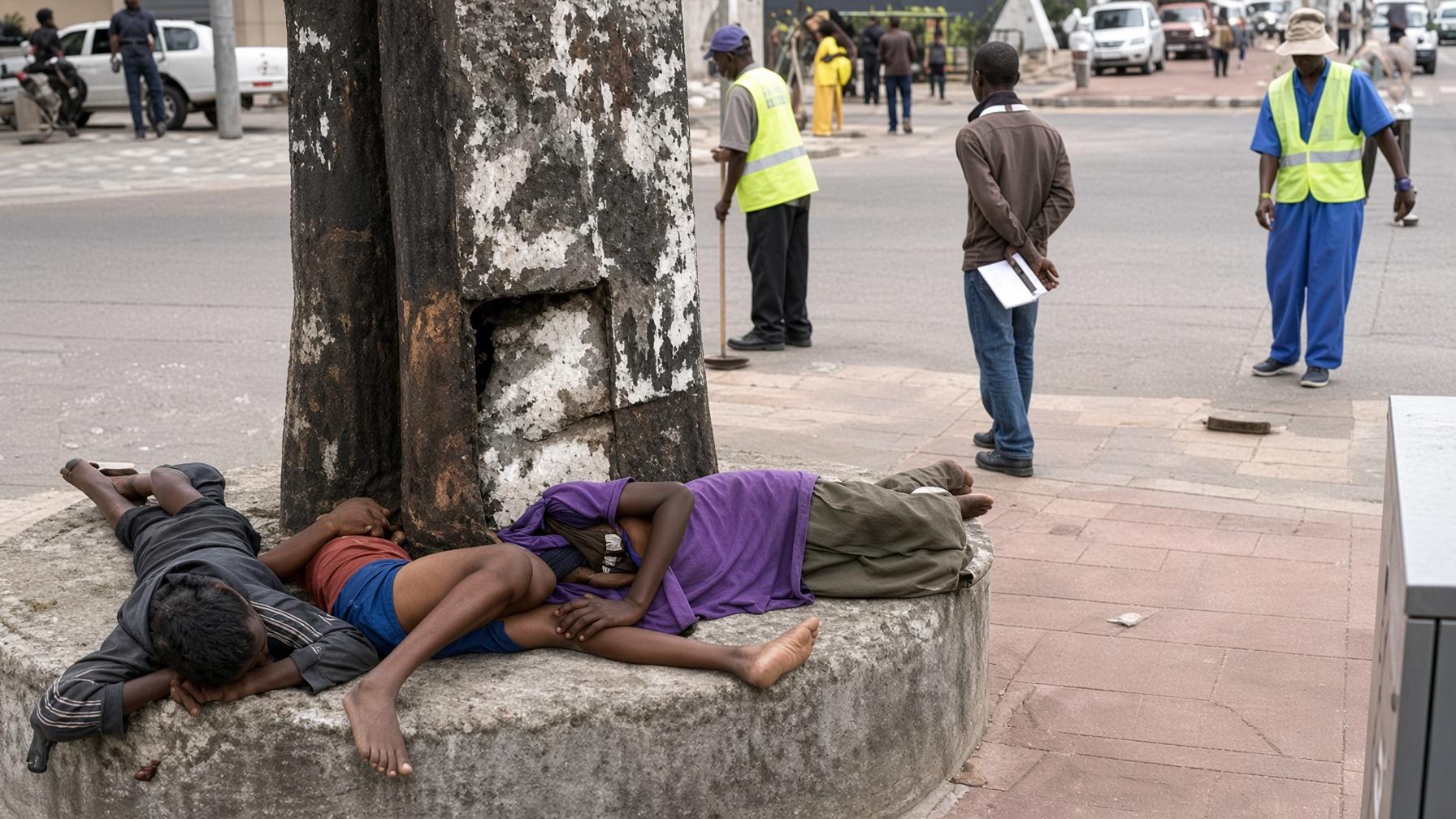
Recent data has reshaped the narrative surrounding social welfare programs in Mauritania. During a meeting with representatives of major labor unions on June 11, 2026, the President disclosed updated figures on state support for households. Expenditures on energy price subsidies alone are projected to reach 13 billion MRU by the end of 2026, up from an initial 4.06 billion MRU. Additional measures include food assistance for 155,000 families and cash transfers to 352,000 households—nearly three times the initially reported figure. Over 42,500 civil servants and military personnel, along with 27,600 retirees, are receiving exceptional support. The total social interventions for 2026 are expected to exceed 14.8 billion MRU.
These figures reveal three key insights:
- Expanded coverage: The program now reaches 352,000 households, a substantial increase that aligns with the scale of initiatives like the Tekavoul program at full capacity. The national social registry has proven instrumental in ensuring efficient targeting.
- Cost considerations: While energy price support is significantly higher than initial estimates, it encompasses electricity and other energy sources, not just transportation fuels. A breakdown of this expenditure is necessary to assess its efficiency accurately.
- Policy approach: The government has adopted a hybrid strategy—partial price adjustments, sector-specific energy support, and multiple targeted transfers. This approach prioritizes protection for vulnerable households, even if it comes at a higher total cost than a rigidly applied alternative.
The current social welfare system, while improved, remains modest relative to the country’s needs. The real challenge is to transition from ad hoc interventions to regular, predictable support with gradually increasing benefits.
Yahya Ould Amar, an economist and banker, has emphasized that the poor should never be the adjustment variable in economic decisions. This principle does not negate the need for targeted subsidies; rather, it underscores their necessity. Universal subsidies, while appearing socially equitable, often benefit wealthier households disproportionately and exacerbate fiscal deficits that ultimately burden the most vulnerable during periods of austerity.
The road ahead: building beyond rents and public spending
Mauritania’s macroeconomic foundation is solid, its gas sector is ramping up, and its social safety nets are more extensive than previously assumed. What remains lacking is structural transformation—an economy capable of generating value beyond reliance on natural resource rents and public expenditure.
This transformation hinges on three pillars:
- Human capital investment: No natural resource can substitute for a well-functioning education system that equips citizens with the skills needed for a modern economy.
- Regional equity: Growth must be inclusive, reaching all regions of Mauritania, not just Nouakchott.
- Institutional consistency: Policies must transcend political and economic cycles, ensuring continuity and reliability in governance.
Conclusion: balancing stability and shared prosperity
A robust economy must first manage its balances. Its greater challenge is to make prosperity sustainable and inclusive. These two objectives are not mutually exclusive, but they do not advance at the same pace.
The fuel subsidy debate has served a vital purpose. It has demonstrated that protecting the vulnerable and maintaining fiscal discipline are not contradictory goals. Both require the same tools: precise targeting, regular disbursements, and transparent spending. This is not a matter of generosity; it is a matter of method.
An economy that excels in calculation must also excel in construction—and in knowing whom it protects.

 Boureima Amadou