Boureima Amadou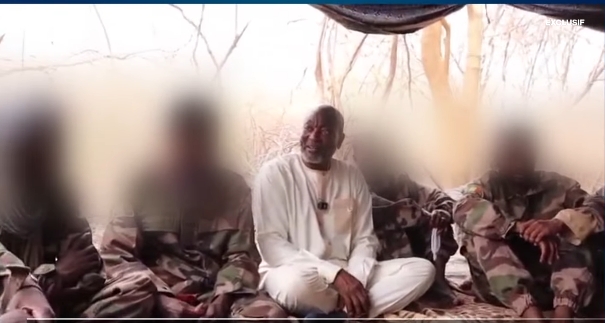
In a single photograph that swiftly went viral across Malian social media, a stark reality came into focus: opposition leader Oumar Mariko — currently living in exile — stood alongside militants from the Jama’a Nusrat ul-Islam wa al-Muslimin (JNIM), negotiating the freedom of 17 hostages recently seized by the Al-Qaeda-affiliated group in the Sahel.
While the return of the civilians brought immediate relief to their families, the incident has cast a long shadow over the country’s political transition. It underscores a troubling erosion of state authority in Bamako, raising urgent questions about Mali’s true sovereignty over its own territory.
From absent state to absent sovereign
The role played by Mariko — a prominent political figure estranged from the ruling authorities — in securing the hostages’ release has exposed a profound paradox. How can a civilian opponent, officially sidelined by the government, move freely across contested zones and broker deals where the national security apparatus has failed?
This unorthodox mediation highlights a dangerous shift: in vast regions of Mali, the power to negotiate and protect no longer resides with the state. Instead, it has been ceded to informal actors, signaling a state that is steadily losing control. For analysts and citizens alike, this is not merely a setback — it is a sign that governance and security are being outsourced, not by choice, but by default.
Terrorists as alternative rulers: the JNIM show of force
The JNIM’s involvement in the hostage exchange was no act of benevolence. It was a calculated propaganda move designed to achieve two strategic goals:
- Image rehabilitation: By participating in a filmed negotiation and public handover, the group portrays itself as a rational, even responsible, interlocutor — a stark contrast to the government’s image of weakness and disarray.
- Authority substitution: In areas where state institutions have collapsed, the JNIM has positioned itself as the de facto authority. By assuming roles traditionally held by prefects and local officials — including the dispensation of justice and protection — the group further undermines the legitimacy of the Malian Republic.
Sovereignty is not declared in speeches from Bamako; it is proven by the state’s ability to protect its people — without intermediaries.
The hidden costs of backroom deals
Behind the emotional reunions of families lies a darker reality: unregulated negotiations carry grave long-term consequences for Mali’s future:
- Ransom economy: Though never officially acknowledged, the payment of secret ransoms fuels future attacks. Every released hostage may come at the cost of further violence against Malian armed forces and civilians.
- Legitimacy for insurgents: Seeking mercy from a terrorist commander implicitly acknowledges his control. It signals weakness to rural communities and strengthens the insurgent’s claim to moral and political authority.
Two nations, one crisis
Mali today is split between two realities:
- The institutional Mali: In the capital, Bamako continues to assert a narrative of military progress and territorial recovery, projecting strength and resolve.
- The real Mali: Across the countryside, where state presence is minimal, communities face daily survival. With no functioning administration, many have no choice but to adapt, negotiate, and coexist with armed groups to endure.
The path to restoring state authority
The Mariko-JNIM episode is far more than a humanitarian footnote. It is a warning bell. By allowing private actors and opposition figures to handle matters of national security — especially those involving armed groups — Mali risks deepening fragmentation. The challenge now facing Bamako is not just military. It is existential: to reclaim authority, restore trust, and reassert the state’s monopoly on violence and governance across every inch of its territory.

 Mariama Hamani