Boureima Amadou
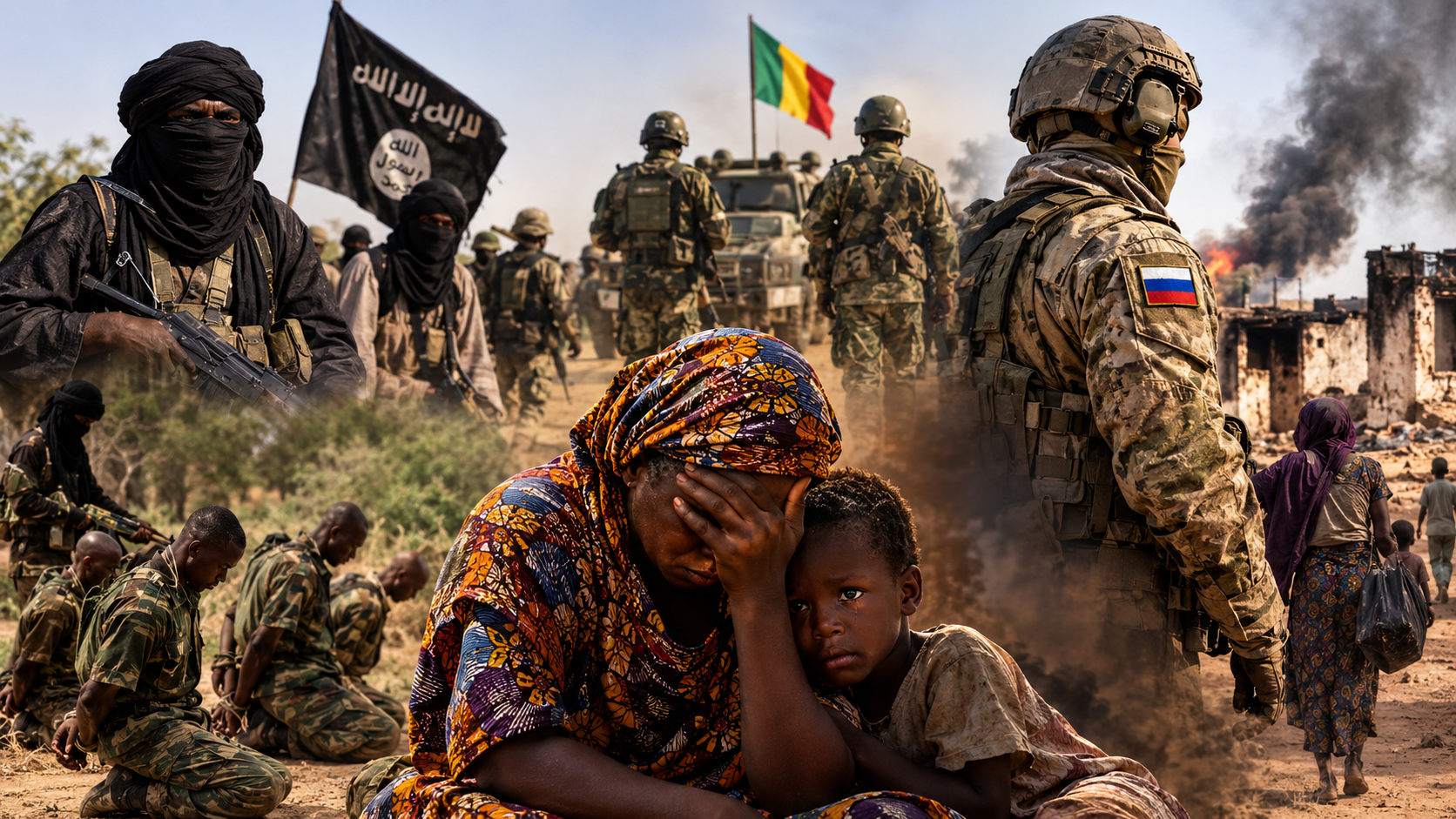
As Mali grapples with relentless attacks by the Group for the Support of Islam and Muslims (JNIM), recent findings expose a disturbing paradox: while soldiers fall victim to jihadist executions, civilians are increasingly caught in the crossfire of state-backed operations. This dual crisis has thrust the country’s security strategy into a critical turning point, where the line between defense and abuse has blurred under the scrutiny of international observers.
Human rights documentation reveals a stark reality: far from shielding vulnerable communities, Mali’s armed forces now stand accused of inflicting harm on civilians already trapped between armed groups and military campaigns. The human toll of this conflict has reached alarming levels, further destabilizing regions already ravaged by insecurity.
Soldiers and civilians: the unrelenting violence in Mali’s war
The JNIM’s brazen attacks on military personnel underscore the persistent threat facing government forces. Yet these losses do not grant immunity to the armed forces, whose own actions are now under scrutiny. Civilians regardless of allegiance or suspicion must never become collateral damage in a war where accountability is slipping through the cracks.
With the Africa Corps Russia’s military contingent supporting Bamako operating alongside Malian troops, the stakes have grown even higher. The partnership, hailed as a cornerstone of Mali’s security overhaul, now faces questions about its role in operations linked to civilian casualties. Can a strategy built on foreign military reinforcement truly prioritize the protection of non-combatants?
Human rights violations: where counterterrorism loses its moral compass
The dual burden of jihadist strikes and military abuses has created a cycle of violence that shows no signs of abating. Reports highlight cases where civilians are caught in indiscriminate fire, their communities left shattered by operations that prioritize territorial gains over human lives.
International humanitarian law demands that all parties government forces and armed groups alike adhere to principles of distinction and proportionality. Yet the reality on the ground suggests a dangerous erosion of these standards. The JNIM’s deliberate targeting of soldiers is indefensible, but so too are the allegations of civilian harm attributed to Malian forces, often with foreign support.
Accountability or impunity? The missing link in Mali’s security narrative
The absence of transparent investigations into civilian deaths has fueled distrust in Mali’s institutions. Without clear mechanisms to hold perpetrators accountable, the promise of security rings hollow for those living in fear. How can a military campaign claim success when the very people it claims to defend remain trapped in uncertainty?
Rebuilding trust: a security strategy that puts people first
Mali’s path forward requires more than military posturing; it demands a fundamental shift. A sustainable solution must balance the imperative to dismantle jihadist networks with an unwavering commitment to safeguarding civilian lives. This includes:
Independent oversight: Establishing impartial bodies to investigate alleged abuses, ensuring that all allegations whether against soldiers or foreign operatives are scrutinized fairly.
Community engagement: Involving local leaders and affected populations in shaping security measures, reinforcing mutual trust and reducing the risk of misplaced suspicion.
Transparent operations: Disclosing the rules of engagement for Africa Corps-backed missions, particularly in high-risk areas where civilian casualties have been reported.
Victim support: Providing reparations and rehabilitation for civilians harmed by either side, signaling that their suffering will not be ignored.
The road ahead: can Mali pivot from violence to protection?
For Mali, the turning point is now. While the JNIM’s brutality remains a grave threat, the country cannot afford to fight terror at the expense of its own people. A security strategy that fails to protect civilians is not a strategy at all it is a betrayal of the public trust.
The coming months will determine whether Bamako can reclaim its moral authority and deliver on the promise of safety for all. Until then, the cycle of violence and retaliation will continue, leaving communities to pay the price in blood and hope.
By Boureima Amadou — Journalist

 Mariama Hamani