
 Mariama Hamani
UN delegation’s surprise arrival signals a new chapter in Mali’s humanitarian response
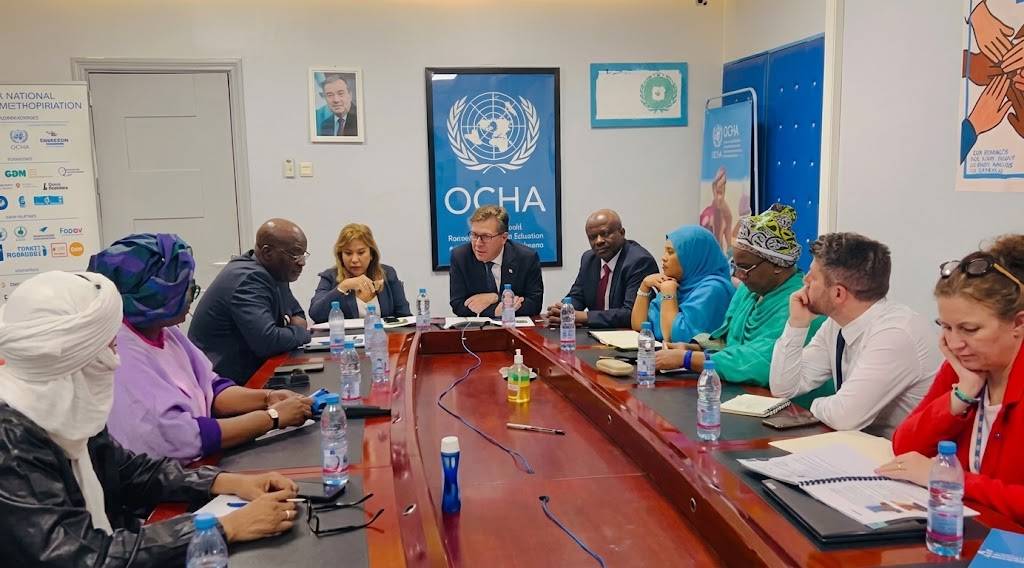
Bamako has become the epicenter of a critical moment in Mali’s fight against a deepening humanitarian crisis, as a high-level United Nations delegation led by Tom Fletcher, UN Under-Secretary-General for Humanitarian Affairs and Emergency Relief Coordinator, touched down in the capital. The unannounced visit follows a wave of policy shifts by Malian authorities that forced several international aid organizations to scale back or suspend operations across the country.
With 5.1 million Malians projected to require urgent humanitarian assistance by 2026, the stakes could not be higher. Of these, 3.8 million are already prioritized in the UN’s 2026 Humanitarian Response Plan, signaling both the scale of the crisis and the urgent need for coordinated action.
Why Bamako’s welcome matters now
The timing of the UN mission is no coincidence. Malian authorities have recently implemented measures that have reshaped the operational landscape for international aid groups, triggering closures and restrictions that have left critical aid gaps. As Tom Fletcher’s delegation engages with government officials, the central question looms large: how can Mali protect its sovereignty while ensuring that millions of vulnerable citizens do not fall through the cracks?
The arrival of UN officials in Bamako may indicate a potential turning point. Unlike other international organizations that have faced expulsion or operational restrictions, the UN maintains a unique diplomatic foothold—one that could pave the way for renewed dialogue and access to communities in desperate need of food, healthcare, clean water, sanitation, and protection.
Who is Tom Fletcher, and what’s his mission?
Tom Fletcher is not just any visitor—he serves as the UN’s top humanitarian official, responsible for coordinating global emergency response efforts. His presence in Bamako underscores the gravity of the situation and elevates the urgency of finding solutions that align with both Malian sovereignty and international humanitarian principles.
The humanitarian numbers don’t lie
The UN’s 2026 Humanitarian Response Plan paints a stark picture. Behind the headline figure of 5.1 million people in need lies a reality of displaced families, communities cut off by insecurity, and families struggling to access basic services. Of those, 3.8 million have been identified as most in need, but the gap between those in need and those receiving aid remains distressingly wide.
Food insecurity, lack of healthcare access, waterborne diseases from poor sanitation, and rising protection threats such as gender-based violence and child labor are just some of the challenges facing millions of Malians. These issues have been exacerbated by years of instability, climate shocks, and now, the withdrawal of key international partners.
A fragile balance: sovereignty vs. survival
Mali’s government has made no secret of its desire to assert greater control over humanitarian operations, framing it as a move toward national sovereignty. While the principle of sovereignty is universally recognized, the immediate consequence has been reduced access to life-saving aid for millions of civilians.
The UN’s visit presents an opportunity to renegotiate that balance—not by challenging Mali’s authority, but by demonstrating how coordinated humanitarian action can coexist with national policies. The goal? Ensuring that aid reaches those who need it most, without compromising Mali’s autonomy or dignity.
A turning point for 2026—and beyond
As the UN delegation prepares to meet with Malian officials, the world watches closely. Will this visit catalyze a breakthrough in access, funding, and coordination? Can Mali chart a path forward that protects both its national interests and the lives of its citizens?
One thing is certain: the humanitarian crisis in Mali is not just a statistic. It is a human emergency that demands immediate action. With 5.1 million people relying on external support to survive, the decisions made in Bamako in the coming days and weeks will shape the fate of a generation.
The question is no longer whether the international community can help—it’s whether Mali’s leaders will allow it to do so, in time.


 Boureima Amadou





