Boureima Amadou
Guinea’s crackdown on illegal mining exposes Burkina Faso’s economic fault lines
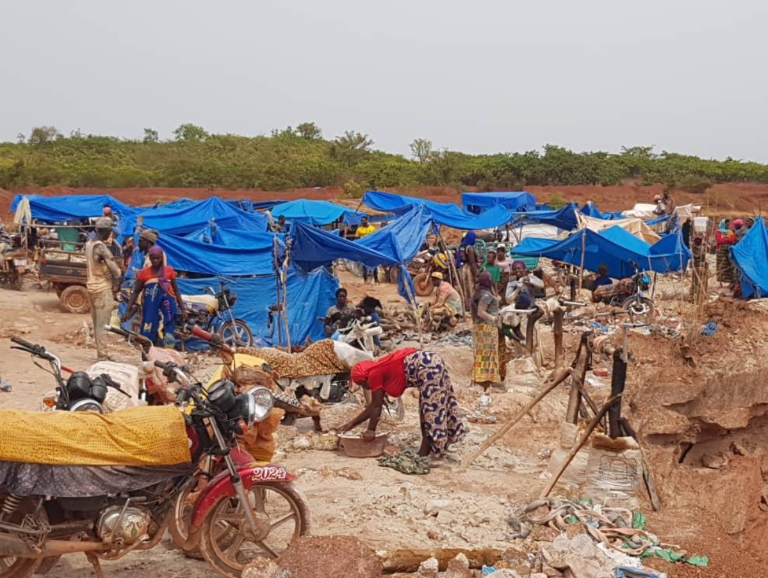
In a dramatic shift that underscores the desperation of regional migration, Guinea’s sweeping crackdown on illegal gold mining has ensnared 1,412 individuals—many of them Burkinabè migrants seeking economic survival. The mass arrests, announced by Guinean authorities on November 10, 2026, mark not just a security milestone but a critical turning point in how West Africa confronts the intertwined crises of poverty, unemployment, and resource mismanagement.
The operation, which led to the dismantling of clandestine mining sites across Kérouané and Siguiri, revealed a harsh reality: thousands of Burkinabè are risking everything in Guinea’s gold fields, where artisan mining offers a stark alternative to stagnation at home. While Guinea enforces its mining laws, the arrests lay bare the unmet economic promises of Burkina Faso’s leadership under Captain Ibrahim Traoré—a regime that has vowed to prioritize national sovereignty and natural resource control.
Yet, as the numbers suggest, sovereignty extends beyond rhetoric when citizens must leave their homeland to dig for gold just miles across the border.
What drives Burkinabè miners into Guinea’s dangerous gold fields?
The allure of Guinea’s artisan mines is undeniable for many in Burkina Faso. A nation grappling with chronic unemployment, internal displacement, and rural economic collapse, Burkina Faso has seen its gold wealth—second only to cocoa in export value—fail to translate into tangible prosperity for its people. With over 80% of artisanal miners nationwide earning less than the minimum wage, the promise of higher earnings in Guinea’s unregulated pits becomes a compelling, if perilous, option.
For these migrants—often young men from rural areas—Guinea’s mines represent a desperate bid for subsistence. Despite the well-documented hazards—land degradation, toxic mercury exposure, and violent turf wars—the potential payout of a few grams of gold outweighs the bleak alternatives of subsistence farming or unemployment. This migration is not a choice of opportunity, but of survival.
The phenomenon reflects a broader trend in West Africa, where natural resource abundance often fails to uplift local populations. In Burkina Faso, gold accounts for nearly 70% of export earnings, yet the average citizen sees little benefit. As global gold prices soar and domestic stability wanes, the exodus to Guinea’s mines intensifies—a silent indictment of unfulfilled economic promises.
The paradox of Burkina Faso’s resource nationalism
Since seizing power in 2022, Captain Ibrahim Traoré has positioned himself as a champion of economic sovereignty. His administration has renegotiated mining contracts, increased state royalties, and touted greater control over natural resources. Yet the arrest of 1,412 Burkinabè miners in Guinea exposes a glaring disconnect: how can a country rich in gold export its citizens to dig for the same mineral abroad?
Resource nationalism, as practiced, has so far failed to deliver on its foundational promise: improving the lives of ordinary citizens. While the state may capture more revenue from foreign firms, the rural poor—especially in mining zones like Poura and Essakane—continue to live in poverty. The mass migration to Guinea is not just an economic signal; it is a political one, demanding accountability for policies that claim to empower yet leave millions behind.
Critics argue that true sovereignty cannot be measured by tax receipts or contract renegotiations alone. It must be measured in the capacity of citizens to thrive at home. The exodus to Guinea’s mines reveals that Burkina Faso’s economic model remains fundamentally unbalanced—extracting wealth from the earth but failing to cultivate stability on the ground.
Guinea’s crackdown: a necessary step, but not the solution
From Guinea’s perspective, the arrests represent a long-overdue enforcement of mining laws. Illegal gold panning has devastated ecosystems, polluted waterways with mercury, and fueled violent conflicts between armed groups and local authorities. By dismantling clandestine sites and prosecuting offenders, Conakry aims to restore order and protect its natural resources.
However, repression alone cannot break the cycle. Without addressing the root causes of migration—joblessness, rural poverty, and weak governance in Burkina Faso—the demand for illegal mining in Guinea will persist. Authorities admit that identifying the nationalities of those arrested remains incomplete, but reports from detention centers suggest that Burkinabè constitute a significant share of the detained workforce.
For lasting change, both nations must move beyond punitive measures. Guinea could enhance cross-border cooperation, sharing intelligence on migrant networks and offering vocational training to deter illegal migration. Meanwhile, Burkina Faso must accelerate job creation, support for rural economies, and transparent investment in mining communities—ensuring that gold wealth flows back to the people who mine it.
Beyond the numbers: human stories and unanswered questions
Behind each of the 1,412 arrests lies a personal story of struggle. There’s the 28-year-old father from Dori who left his family to dig in Siguiri, sending home small sums to survive. There’s the 19-year-old from Ouahigouya who borrowed money for the journey, only to be arrested within weeks. And there’s the elderly farmer from Banfora who saw gold mining as his last chance at dignity after drought ruined his crops.
These individuals are not criminals by nature, but economic refugees navigating a broken system. Their migration exposes a harsh truth: in a region where natural resources should be a blessing, they have become a curse for millions who lack access to fair wages, education, or stable livelihoods.
The 1,412 arrests in Guinea are not just a statistic—they are a turning point. They force both nations to confront an urgent question: How long will West Africa’s gold wealth continue to fuel poverty abroad while enriching elites at home?
The path forward: sovereignty must begin at home
For Burkina Faso, the lesson is clear: economic independence requires more than nationalizing mines or renegotiating contracts. It demands a radical shift toward inclusive development—prioritizing job creation, especially in rural areas, ensuring fair wages in artisanal mining, and investing in alternatives like agroforestry and renewable energy.
For Guinea, the challenge is to balance enforcement with empathy. While illegal mining threatens ecosystems, the people driving it are victims of circumstance. A humane approach—combining rehabilitation, legal pathways, and regional cooperation—could transform a crisis into an opportunity for collaboration.
The era of blaming migrants or relying solely on repression is over. The 1,412 arrests in Guinea have sounded a regional alarm. It’s time for both countries to act—not just with laws, but with vision.

 Mariama Hamani