Boureima Amadou
Libreville’s bold leap forward: how 12 billion FCFA is rewriting urban growth with dignity
Libreville, November 9, 2026 — The capital’s transformation isn’t merely about concrete, steel, and wider roads. It’s measured by how the state honors its citizens whose homes are sacrificed in the name of progress.
The government’s sweeping urban renewal initiative, launched November 4 in Diba-Diba, Okala, and Lac Bleu, has reached a defining moment. President Brice Clotaire Oligui Nguema has ordered an injection of an additional 4 billion FCFA to strengthen compensation and resettlement support for affected families. This brings the total social investment to nearly 12 billion FCFA — a clear signal that the nation will not modernize its capital at the expense of human dignity.
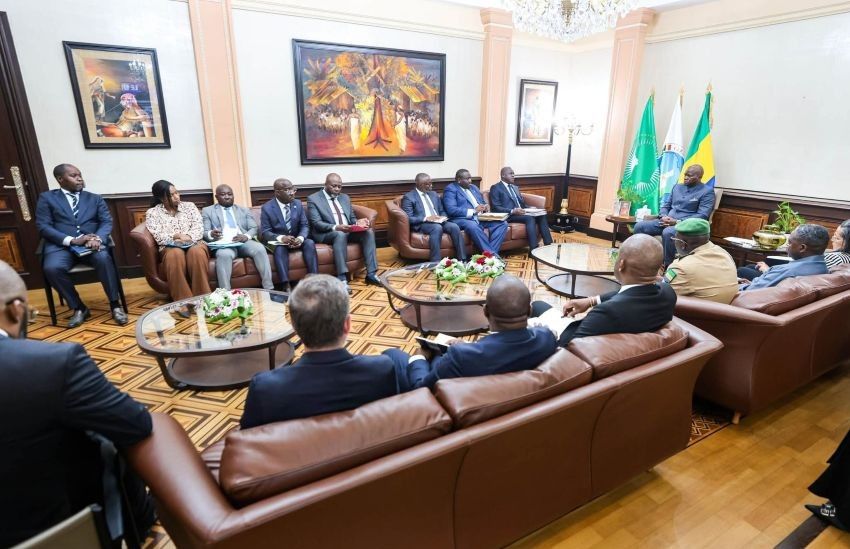
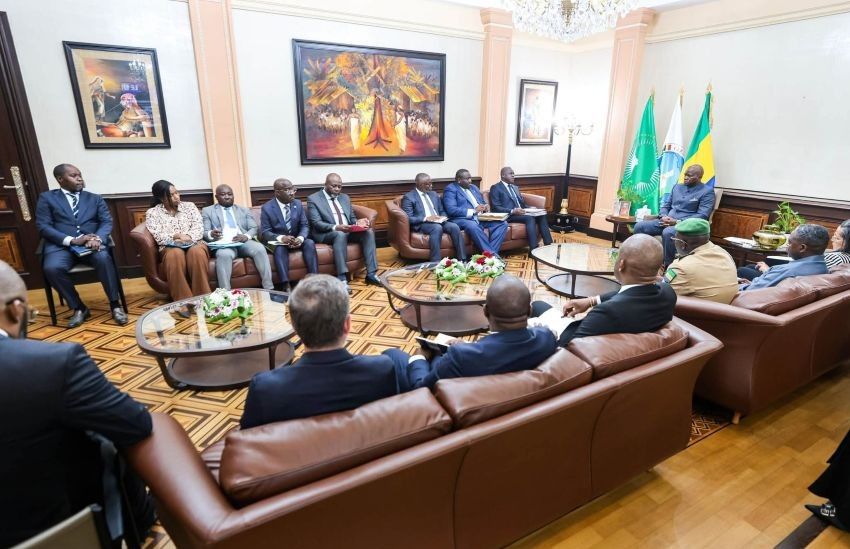
In a high-stakes government meeting chaired by Vice President Hermann Immongault, the president reviewed progress on demolitions and the status of 430 households displaced by the project. What began as a technical urban upgrade has evolved into a policy turning point: modernizing Libreville must not leave communities behind.
“A house isn’t just shelter — it’s where families grow, where memories are built, and where life savings are kept,” the president emphasized. By acknowledging the emotional and economic weight of displacement, Oligui Nguema is redefining public responsibility. This means every clearance of land must come with tangible guarantees for every family affected.
From financial relief to real security: the social response
The new 4 billion FCFA allocation complements existing compensation packages. Each displaced family will receive a developed plot of land, complete with a registered title deed, securing their future. Priority relocation sites include Malibé, the First Campement, and Ntoum — areas strategically selected to restore community continuity while avoiding overcrowding.
The Ministry of Housing, Urban Planning, and Land Reform oversees case-by-case social and administrative follow-ups, while the Ministry of Public Works and Construction executes the road infrastructure projects. The president has mandated weekly progress reports until every family is permanently settled — a level of accountability rarely seen in large-scale urban projects.
This vigilance is crucial. Behind the numbers lie real lives disrupted — families separated from schools, workplaces, and social networks. While cash compensation and land grants are critical first steps, their success hinges on the quality of parcels, their infrastructure readiness, accessibility, and the legal security of property rights. Without these, resettlement becomes displacement in disguise.
Building arteries for a capital city: roads that serve the people
The freed land is already being transformed into vital infrastructure. The expanded outer ring road around the airport is being extended to Okala. A new dual-carriageway is rising between the Jeanne-Ebori intersection and the Express Way. And a critical link is being built between Lac Bleu and Diba-Diba.
These aren’t just traffic solutions. They form part of a vision to improve emergency response times, enhance public safety, and reduce chronic flooding in vulnerable neighborhoods. They reflect a deeper challenge: Libreville’s urban sprawl, land scarcity, and crumbling road network can no longer be ignored.
Yet, the true test of urban governance lies not in concrete laid or lanes widened, but in whether progress uplifts all citizens — especially those displaced by it. Transparency, fairness, and sustained social support must accompany every bulldozer and excavator. The 12 billion FCFA commitment is a strong start. Its legacy will be measured not in kilometers of tarmac, but in the number of families restored, in the titles secured, and in the daily lives rebuilt.
A capital does not become modern simply by changing its skyline. It becomes modern when its people are not abandoned in the process. That is the standard by which Libreville’s transformation will be judged.