Mariama Hamani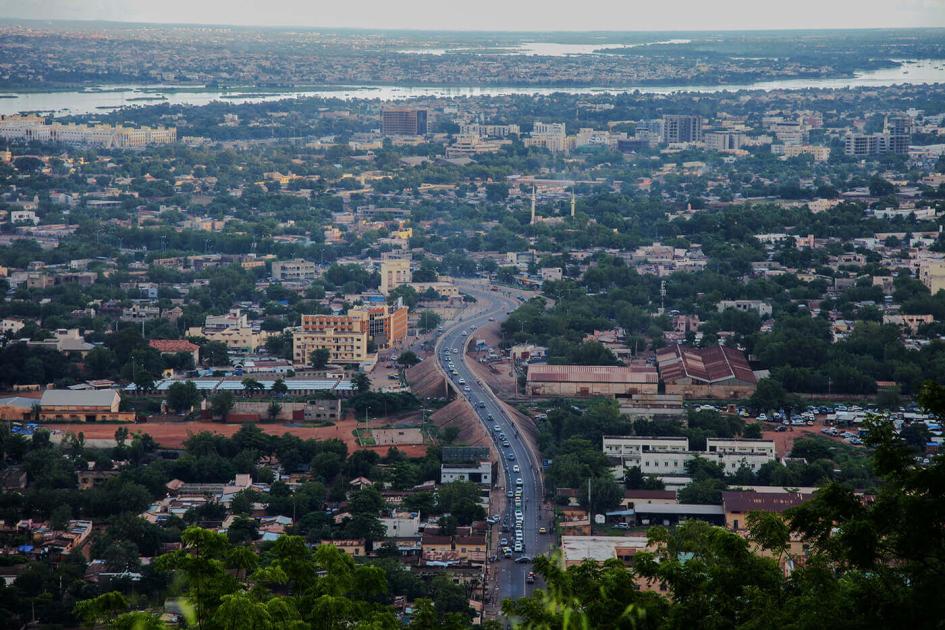
Jihadist militant factions operating in the Sahel are intensifying their campaigns, extending their reach beyond traditional strongholds into coastal West African nations. This strategic expansion is merging previously distinct conflict zones into a unified, interconnected threat landscape that will likely become a critical battleground for militant competition in 2026.
key statistics: the human cost of militant expansion
From January to November 2025, the escalation of political violence across West Africa has resulted in devastating consequences:
- more than 10,000 fatalities were recorded in Burkina Faso, Mali, and Niger due to political violence
- 30 foreign nationals were kidnapped in Mali (22) and Niger (8)
- Benin experienced a nearly 70% surge in fatalities compared to the same period in 2024, according to ACLED data
sahelian militant groups extend their economic warfare tactics
In 2025, militant factions such as Jama’at Nusrat al-Islam wal-Muslimin (JNIM) and the Islamic State Sahel Province (ISSP) have significantly expanded their operations across the central Sahel, particularly in Mali, Burkina Faso, and Niger. These groups have now extended their activities into the border regions of Benin, Niger, and Nigeria, employing economic warfare as a deliberate strategy to destabilize regional governments.
In Mali, JNIM implemented a comprehensive fuel and transport blockade targeting cities including Kayes and Nioro du Sahel. This embargo disrupted critical trade and transportation routes connecting Bamako to surrounding regions, resulting in severe fuel shortages and nationwide price inflation. The blockade was part of a calculated effort to paralyze the national economy, undermine government legitimacy, and challenge the authority of the military-led regime. As a consequence of JNIM’s offensive actions and subsequent military countermeasures, regions such as Kayes, Sikasso, and Segou experienced the highest levels of violence since ACLED began tracking data in 1997.
In Burkina Faso, JNIM sustained its military pressure against both national forces and the Volunteers for the Defense of the Homeland (VDP). In May 2025, the group briefly seized control of the provincial capitals of Djibo and Diapaga in rapid succession, demonstrating a marked improvement in its military capabilities. The group’s offensive capabilities were further evidenced in September when it launched a devastating ambush on a military convoy near Koubel-Alpha in Soum province, resulting in approximately 90 military fatalities. These developments underscore JNIM’s growing military sophistication and its intent to destabilize military regimes by challenging state authority and disrupting economic stability.
While Niger has not experienced the same intensity of violence as its neighbors, it remains highly vulnerable to militant infiltration. Militant activities have spread from traditional conflict zones into southern Dosso and northern Agadez regions. The Islamic State Sahel Province (ISSP) has intensified attacks on critical infrastructure, including the Benin-Niger oil pipeline in the Dosso and Tahoua regions along the Nigerian border. The kidnapping of an American citizen in Niamey on 21 October 2025 highlights the growing infiltration of militant groups into urban centers previously considered secure.
kidnapping campaigns escalate as militant groups target foreign nationals
Both JNIM and ISSP have launched coordinated kidnapping campaigns targeting foreign nationals, resulting in record numbers of abductions in Mali and Niger. JNIM’s strategy primarily focuses on disrupting industrial operations, mining activities, and transportation networks as part of its broader economic warfare campaign. ISSP, on the other hand, has adopted a more indiscriminate approach, targeting both Western nationals and foreign laborers, with the majority of incidents occurring in Niger. ACLED records additional kidnapping incidents in border regions of Burkina Faso and Algeria. ISSP’s operations signal a shift toward high-value hostage-taking, often outsourcing abductions to criminal networks to maximize operational reach.
expansion into coastal West Africa: a new frontline emerges
One of the most significant developments for 2026 is the consolidation of a new conflict frontline in the Benin, Niger, and Nigeria borderlands, which has become strategically critical for both Sahelian and Nigerian militant factions. Throughout 2025, JNIM and ISSP have solidified their presence in this tri-border region, transforming it into a major conflict hotspot with implications for both the Sahel and coastal West Africa.
Northern Benin experienced its deadliest year on record as JNIM intensified cross-border operations from eastern Burkina Faso in April 2025, culminating in the killing of over 50 soldiers in Park W. By mid-2025, the group had advanced further south into the Borgou department along the Nigerian border, marking a significant southward expansion beyond its traditional northern strongholds of Atacora and Alibori. JNIM also claimed its first attack in Nigeria in late October 2025.
Meanwhile, ISSP has strengthened its foothold in southwestern Niger, moving closer to the city of Gaya on the Benin border while continuing operations in Nigeria’s Sokoto and Kebbi states. In the Niger-Nigeria border areas, the group has targeted villages, security installations, and military patrols while sabotaging critical infrastructure. Both Sahelian militant factions have now established a presence in northwestern and western Nigeria, signaling the merging of previously distinct Sahelian and Nigerian conflict theaters into a single, interconnected conflict environment stretching from Mali to western Nigeria.
This convergence represents a turning point, as militant groups such as JNIM, ISSP, Ansaru, Mahmuda, Islamic State West Africa Province factions, and bandit groups increasingly overlap in these border regions. As their areas of operation expand into shared spaces, increased interaction among these groups may lead to evolving dynamics and new patterns of violence across these critical borderlands.
regional instability: the growing threat to military regimes
The southern expansion of militant activities is reshaping the conflict landscape while placing increasing pressure on military regimes in the central Sahel. In Mali and Burkina Faso, sustained JNIM offensives, blockades, and sieges have eroded state control and exposed structural vulnerabilities within both governments.
In Mali, the fuel and transport embargo continues to devastate the economy, disrupting the movement of goods and people and intensifying civilian hardship. This economic paralysis undermines the junta’s legitimacy and risks deepening fractures within the military, potentially triggering unrest that the regime may struggle to contain. Burkina Faso faces comparable challenges, with years of sustained conflict leaving the national army and VDP forces overstretched and under-resourced. JNIM’s ability to temporarily seize major towns reflects not only the group’s strategic evolution but also the state’s inability to defend regional capitals such as Fada N’Gourma in the east. Continued heavy military losses and territorial concessions could generate internal dissent and coup pressures similar to those that have toppled previous governments.
Across the central Sahel, state authority is steadily eroding as JNIM and ISSP contest sovereignty over vast rural territories. These groups are imposing their own social order, taxing local populations, and controlling access to livelihoods. Their influence is increasingly encroaching on major population centers previously considered insulated from militant activity. ISSP’s incursions into Ayorou and Tillabéri, along with operations in Niamey, demonstrate that no urban area remains beyond militant reach.
local defense forces under unprecedented strain
Local self-defense groups, which are central to state counter-insurgency efforts in rural areas, are facing unprecedented challenges. In Mali, many Dozo militias have been disarmed or forced into agreements with JNIM, leaving communities dependent on militant-enforced security arrangements for limited protection and economic access. In Burkina Faso, the VDP—which was once a cornerstone of Traoré’s mobilization strategy—has suffered heavy losses and remains largely on the defensive, limiting the state’s ability to hold or reclaim territory. As these groups weaken, militant factions are likely to extend their territorial control even further.
Russia’s military partnership with Sahelian states has produced limited results following the transition from the Wagner Group to the Africa Corps. The Africa Corps operates with a more restricted mandate and has been unable to prevent militant advances across large areas. However, toward the end of 2025, the Africa Corps shifted its focus to securing fuel convoys and critical supply routes in southern Mali, where JNIM’s embargo was beginning to lose momentum. This military partnership is expected to remain vital in 2026, as the Africa Corps provides essential logistical and aerial support to help the junta maintain control over major transit routes and urban centers, even as broader security challenges persist.
The combination of sustained militant pressure, the weakening of local defense forces, and declining state capacity and legitimacy significantly increases the risk of political destabilization across the central Sahel. If either the Malian or Burkinabe military regimes succumb to internal divisions or popular unrest, a regional domino effect could unfold, placing neighboring governments in increasingly precarious positions. If current trends continue, 2026 may witness deeper political instability and territorial fragmentation across the central Sahel and along its southern borders.

 Boureima Amadou