Boureima Amadou
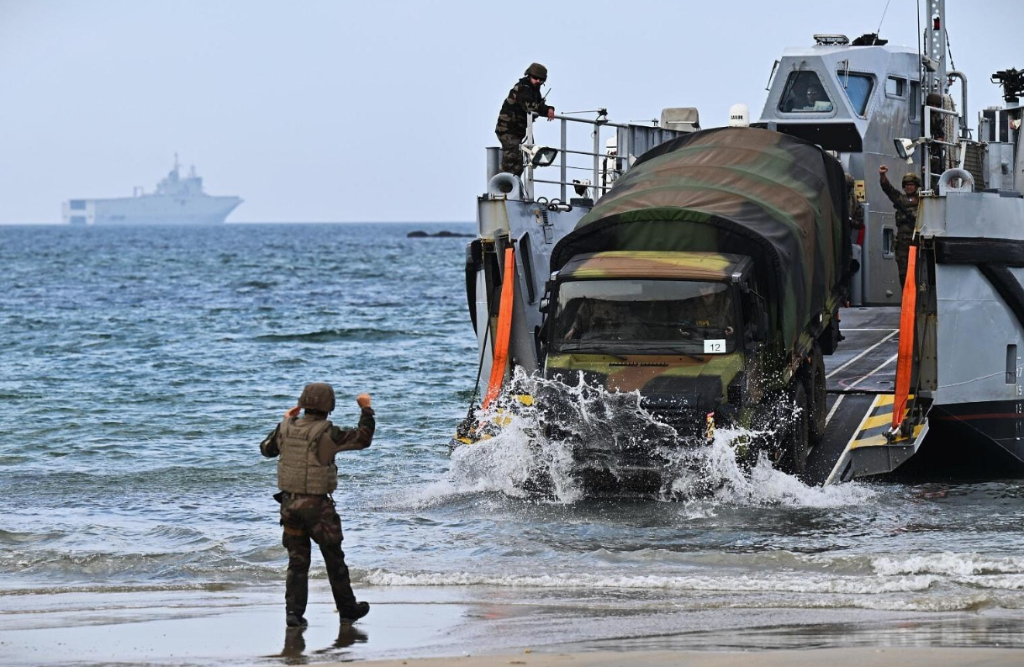
The GEX 2026 multinational military exercise marks a decisive break from past approaches, signaling a major strategic shift in how France and West African allies are reshaping their security partnerships. Held in Côte d’Ivoire and Gabon in November 2026, this groundbreaking drill brings together over 2,000 troops from France, Côte d’Ivoire, and Gabon, with observers from seven additional African nations. More than a training mission, GEX 2026 represents a bold new chapter in interoperability and shared strategic vision across the Gulf of Guinea.
From joint exercises to lasting security architecture
The GEX 2026 initiative unfolds in two distinct phases: “FANGHA 2026” in Abidjan from November 7-14, followed by “WAIYA 2026” in Libreville from November 24-29. This dual-location format underscores a fundamental shift in military cooperation—one that moves beyond traditional bilateral training toward a comprehensive system of coordinated defense across multiple domains.
While France contributes advanced naval and aerial assets including the Mistral amphibious helicopter carrier and Mirage 2000 fighter jets, the exercise emphasizes mutual capability building. Côte d’Ivoire fields more than 1,100 personnel, Gabon contributes around 100, and observers from Benin, Guinea, Liberia, and Senegal participate in planning and evaluation, signaling regional buy-in to this new security paradigm.
Why the Gulf of Guinea matters to African security
The Gulf of Guinea has become the focal point of West Africa’s security concerns. Beyond its role as a global trade corridor connecting Europe, South America, and Asia, the region faces escalating threats: rampant piracy, illegal resource trafficking, coastal terrorism, and spillover violence from the Sahel. Both Côte d’Ivoire and Gabon recognize that their national security is inseparable from regional stability.
Côte d’Ivoire—particularly in its northern border regions—has seen growing infiltration by militant groups moving south from the Sahel. Gabon, with its extensive Atlantic coastline, remains vigilant against maritime crime that threatens oil installations and shipping lanes. By aligning their military responses, these nations are not merely protecting their own borders; they are laying the groundwork for a shared defense ecosystem that transcends national boundaries.
Redefining France’s military footprint in Africa
GEX 2026 arrives at a pivotal moment in France’s African strategy. After withdrawing from Mali, Burkina Faso, and Niger, Paris has shifted from large-scale permanent bases to flexible, partnership-based arrangements. The return of Port-Bouët camp to Côte d’Ivoire in 2025 and the restructuring of Gabon’s military cooperation reflect a new model—one focused on training, knowledge exchange, and rapid deployment rather than static presence.
This exercise demonstrates that France is not disengaging from the region, but reallocating resources toward more sustainable, reciprocal partnerships. The presence of French naval and air assets during GEX 2026 proves operational capacity remains intact, while emphasizing shared responsibility in crisis response.
Towards strategic autonomy for African armed forces
For African partners, GEX 2026 is more than a training opportunity—it’s a catalyst for building endogenous defense capabilities. The focus on joint planning, inter-service coordination, and standardized operational procedures gives Côte d’Ivoire and Gabon tools to manage crises independently and reduce reliance on external support.
Key priorities include:
- Enhanced maritime domain awareness: shared surveillance and intelligence to counter piracy and illicit trafficking
- Regional command-and-control systems: unified platforms for decision-making during crises
- Human capital development: joint officer training programs to sustain institutional knowledge
- Resource protection: coordinated protocols for securing offshore energy and port infrastructure
The long-term goal is clear: to transform ad-hoc exercises into permanent mechanisms of cooperation that are owned and operated by African stakeholders themselves.
Can GEX 2026 change the game in West African security?
What makes GEX 2026 truly groundbreaking is its potential to redefine the rules of military engagement in West Africa. Unlike previous bilateral drills, this exercise embeds the principles of multilateralism from the outset, with observer nations already involved in scenario design and post-exercise evaluation.
The challenge now lies in translating operational gains into durable institutions. Success will be measured not by the scale of the maneuvers, but by the continuity of cooperation they inspire—whether through joint patrols, shared intelligence cells, or synchronized disaster response units.
As the Gulf of Guinea emerges as the frontline of Africa’s security future, GEX 2026 may well stand as the moment when France, Côte d’Ivoire, and Gabon—not to mention the observer nations—stop rehearsing for threats and begin building a regional defense infrastructure designed to withstand them.
What’s next for Africa-France military cooperation?
The conclusion of GEX 2026 is just the beginning. If the lessons of this exercise are institutionalized, the Gulf of Guinea could become a model for how African states and external partners collaborate—on equal footing, with shared risks and shared rewards. The question is no longer whether such cooperation is possible, but how quickly it can become permanent.
One thing is certain: in the shifting sands of West African security, GEX 2026 represents a pivotal stride toward a more integrated, resilient future.


 Mariama Hamani