Mariama Hamani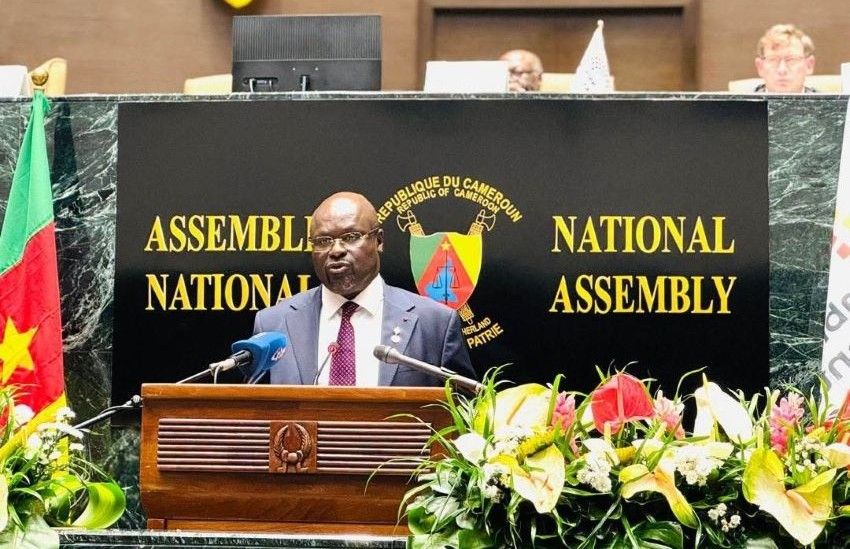
Gabon reasserts leadership in Francophonie parliamentary assembly
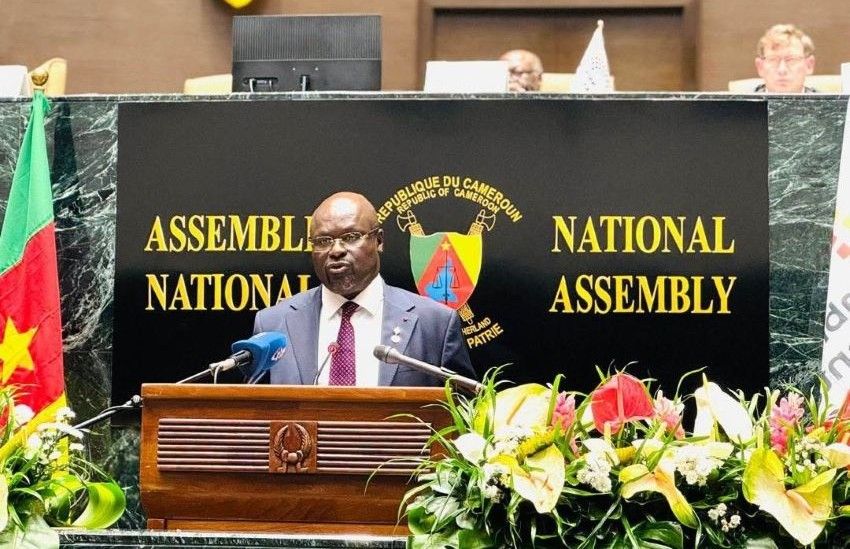
Yaoundé, July 11, 2026 – The return of a nation to the global stage often transcends mere diplomatic reengagement. It is measured by the capacity to reclaim its voice, articulate a vision, and reassert itself as a key player in shaping political equilibria. This truth found its expression in Yaoundé during the 51st session of the Francophonie Parliamentary Assembly.
There, before presidents of assemblies, delegation leaders, and representatives of the Francophone community, Michel Régis Onanga M. Ndiaye, President of Gabon’s National Assembly, formally announced the country’s reinstatement following two years of political transition dedicated to institutional reforms.
Far from being a mere ceremonial act, this declaration signaled a pivotal moment in Gabon’s diplomatic strategy—one aimed at repositioning the nation at the heart of regional and international dialogue mechanisms.
Reintegration beyond symbolism
The 51st session unfolded against an international backdrop marked by escalating crises, growing skepticism toward multilateralism, and resurgent sovereignist movements worldwide. The chosen theme—multilateralism and state sovereignty—provided Gabon with a strategic platform to outline its renewed diplomatic doctrine.
In his address, Michel Régis Onanga M. Ndiaye expressed gratitude to the Francophonie Assembly for its support during Gabon’s transition while reaffirming the nation’s longstanding commitment to the values of dialogue, cooperation, and solidarity that underpin the Francophone community.
By declaring Gabon’s return with conviction, the National Assembly President sent a clear message to international partners: a nation that has completed a transformative institutional chapter and is now poised to reclaim its role in decision-making spaces.
This reinstatement carries significance that extends beyond parliamentary frameworks. It serves as a signal to investors, international bodies, and economic partners regarding Gabon’s restored stability and its resolve to engage fully in regional dynamics.
A sovereignty rooted in engagement
One of the most compelling takeaways from the address was Gabon’s articulation of sovereignty. In an era where some states equate sovereignty with disengagement from international institutions, Libreville champions a different approach. Here, sovereignty is framed as a nation’s ability to defend its interests while remaining deeply committed to international cooperation.
This perspective rests on the belief that dialogue, consultation, and solidarity remain the most effective tools for crisis prevention, democratic consolidation, and regional stability.
The stance reflects the evolving African discourse on the continent’s place in the global system. It also highlights the emergence of a new generation of leaders who are redefining the balance between national independence and multilateral cooperation.
Gabon’s approach positions the country as an actor capable of harmonizing sovereign assertion with active diplomatic participation.
Turning Gabon’s experience into regional influence
The Yaoundé address also unveiled Gabon’s broader ambition to support African nations undergoing institutional transitions or reconstruction.
A proposal to convene a high-level conference of parliament presidents from transitioning and post-transition countries exemplifies this goal. The initiative seeks to transform Gabon’s recent experience into a platform for institutional solidarity aimed at strengthening political stability across Africa.
This marks a notable evolution in the continent’s parliamentary diplomacy. Parliaments are increasingly stepping beyond national roles to become mediators, crisis prevention agents, and democracy support actors.
By endorsing reform proposals from Senegalese and Ivorian parliamentary sections, Gabon signals its intent to move beyond passive participation to active contribution. This stance could enhance Libreville’s influence within the Francophone sphere while reinforcing its image as a constructive partner on institutional and democratic matters.
Gabon’s reinstatement in the Francophonie Parliamentary Assembly is thus more than a diplomatic normalization—it is the inaugural act of a broader strategy to reposition the country in pivotal African and global debates.
In a world grappling with geopolitical tensions, identity-driven retrenchment, and challenges to multilateralism, Gabon is forging a distinct path. It champions a sovereignty that is assertive yet open, a cooperation built on mutual respect, and a parliamentary diplomacy dedicated to stability and development.
The true challenge for Gabon now lies not merely in its reintegration but in its ability to project a distinctive voice and translate its renewed presence into lasting influence for the benefit of its citizens and the wider Francophone community.

 Boureima Amadou