Mariama Hamani
Gabon modernizes governance through legal drafting reforms

Libreville – This week, Gabon took a significant step toward institutional modernization by finalizing a groundbreaking legal drafting guide under the leadership of the General Secretariat of the Government.
While infrastructure projects often steal the spotlight, the true foundation of a well-functioning state lies in the clarity and coherence of its legal framework. Gabon’s latest initiative addresses this critical yet often overlooked aspect of governance.
For decades, many African nations have struggled with normative inflation—a proliferation of laws riddled with contradictions, ambiguities, and procedural inconsistencies. These flaws create legal uncertainty, deter investment, and hinder public policy implementation. Gabon now appears determined to tackle this issue head-on.
Establishing a unified language for public action
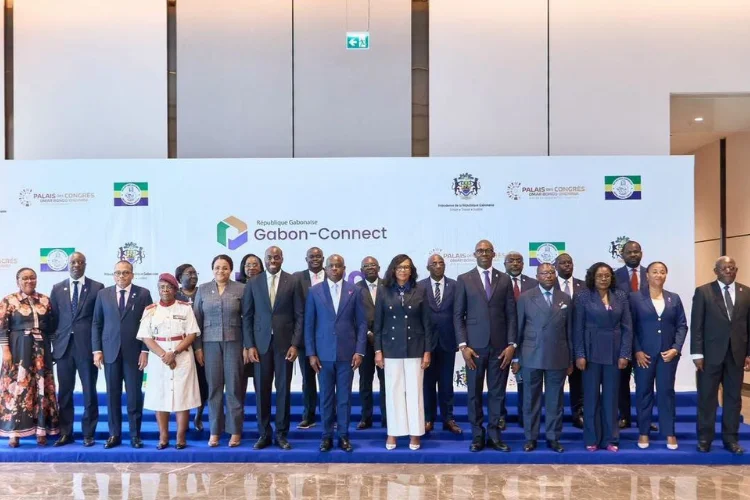
The second working session, convened by the General Secretariat of the Government, brought together key stakeholders from across Gabon’s legislative and regulatory landscape. Participants included the Director of Legislation, the President’s Legal Advisor, representatives from the Council of State, Omar Bongo University, the National Assembly, the Senate, the Vice-President’s office, and a legal consultant.
This collaborative effort underscores the project’s ambition. Rather than producing a mere technical manual for lawmakers, Gabon aims to create a shared reference framework for all institutions involved in drafting public norms. The goal is to standardize legal drafting methods, clarify procedures, and enhance the quality of legislative and regulatory texts.
In essence, Gabon is working to develop a common language for public action—one that ensures consistency, transparency, and efficiency in governance.
Legal clarity as an economic catalyst
In today’s global economy, legal certainty is a cornerstone of competitiveness. Investors prioritize stability and predictability in regulatory environments alongside macroeconomic performance. Poorly drafted laws, conflicting texts, or vague procedures create uncertainty that directly undermines business confidence.
The new legal drafting guide seeks to eliminate these pitfalls by promoting clarity, internal consistency, and compliance with existing legal principles. This initiative will streamline administrative processes, reduce litigation, and accelerate public decision-making—benefiting magistrates, government agencies, parliamentarians, businesses, and citizens alike.
A clear law minimizes disputes. A coherent regulation improves administrative efficiency. A harmonized procedure speeds up public decisions. In this way, high-quality legislation becomes a strategic economic investment.
A quiet revolution with far-reaching impact
These reforms align with Gabon’s broader administrative modernization agenda, now in its advanced stages. The recommendations from the working sessions will be integrated into the final document before its official adoption.
The initiative also reflects a shift in governance philosophy. Norm creation is no longer seen as an exclusively administrative task but as a collective endeavor involving institutions, academics, and legal practitioners. This collaborative approach positions Gabon closer to international standards in regulatory governance while professionalizing the country’s legal framework.
The benefits extend beyond specialists. Every citizen stands to gain from clearer laws, more transparent procedures, and a more cohesive administration. In modern democracies, the quality of the legal system is a reliable indicator of the state’s overall effectiveness.
By launching this legal drafting project, Gabon is not just reforming its laws—it is reshaping the very way governance is conducted. As states worldwide strive for greater efficiency, predictability, and transparency, this quiet transformation could yield profound effects. Institutional revolutions often begin in the deliberations of jurists before becoming the norms of tomorrow.


 Boureima Amadou