Boureima Amadou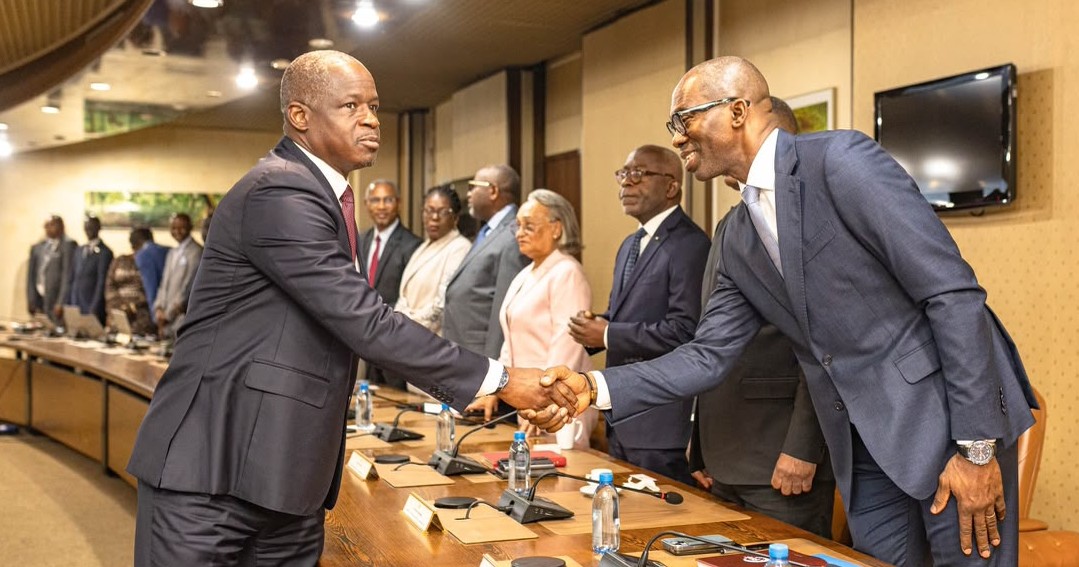
Libreville is hosting pivotal budget conferences this week as Gabon advances preparations for its 2027 financial blueprint. Government officials are engaging in structured discussions to finalize revenue projections and expenditure frameworks, following the official announcement of the budget conference schedule.
Two-phase approach to fiscal planning
The process unfolds in two distinct stages, as outlined in the official budget preparation circular issued in March 2026. The first phase, running from July 14 to 17, focuses on ministerial-level deliberations. The second phase, scheduled for July 20–24, brings together program managers from government ministries, state operators, and budget officials for a technical review.
During these sessions, participants will assess the feasibility of revenue forecasts, evaluate expenditure sustainability, and determine public sector financing requirements. The ultimate goal is to craft a budget that is transparent, realistic, and financially viable amid efforts to enhance public resource mobilization and spending efficiency.
Aligning with national priorities
The conferences are not conducted in isolation. They reflect the broader economic strategy embedded in the National Growth and Development Plan (PNCD) 2026–2030. They also incorporate insights from the June 27 budget orientation debate and parliamentary discussions on the 2026 supplementary finance law. Additionally, the meetings respond to commitments made at the January 2026 Extraordinary CEMAC Summit in Brazzaville, where Central African leaders emphasized fiscal discipline and regional economic integration.
Key priorities set by President Brice Clotaire Oligui Nguema—outlined during his June 15 State of the Nation address—will also shape the budget’s strategic direction, ensuring alignment with national development objectives.
2026 adjustments set the stage
Earlier this year, Gabon revised its 2026 budget downward from an initial 6.358 trillion CFA francs to 5.495 trillion, a reduction of 862.9 billion CFA francs. This adjustment reflected tighter revenue expectations and a commitment to fiscal prudence. Despite the reduction, the budget maintained a strong focus on infrastructure investment, social welfare enhancements, and public finance consolidation, all within the context of ongoing economic and institutional transition.
Ensuring budgetary coherence
The Minister of Economy, Thierry Minko, has underscored the need for the 2027 budget proposals to remain consistent with the 2027–2029 macroeconomic and fiscal framework. He emphasized that the upcoming budget must reflect the government’s strategic priorities while ensuring that public spending delivers measurable impact and long-term sustainability.