Mariama Hamani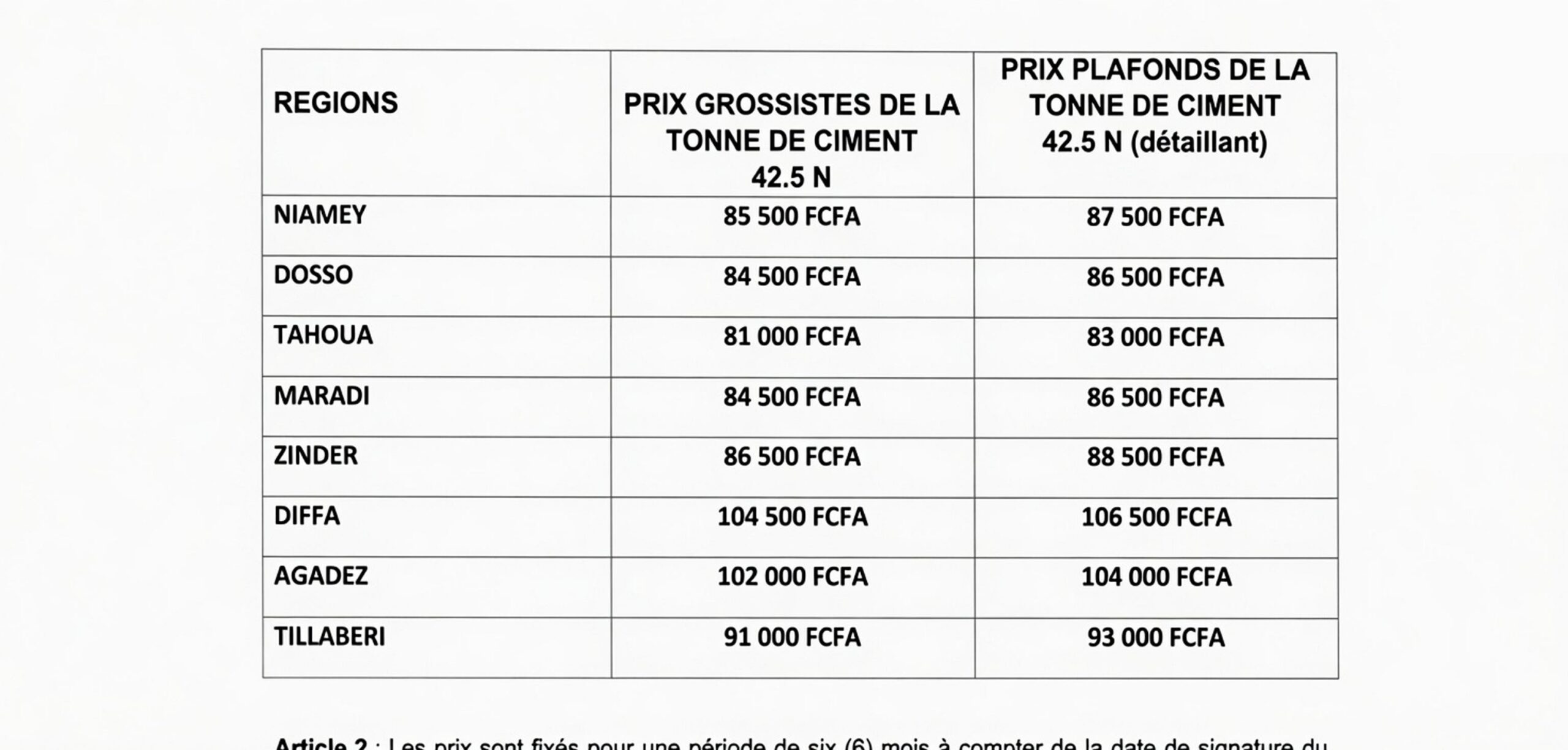
In response to soaring cement prices and reported shortages across multiple regions, the Nigerien government has intervened with decisive measures. On July 13, 2026, the Ministry of Commerce and Industry issued two decrees imposing a price ceiling on 42.5N cement and introducing stringent penalties for non-compliant operators, including the confiscation of illegally hoarded stocks.
An emergency response to protect consumers
The government’s rationale centers on shielding households from exploitative practices, where certain traders allegedly capitalize on high demand by inflating prices or artificially restricting supply. The stated goal is clear: curb speculation and safeguard purchasing power. Yet, while the intent may be justified, the efficacy of administrative price controls remains questionable.
Potential unintended consequences
Historical precedents in other markets suggest that price caps, when unaccompanied by structural reforms, often yield counterproductive outcomes. By capping prices without addressing underlying supply chain vulnerabilities—such as production costs, transportation expenses, or import bottlenecks—the state risks exacerbating market distortions. When actual operational expenses exceed regulated margins, distributors may respond by curtailing sales, reducing orders, or diverting stock to unregulated markets where prices remain unchecked.
The risks of confiscation
The decree’s provision for systematic stock confiscation introduces further complexities. While intended to deter fraud, the measure lacks safeguards against arbitrary enforcement. Without transparent oversight and robust legal protections, it could lead to disputes, bureaucratic overreach, or even abuse by officials. The absence of clear guidelines raises concerns about fairness and accountability in its implementation.
Structural weaknesses exposed
Beyond punitive actions against a few unscrupulous traders, this crisis lays bare the Nigerien cement sector’s systemic vulnerabilities. Persistent supply chain disruptions, exorbitant logistics costs, import dependency, and inadequate local production cannot be resolved by ministerial decrees alone. Industry stakeholders emphasize that price stability hinges on a well-functioning market—one with reliable supply, streamlined distribution, and responsive production capacities.
Short-term relief vs. long-term solutions
The government’s swift intervention reflects mounting public frustration, but it addresses symptoms rather than root causes. While enforcement may curb some abuses temporarily, it cannot substitute for the sweeping reforms needed to ensure a stable, sustainable cement supply. The real challenge lies in rebuilding trust among authorities, producers, distributors, and consumers—a goal that demands a cohesive strategy rather than isolated administrative measures.
Without tackling the core issues—production inefficiencies, logistical bottlenecks, and import constraints—the price cap risks offering only temporary respite. The burden of these unresolved problems will once again fall disproportionately on Nigerien households, who have already borne the brunt of economic instability.