Boureima Amadou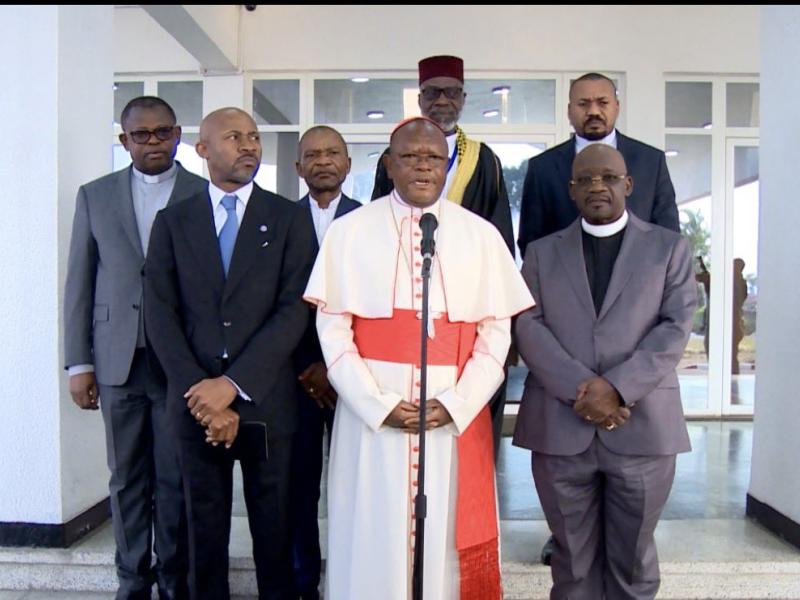
DRC president unveils inclusive national dialogue with religious leaders at helm
The President of the Democratic Republic of the Congo (DRC), Félix Tshisekedi, has announced the launch of an inclusive, national dialogue designed to foster peace and unity. This initiative, unveiled following a meeting with leaders of the country’s major religious denominations, places the religious community at the center of the process.
The announcement, made through a statement from the Presidency, underscores the government’s commitment to consolidating national cohesion while upholding constitutional principles and institutional integrity. The dialogue is intended to create a platform for all stakeholders—including political leaders, civil society, and opposition figures—to engage in constructive discussions aimed at strengthening the country’s unity.
Religious leaders endorse the initiative
Cardinal Fridolin Ambongo, Archbishop of Kinshasa and spokesperson for the religious delegation, expressed strong support for the initiative. In a statement following the meeting, he highlighted the president’s dedication to peace-building, national cohesion, and national unity.
The cardinal emphasized the importance of a united Congolese front to address the ongoing challenges facing the country, particularly the conflict in the eastern regions. He attributed the instability to external interference, specifically pointing to Rwanda’s alleged support for rebel groups operating in North Kivu and South Kivu.
« Our country needs communion among its sons and daughters, » Ambongo stated, calling for unity to tackle the crisis in the east. « We must stand together to defend our sovereignty and territorial integrity. »
Religious communities take on a leading role
The religious leaders present at the meeting—representing Catholic, Protestant, and Muslim communities—have agreed to play an active role in facilitating the dialogue. The cardinal described their involvement as an apostolic mission, urging both the ruling majority and opposition to actively participate in the process.
The delegation included prominent religious figures such as:
- Mgr André Bokundoa, representative of the Église du Christ au Congo;
- Archbishop Ejiba Yamampia, of the Église de Réveil du Congo;
- Sheikh Abdallah Mangala, representing the Muslim community;
- Mgr Donatien Nshole, spokesperson for the Catholic Church;
- Pastor Éric Senga, spokesperson for the Église du Christ au Congo.
The leaders confirmed that a roadmap outlining the dialogue’s framework will be published shortly. This announcement follows a series of consultations held in response to the ongoing political and security crisis in the DRC.
Regional and international support for dialogue
The initiative has garnered attention from regional leaders, including President Évariste Ndayishimiye of Burundi, who met with Congolese opposition representatives and religious leaders in early July. Ndayishimiye, then serving as chair of the African Union, urged flexibility and a commitment to dialogue among all parties.
Additionally, Cardinal Ambongo held discussions with President Denis Sassou-Nguesso of the Republic of the Congo on July 9, focusing on the political and security situation in the DRC. These engagements reflect growing regional recognition of the need for a peaceful resolution to the crisis.
Next steps and challenges ahead
While the announcement has been welcomed, several key details about the dialogue remain to be clarified. These include:
- The timeline for the dialogue;
- The format and structure of the discussions;
- The participants involved;
- The agenda and priorities;
- Guarantees for the safety and inclusion of all stakeholders.
Opposition groups have already outlined their expectations, including the release of political prisoners, the halt to politically motivated prosecutions, the restoration of public freedoms, and the abandonment of any constitutional amendments prior to dialogue.
In late June, President Tshisekedi reiterated his openness to dialogue but warned that it must not undermine the country’s institutions or the constitutional will of the people. « Dialogue should not be a tool to circumvent democracy, » he emphasized.
The coming weeks will be critical in determining whether this initiative can bridge the deep divisions in Congolese society and pave the way for lasting peace and stability.
Religious leaders following their meeting with Félix Tshisekedi.

 Mariama Hamani