Mariama Hamani
DRC president orders crackdown on illegal military presence in mines
- Politics
During a pivotal moment for the Democratic Republic of Congo’s mining sector, President Félix Tshisekedi has issued a firm directive to end the persistent issue of illegal military and security force presence on mining sites across the country.
Speaking at the 94th session of the Council of Ministers on Friday, July 10, 2026 at the Cité de l’Union africaine in Kinshasa, the Head of State emphasized the strategic importance of the mining sector for national economic development. He underscored the urgent need to enhance governance, transparency, and credibility in the sector to meet international market standards.
President Tshisekedi addressed the recurring problem of military personnel and elements of the National Police illegally occupying mining sites nationwide. As the guarantor of the nation, he reiterated the strict prohibition of unauthorized military or security force involvement in mining operations, except in legally authorized missions explicitly ordered by competent authorities within their mandates.
« Such a situation perpetuates negative perceptions about the governance of our natural resources, weakens control mechanisms, fosters illicit activities, and undermines the government’s efforts toward responsible, transparent mining that aligns with international standards, » he stated, according to the official government communiqué.
The President made it clear that such actions cannot be tolerated as they severely damage state authority, the country’s image, the credibility of mining sector reforms, and investor confidence.
« Illegal militarization of mining sites results in the deprivation of peaceful enjoyment of mining rights by legitimate holders, insecurity in exploitation zones, intimidation, extortion against state services, miners, and local communities. It also disrupts supply chains, mineral traceability, and fosters fraud, smuggling, and illicit enrichment networks, » President Tshisekedi highlighted.
In response, the Head of State instructed the Deputy Prime Minister and Minister of Interior, the Deputy Prime Minister and Minister of National Defense and Veterans Affairs, the Chief of General Staff of the Armed Forces of the DRC (FARDC), and the National Police Commissioner to take immediate and decisive action to eliminate all forms of illegal militarization of mining sites across the national territory.
« The President therefore instructed them to take all necessary measures without delay to permanently end any form of illegal militarization of mining sites nationwide, with immediate implementation, » the communiqué noted.
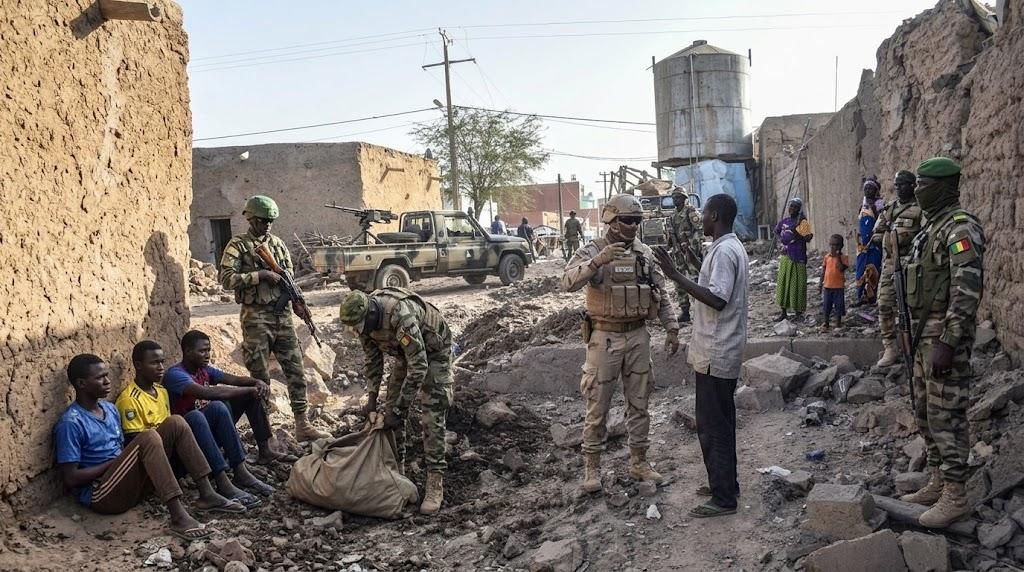
Under these directives, authorities are tasked with ensuring the immediate withdrawal of illegally stationed military and security personnel from mining sites, ceasing any interference by defense and security forces in mining activities, securing sites in accordance with legal frameworks, and dismantling fraud networks linked to illegal mining operations that may be backed by uniformed individuals.
The President also emphasized the need to impose exemplary sanctions on all irregularly present individuals in mining areas.
Building on the 87th Council of Ministers meeting, the government was further urged to strengthen control, certification, traceability, and monitoring mechanisms for mineral supply chains to ensure compliance with national and international standards while safeguarding the rights of legitimate operators and local communities.
The issue of military and police presence on mining sites has been a longstanding concern for authorities in the DRC. Over the years, this practice has frequently been criticized for enabling abuses such as intimidation, extortion, influence peddling, and illegal exploitation of mineral resources for the benefit of clandestine interest groups.
President Tshisekedi’s announcement is not the first of its kind. In 2022, the government ordered the withdrawal of military and police personnel from artisanal mining sites following numerous reports of severe irregularities. At the time, the order was publicized by the then Deputy Minister of Interior, Security, and Customary Affairs, Jean-Paul Molipe, during a tour of the Grand Katanga region.
Back then, authorities justified the measure by citing the widespread disorder in artisanal mining zones. Military and police personnel, sometimes without official assignments, were found occupying mining sites, while some Mine Police officers—tasked with overseeing artisanal miners—were accused of turning a blind eye to fraudulent practices or facilitating illicit mineral exploitation, particularly benefiting foreign operators, including Chinese nationals.

Mariama Hamani
Journalist
Boureima Amadou
- Politics
- October 15, 2026
- 3 views
Ivory Coast takes bold step with new electoral body proposal to restore faith in elections
In a decisive move to rebuild public trust and strengthen democratic processes, Ivory Coast’s ruling RHDP coalition has submitted groundbreaking proposals for a new electoral body to the Interior Minister.…
- Politics
- October 13, 2026
- 24 views
Senegal’s accountability push: Ousmane Sonko sets uncompromising standard for public officials
Assemblée nationale : Ousmane Sonko fait de la reddition des comptes une exigence envers le peuple « Et cette dette-là, aucun gouvernement ne peut la renégocier », a déclaré le…