Boureima Amadou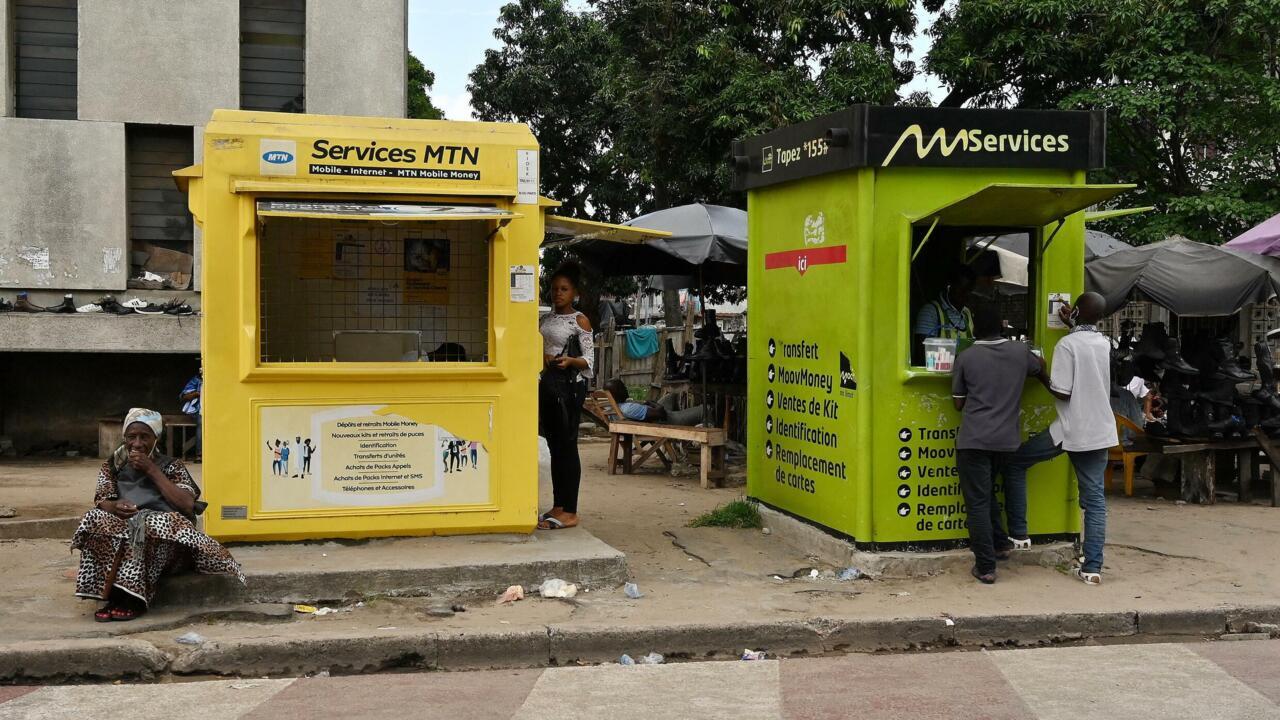
Côte d’Ivoire currently boasts over 400,000 mobile money service points, a staggering 300 times more than the total number of automated teller machines (ATMs) across the nation, according to the Agency for the Promotion of Financial Inclusion. Ivorians rely on these ubiquitous kiosks daily for essential financial transactions, from depositing salaries to withdrawing funds. However, the very agents facilitating these services are increasingly encountering a critical lack of physical cash, severely hindering their operations.
As late afternoon descends on Abidjan’s bustling Angré Château district, a common scene unfolds. Customers at a highly frequented mobile money kiosk find themselves unable to complete transactions due to a lack of liquidity. Rosette, who intended to withdraw 10,000 CFA francs (approximately 15 euros), expresses a sense of resignation. “When you come, they don’t have what you need; it’s something that happens, so we just deal with it,” she explains, reflecting a shared frustration among patrons.
Inside the distinctive yellow booth, teller Nema attempts to manage a growing line of impatient clients. “There are days when withdrawals are particularly high, and we simply run out of cash. We apologize and inform customers that we are only able to process deposits,” she states. Rather than waiting, some customers opt to seek out another service point, illustrating the direct impact on user convenience.
Affoué, the manager of this kiosk and a former accountant, understands the financial implications of such situations. Losing a customer means losing potential commission. “You lose the client, and you lose the client’s commission. That’s why it’s crucial to serve customers well so that commissions can increase and generate a net profit,” she emphasizes, highlighting the direct link between service availability and business viability.
Clientele and profitability losses mount
Mobile money operators such as Orange, Moov, MTN, and Wave compensate kiosk managers with a commission for each transaction. For instance, agents typically earn between 20 and 60 CFA francs (3 to 9 euro cents) for a 10,000 CFA franc transaction. Consequently, higher transaction volumes and values directly translate into increased earnings for these agents.
However, this revenue stream grinds to a halt when agents face a deficit of cash or credit. They are often compelled to temporarily close their kiosks to replenish their reserves from operators or banks. This downtime leads to a direct loss of clientele and subsequently, a reduction in commissions, making their operations less profitable. The necessity to frequently shut down and travel for resupply adds further inefficiency to their daily business.
Motorcycle couriers boost responsiveness
Recognizing this pressing issue, Gertrude Yapi, Operations Director at Leya, an Abidjan-based startup, has pioneered an innovative solution: a motorcycle-based cash delivery service for mobile money points. “We supply them with credit in less than four minutes, and deliver physical cash in under 30 minutes to satisfy customer demand,” Yapi explains. Leya claims this service enables points of sale to achieve a 50% increase in their turnover. Currently, Leya serves over 3,000 active clients across four key Ivorian cities: Abidjan, Bondoukou, Bouaké, and Korhogo.
Ivorian economist Kassoum Timité stresses the fundamental importance of uninterrupted service for the broader economy. “Mobile money directly serves the informal sector population, which constitutes the largest portion of economic activity in Côte d’Ivoire,” he notes, adding that this sector is estimated to contribute up to 40% of the nation’s Gross Domestic Product, according to the International Monetary Fund. “Therefore, a lack of liquidity will inevitably slow down transactions, leading to a decrease in overall economic activity.”
The scale of mobile money’s impact is undeniable. In 2024, over 140 billion CFA francs (more than 210 million euros) were exchanged daily via mobile money platforms, a nearly fourfold increase compared to 2020, underscoring its pivotal role in Côte d’Ivoire’s financial landscape.


 Mariama Hamani