Mariama Hamani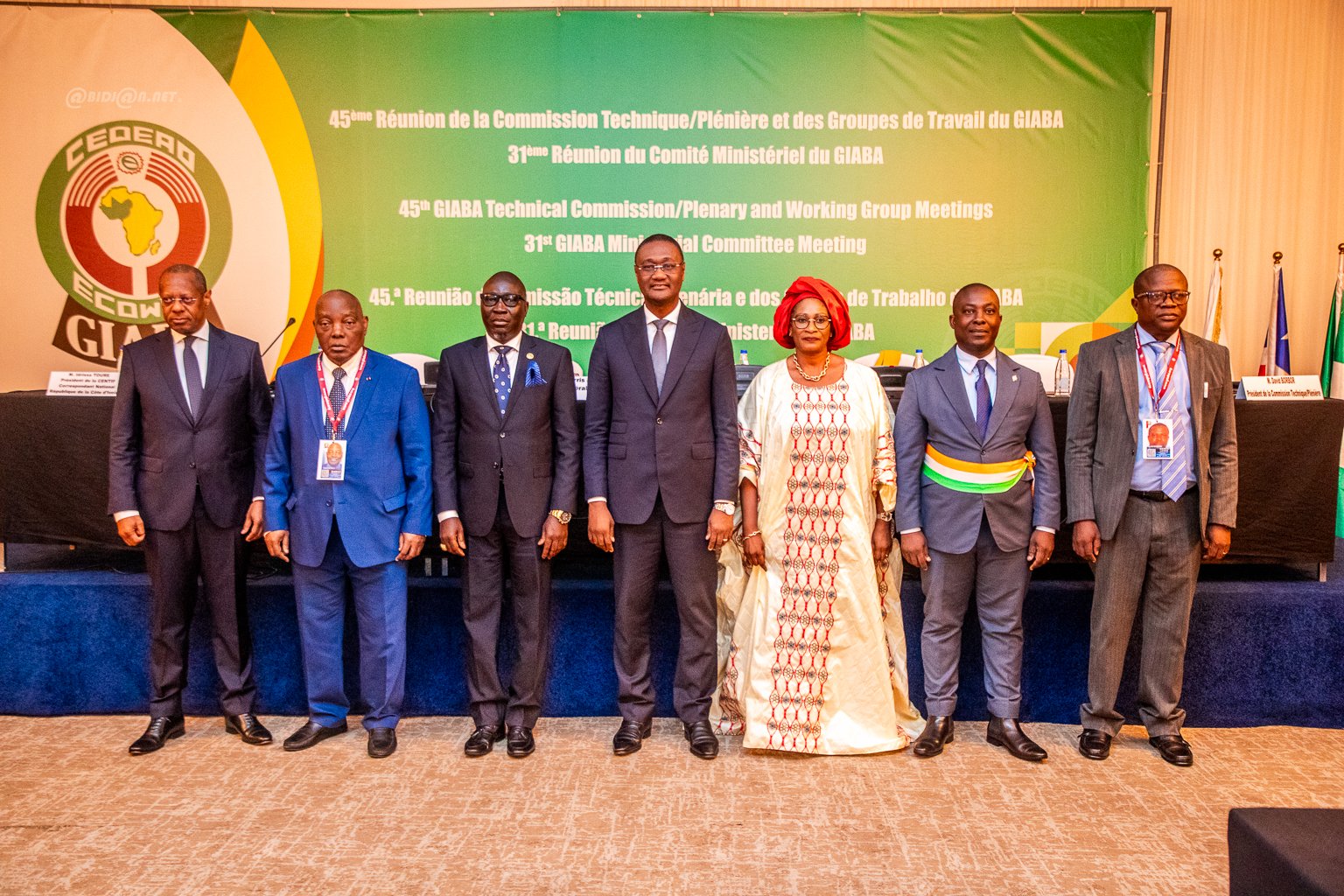
Abidjan is set to become the epicenter of West African financial crime prevention from May 18 to 23, 2026, as the Group Intergovernmental Action Against Money Laundering in West Africa (GIABA) convenes its 45th technical commission and 31st ministerial committee. The opening ceremony unfolded this morning in Cocody, drawing experts, CEDEAO state delegates, technical partners, financial backers and international observers.
This regional gathering, co-organized with Côte d’Ivoire, serves as a pivotal platform for assessing and synchronizing anti-money laundering and counter-terrorism financing (AML/CFT) strategies across West Africa.
The plenary sessions will scrutinize second-cycle mutual evaluation follow-up reports from multiple member states. Discussions will also cover typology reports from the Risk, Trends and Methods Working Group (RTMG), activities of the Financial Intelligence Units Forum (FCRF) and technical assistance mechanisms for participating nations.
Speaking on behalf of the Minister of Economy, Finance and Budget, Moussa Sanogo, Minister of Construction, Housing and Urban Planning, emphasized Côte d’Ivoire’s unwavering commitment to strengthening regional financial crime defenses. “Côte d’Ivoire fully recognizes its responsibility and pivotal role in West Africa. Under President Alassane Ouattara’s leadership, our nation has embraced a systematic, determined and transparent approach,” he stated.
The government representative highlighted ongoing structural reforms to align Côte d’Ivoire’s framework with Financial Action Task Force (FATF) international standards. While acknowledging the rapid evolution of transnational criminal networks, he noted encouraging progress despite these challenges.
Sanogo underscored the critical need for enhanced sub-regional cooperation to combat emerging financial crime threats. “No single country can succeed in isolation. Our effectiveness hinges on information sharing, mutual trust and sustained political will.” He framed AML efforts as a broader struggle for “development, economic stability and peace.”
The minister also stressed that cleansing financial systems is essential to bolster West African states’ economic appeal and safeguard both domestic and foreign investments.
Hafsat Abubakar Bakari, Chair of GIABA’s Technical Commission, praised Côte d’Ivoire’s strides in financial governance and AML/CFT data interoperability. She noted significant technical advances across member states, driven by legislative enhancements and modernized Financial Intelligence Units.
However, she warned of new threats posed by emerging technologies like generative AI, deepfakes and synthetic identities—tools criminals increasingly exploit to bypass standard customer due diligence (KYC) procedures. “Our detection systems, reporting rules and investigator training must evolve to counter these modern dangers,” she urged.
Bakari also highlighted the urgent need to improve transparency around beneficial ownership of legal entities, a cornerstone of GIABA’s third-cycle mutual evaluations. While commending recent progress by Burkina Faso, Mali and Nigeria—recently removed from FATF’s grey list—she called for continued technical support to help Côte d’Ivoire achieve the same.
This regional summit is expected to yield actionable recommendations to fortify prevention, detection and enforcement mechanisms against illicit financial flows within the ECOWAS space. The gathering comes at a time of escalating security and technological threats across West Africa.

 Boureima Amadou