Mariama Hamani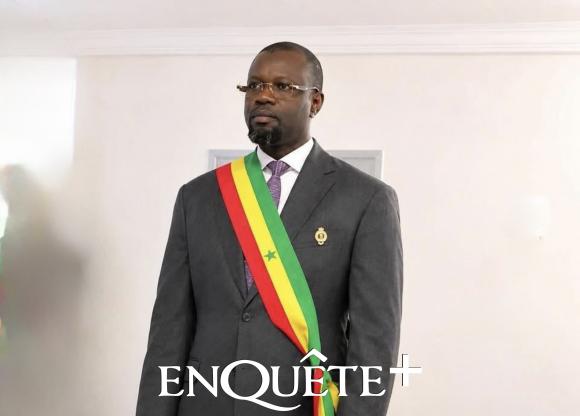
A coalition of opposition lawmakers has escalated the political standoff by filing a landmark constitutional challenge against the reinstatement of Ousmane Sonko as a legislator—a move that paved the way for his election as Speaker of the National Assembly.
In a formal petition presented yesterday, more than twenty opposition deputies accused parliamentary authorities of violating the Constitution by reinstating Sonko despite his prior role as Prime Minister. The lawmakers cited Article 54 of the Constitution, arguing that holding both executive and legislative offices simultaneously breaches the principle of separation of powers and undermines institutional integrity.
Constitutional breach or legal reinterpretation?
The opposition’s petition hinges on the assertion that Sonko’s election as a deputy in 2024 occurred while he was already serving as Prime Minister, creating an automatic conflict of interest under constitutional provisions. By reinstating him to his parliamentary seat and subsequently electing him Speaker on May 26—with 132 votes in favor out of 133 cast—the Assembly Bureau allegedly circumvented legal safeguards designed to prevent such overlaps.
The lawmakers further alleged that they were denied access to critical procedural documents, including the official reinstatement decree and the plenary session minutes from May 26, 2026. Despite formal summons issued by legal representatives, both the Secretary-General and the First Vice-President of the National Assembly allegedly withheld these materials, which the opposition described as essential public records. They condemned the refusal as a deliberate obstruction of transparency and parliamentary accountability.
A high-stakes legal showdown
The opposition’s constitutional complaint arrives amid intense political turbulence. Sonko, who was dismissed as Prime Minister on May 22, 2026, staged a swift political comeback just days later when he was elected Speaker, becoming the second-highest-ranking official in the state. The vote took place under a boycott by opposition members, who condemned the process as an unconstitutional power grab.
The legal debate now centers on whether Article 54—often interpreted as prohibiting dual mandates—applies retroactively or requires automatic resignation from one office. Some constitutional scholars argue that the provision does not explicitly mandate suspension or loss of parliamentary status, while others maintain that the spirit of the law prohibits any form of reinstatement once an incompatibility has been established.
The Council must first determine whether the opposition’s petition is even admissible. Critics within legal and political circles have pointed out that only the President possesses the constitutional authority to directly refer a matter to the Council in this context. The presidency has publicly denied having filed such a referral, leaving the validity of the deputies’ claim uncertain. The Council’s ruling on admissibility will set the tone for what could become a defining moment in the country’s institutional stability.
The opposition has reiterated its commitment to resolving the dispute through legal and peaceful channels, framing the case as a defense of democratic transparency against what they describe as an institutional overreach.


 Boureima Amadou