Boureima Amadou
The 63rd session of the United Nations Human Rights Council opened on Monday in Geneva, Switzerland, providing a platform for the UN to review human rights situations worldwide.
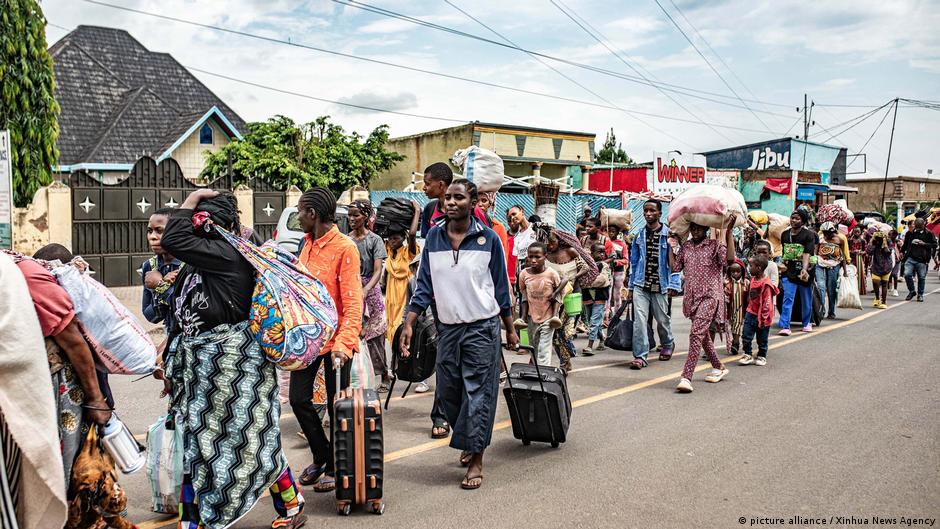
In the Democratic Republic of Congo, human rights violations continue, particularly in the eastern part of the country, where civilians face numerous abuses, including drone strikes. In the west, several human rights organizations denounce arbitrary arrests and detentions in secret locations.
Documented violations, but perpetrators rarely prosecuted
Human rights groups describe the situation in the DRC as highly concerning, both in the east, partially controlled by the AFC/M23, and in the west, administered by Congolese authorities.
“The United Nations continues to document these human rights violations, as do international and local organizations. In government-controlled territory, people are being held in official prisons or clandestine detention centers without knowing the charges against them. Those responsible for these violations within state institutions are rarely brought to justice,” explains Jean-Claude Katende, president of the African Association for Human Rights (ASADHO), which consistently denounces impunity.
CNDH calls for sanctions against AFC/M23
For the National Human Rights Commission (CNDH), the most extreme human rights violations are largely attributable to the AFC/M23. The CNDH reiterates its call for the international community to impose sanctions on the rebels.
“We deplore the extreme human rights violations and attacks on the right to life in the area occupied by the M23 rebels. These are violations that strike at the very core of human rights. Of course, across the national territory, we will demonstrate in Geneva that these are also human rights violations, but of a more traditional category that requires conditions such as a strong economy,” insists Paul Nsapu, president of the CNDH.
Beyond the debates in Geneva, human rights defenders in the DRC are primarily demanding action. For them, the key issue remains justice: documenting violations, identifying perpetrators, and ending impunity.


 Mariama Hamani