Mariama Hamani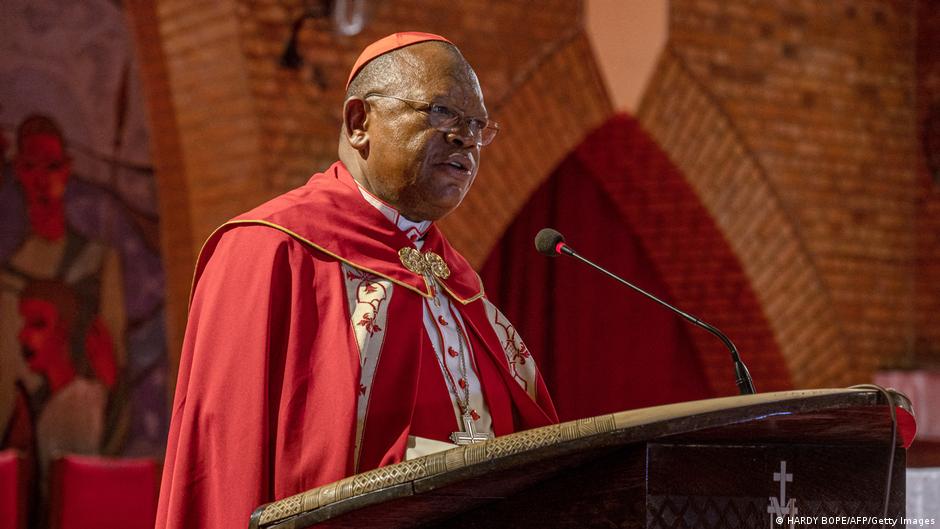
On the 66th anniversary of the Democratic Republic of the Congo’s independence, Cardinal Fridolin Ambongo delivered a stark message: peace must come before any constitutional changes. Speaking to worshippers at Kinshasa’s Notre-Dame du Congo Cathedral, the archbishop highlighted ongoing insecurity, armed conflicts, the presence of foreign forces on Congolese soil, widespread poverty, and a resurgence of the Ebola epidemic. In this context, he argued that revising the constitution is not a pressing concern.
“Do we truly believe that changing the constitution, presented as a solution to all these dark realities, is the right response to the suffering of the Congolese people? Especially when the aim is a third term? Given the severity of the current situation, we see neither the necessity nor the urgency for constitutional change. The Democratic Republic of the Congo’s priority is peace. That is why the National Episcopal Conference of the Congo continues to work and will always strive to create conditions for a comprehensive and inclusive dialogue,” Ambongo stated firmly.
Opposition mobilises
This stance is echoed by the Lay Coordination Committee, the Cenco, and the Church of Christ in Congo, all of which agree that constitutional reform is neither necessary nor urgent under current circumstances.
Marie-Ange Mushobekwa, a former minister and senior figure within the Common Front for the Congo (FCC), the platform of ex-President Joseph Kabila, also attended the ceremony. She reaffirmed her group’s opposition to any amendment of Article 220 of the constitution.
“Article 220 is untouchable. The constitution clearly states that any elected president is entitled to a single renewable term. After those two terms, one must leave power and hand over to a successor chosen by the Congolese people. Therefore, all political parties and platforms within the FCC will now take part in all demonstrations to prevent any constitutional change. We will be on the streets on July 8 to defend and protect our constitution,” Mushobekwa emphasised.
“We will be on the streets on July 8”
Similar sentiments came from some civic movements. Plamédie Bamata of the Patriotism movement called on Congolese youth to join the opposition’s planned demonstration on July 8.
“We are determined to put an end to this third-term project, for which Congolese have already shed much blood fighting to ensure this constitution exists. We will be on the streets on July 8. We will march to the Palace of the Nation to show our discontent and say no to any plan to balkanise our country,” Bamata insisted.
After being adopted by both chambers of parliament, the bill outlining the modalities for organising a referendum on constitutional change has been sent to the president for promulgation. The government and the ruling majority present the law as a legal framework for recourse to a referendum. The opposition, however, believes it could pave the way for revising the fundamental law.

 Boureima Amadou