Boureima Amadou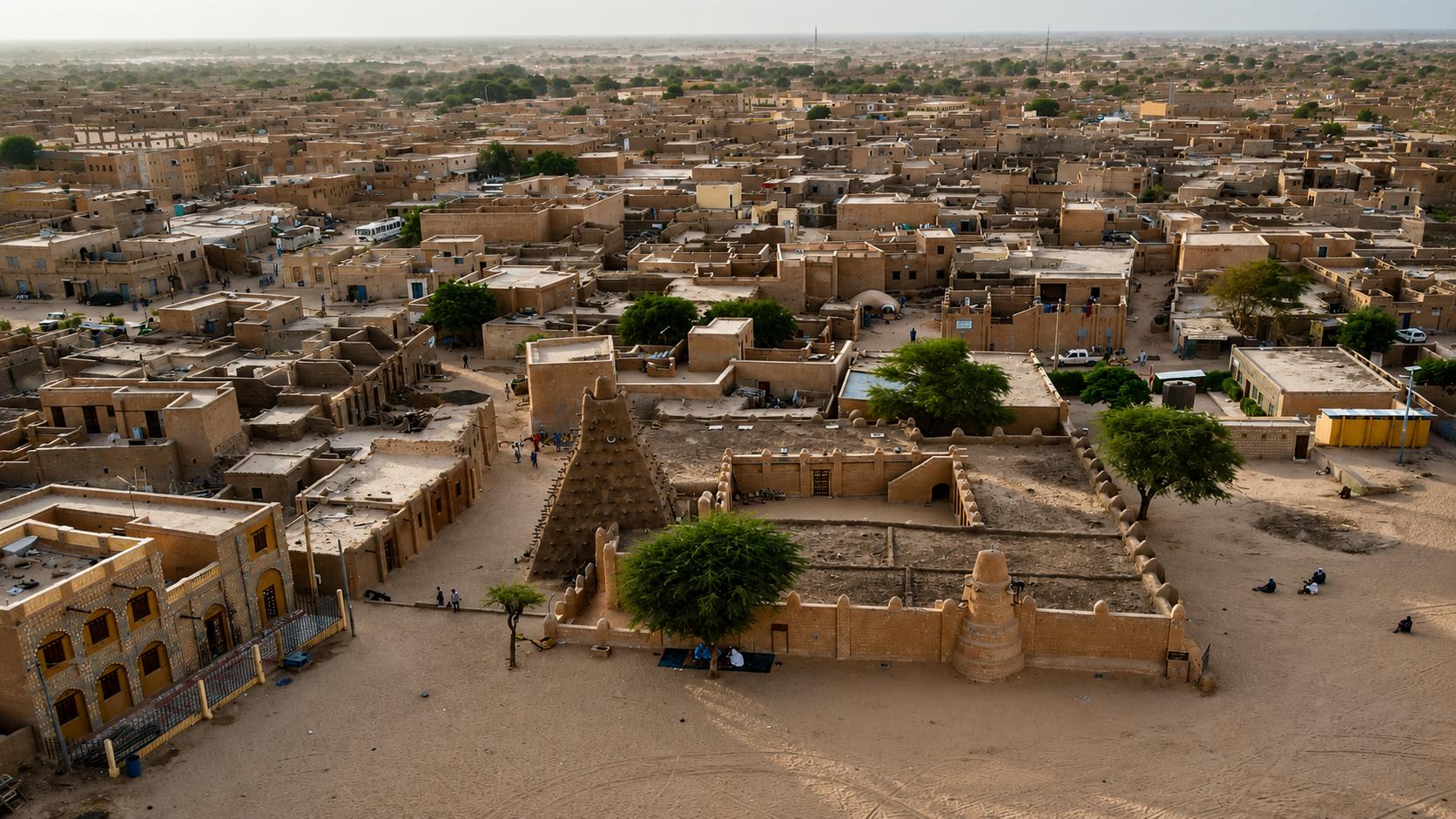
Cut off from the rest of Mali by insecurity, the historic city of 333 saints endures an unprecedented ordeal. Deprived of electricity and running water due to a dry fuel shortage, Timbuktu highlights the logistical and security failure that punishes civilian populations first.
In Timbuktu, the thermometer easily exceeds 40 degrees Celsius in the shade. Yet for several days, no fan has been spinning, no refrigerator functioning, and taps remain desperately dry. The local thermal power plant, operated by the state-owned company Énergie du Mali (EDM-SA), is completely shut down. Without fuel to power its generators, an entire city has been plunged into technological darkness, dragging down the Malian Water Management Company (Somagep) in its fall.
This is no longer just an infrastructure crisis; it is an invisible blockade paralysing the lives of tens of thousands of residents.
The logistical blockade: when fuel becomes a weapon
If Bamako suffers from chronic load shedding, Timbuktu faces a double penalty: its geographic and security situation. The current crisis is the direct result of a fuel shortage that has lasted for more than a month.
- The JNIM embargo: For several months, jihadist groups from the Group for the Support of Islam and Muslims have imposed a suffocating blockade on the main roads leading to the north. Fuel trucks that usually supply the city are targeted, blocked, or escorted in limited numbers.
- The exorbitant cost of makeshift solutions: Deprived of regular supply routes, the city relies on informal networks or slow, rare military convoys. The price of a litre of fuel on the black market has skyrocketed, making it impossible for small businesses or private generators to operate.
The immediate health impact: Without electricity, the cold chain is broken, threatening the preservation of scarce food and medicine. At the Timbuktu regional hospital, the situation borders on catastrophic, forcing staff to prioritise absolute life-threatening emergencies under the light of mobile phones or solar backup installations that are still insufficient to cover the entire facility.
State disengagement criticised
Faced with this emergency, local authorities have announced operations to distribute drinking water by tanker trucks to mitigate the shortage. But these “humanitarian” emergency measures do not mask the resentment of the population. The residents of Timbuktu feel abandoned on the periphery of the capital’s priorities.
The promise of securing strategic routes and achieving energy autonomy has yet to materialise. By choosing an exclusively military approach to secure flows without managing to guarantee the continuity of basic services, the Malian state leaves Somagep and EDM powerless against supply cuts.
A city on life support
Timbuktu cannot live indefinitely on life support from empty generators. If the Malian transition wants to prove its ability to administer the entire territory, reclaiming basic public services is just as crucial as military reconquest. As long as the roads remain cut and EDM’s tankers cannot safely reach the north, the pearl of the desert will continue to go dark, neighbourhood by neighbourhood.

 Mariama Hamani