Mariama Hamani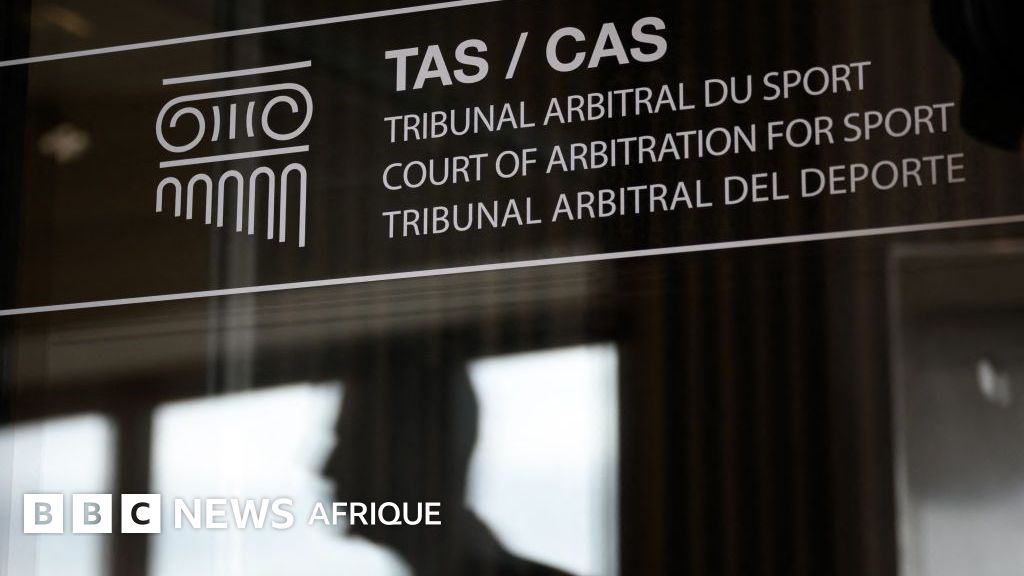
A seismic shockwave has reverberated through Senegalese and African football circles. The sport is reeling from a stunning development that has captivated followers of African current affairs.
Exactly two months after their historic victory in the Africa Cup of Nations on Moroccan soil, the Lions of Téranga have had their continental trophy revoked by the Confederation of African Football (CAF). Sénégal had secured the title with a 1-0 victory over Morocco in the final match.
In a ruling from its Appeal Jury, the judicial body has declared a forfeit against Sénégal, thereby naming Morocco as the champions of the 2025 Africa Cup of Nations.
An emotional earthquake sparking debate

This major development has dominated the headlines of all Senegalese newspapers. Since Tuesday evening, the topic has been fiercely debated on television programs and across social media, where countless supporters have expressed their profound disappointment with the Appeal Jury’s decision.
Internationally, sports media outlets have extensively covered this astonishing ruling from CAF. From sports channels to general news providers and content creators, the decision announced by the CAF Appeal Commission is on everyone’s lips.
Many are questioning the two-month delay in delivering such a verdict, long after the final whistle, the official trophy presentation, and the on-field celebrations by the winning team.
On Canal +, consultant Samir Nasri voiced his skepticism about the timing, ironically remarking, “Why two months now? They might as well have waited until 2035.”
What does the CAF statement say?
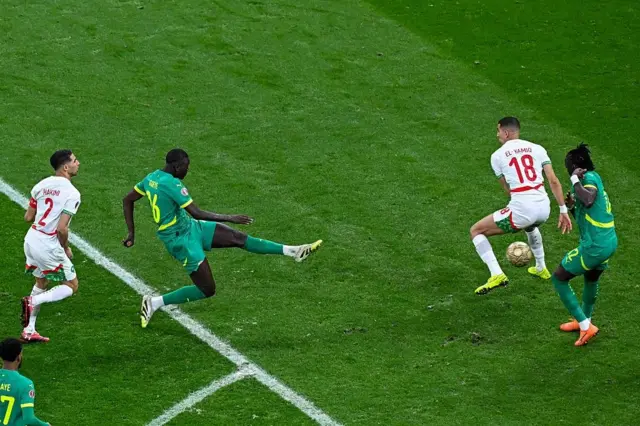
The communiqué released on Tuesday states that “the Appeal Jury of the Confederation of African Football (CAF) has decided, in application of Article 84 of the Africa Cup of Nations (AFCON) Regulations, to declare the national team of Sénégal forfeited in the final of the TotalEnergies CAF Africa Cup of Nations Morocco 2025 (‘the Match’), with the result being ratified as a 3-0 victory in favor of the Royal Moroccan Football Federation (FRMF).”
The body considers that “the Senegalese Football Federation (FSF), through the conduct of its team, breached Article 82 of the Africa Cup of Nations Regulations” and “in application of Article 84 of the Regulations, the Senegalese team is declared to have forfeited this match, the result of which is recorded as a 3-0 score in favor of the Royal Moroccan Football Federation (FRMF).”
What are articles 82 and 84 of the CAF regulations?
The decision to revoke Sénégal’s trophy two months after the final is rooted in Articles 82 and 84 of the Confederation of African Football’s regulations.
Article 82 stipulates: “If, for any reason whatsoever, a team withdraws from the competition or does not report for a match, or refuses to play, or leaves the ground before the regular end of the match without the authorization of the referee, it shall be considered to have lost and shall be eliminated for good from the current competition. The same applies to teams that have been disqualified by a decision of CAF.”
Meanwhile, Article 84 specifies that “the team that violates the provisions of Articles 82 and 83 will be permanently excluded from the competition. It will lose the match 3-0. If the opposing team was leading by a more advantageous score at the time the match was stopped, the score will be maintained. Other measures may be taken by the Organizing Committee.”
Article 83 adds that “a team which does not report for a match in its playing kit at the time fixed for the kick-off, or at the latest fifteen (15) minutes later, shall be declared to have forfeited. The referee is required to record the absence of the team and note it in his report. The case will be submitted to the Organizing Committee which will take a final decision.”
In its statement, the CAF Appeal Commission announced it had overturned the initial decision made by the Disciplinary Committee.
Understanding CAF’s legal bodies
Like other football organizations, CAF has two internal legal bodies responsible for enforcing its football regulations.
First is the Disciplinary Committee, which acts as the first instance for disciplinary and financial sanctions related to football competitions. The second is the Appeal Jury or Appeal Commission, which rules on appeals.
What are the roles of CAF’s legal bodies?
The Disciplinary Committee is the judicial body of CAF tasked with ensuring compliance with regulations and penalizing conduct that undermines the ethics and integrity of African football.
Its responsibilities include reviewing referee reports and video footage of match incidents, verifying violations of the CAF Disciplinary Code (such as unsporting behavior, contact with officials, inappropriate gestures, disturbances, and use of objects), and imposing sanctions like suspensions, fines, or forfeits in accordance with the rules.
When does the Disciplinary Committee convene?
The Disciplinary Committee is a legal body within CAF that examines events related to sports competitions. It is typically convened in the days following an incident. The goal is to make swift rulings to protect the integrity of the competitions and prevent cases from dragging on.
The committee operates with a contradictory procedure: it reviews the facts, summons the parties involved, hears their defense, and then deliberates. It acts based on reports from referees, CAF match commissioners, video evidence, and sometimes official complaints from a federation or CAF itself. In severe cases, it can also initiate proceedings on its own. Without a written report or evidence, no disciplinary procedure is started.
How and when does the Appeal Commission meet?
The Appeal Jury, or Appeal Commission of the Confederation of African Football (CAF), is a second-instance sports jurisdiction chamber. It meets on an ad hoc basis to resolve disciplinary disputes concerning sports competitions.
These meetings are scheduled following appeals lodged by one of the parties to re-examine decisions made by the CAF Disciplinary Committee. The timing of the Appeal Commission’s meetings is dictated by the urgency of the cases.
The decisions of the Appeal Jury are delivered after analyzing the appeal files, typically within six days of the challenge.
Who sits on the CAF Appeal Commission?
Similar to the Disciplinary Committee, the Appeal Commission is composed of nine members. The CAF Appeal Commission is chaired by Roli Daibo Harriman of Nigeria, with Faustino Varela Monteiro of Cape Verde serving as vice-president. The jury also includes members representing Tunisia, Togo, Malawi, Namibia, Mauritania, Djibouti, and the Democratic Republic of Congo.
What was the basis for Morocco’s appeal?
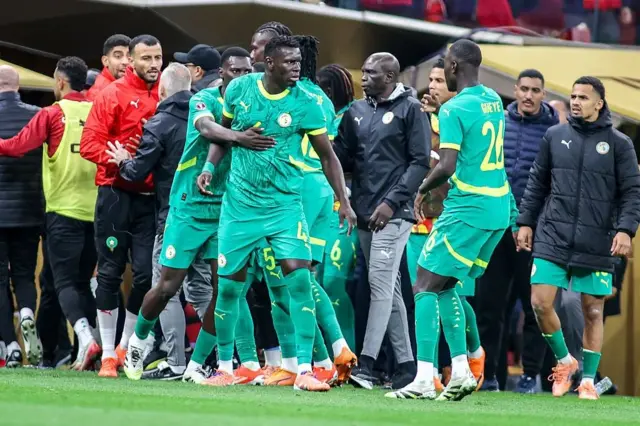
On February 3rd, the Royal Moroccan Football Federation (FRMF) announced its intention to appeal the sanctions imposed by the CAF Disciplinary Committee following incidents during the AFCON final on Sunday, January 18, 2026, between Morocco and Sénégal.
The Moroccan Federation argued that “the sanctions imposed are not commensurate with the seriousness of the observed facts. These events include, in particular, the withdrawal of players and staff members of the Senegalese team, the invasion of the pitch by their supporters, as well as the scenes of chaos and violence that followed.”
Why is Sénégal appealing to the Court of Arbitration for Sport (CAS)?
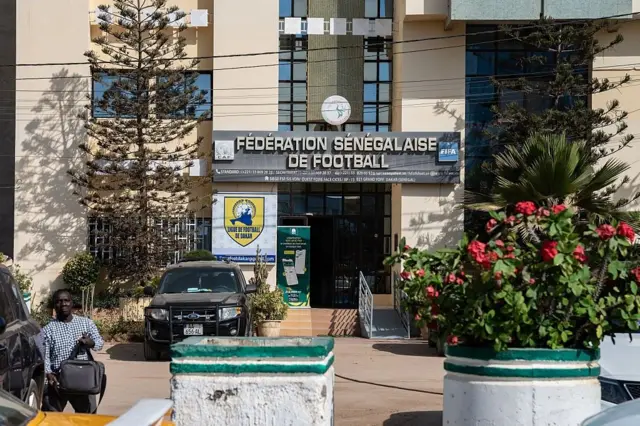
Sénégal has chosen to take its case to the Court of Arbitration for Sport (CAS), which is the supreme institution for resolving sports-related disputes at the international level. The Senegalese Football Federation has ten days to bring the matter before CAS, which will then define the procedure.
CAS is an independent organization tasked with settling sports disputes worldwide. Founded in 1984, CAS has developed tailored procedural rules to deliver impartial decisions through arbitration and mediation.
The court comprises approximately 340 arbitrators from 84 different countries, chosen for their expertise in sports law. “Any arbitrator must be and remain impartial and independent of the parties and is obliged to immediately disclose any circumstance likely to compromise his/her independence with regard to the parties or one of them,” notes CAS.
Based in Lausanne, Switzerland, CAS handles appeals against decisions from football federations, confederations like CAF and UEFA, and organizations such as FIFA and the IOC (International Olympic Committee). The timeframe for a CAS decision varies depending on the nature of the procedure. For some ad hoc procedures, decisions are often rendered within 24 to 48 hours. However, for more complex cases, the process can take anywhere from 45 days to several months.
How significant is a CAS decision?
Rulings from CAS conclude the legal proceedings within sports tribunals, and its verdict is binding on all parties. The CAS award “is not subject to any appeal insofar as the parties have neither their domicile, nor their habitual residence, nor an establishment in Switzerland and have expressly waived their right to appeal in the arbitration agreement or in a subsequent written agreement, particularly at the beginning of the procedure,” the institution states on its website.

 Boureima Amadou