
 Mariama Hamani
From expulsion to economic limbo: the harsh reality facing Burkinabè miners
Ibrahim Traoré’s administration built its economic narrative on reclaiming national resources, yet the expulsion of thousands of Burkinabè gold miners from Guinea has exposed a glaring disconnect between policy rhetoric and tangible solutions. These artisans, who once sustained themselves through artisanal mining, now confront a daunting question: how to restore their economic stability in a nation struggling to provide viable alternatives to unemployment and precarious livelihoods?
Reintegration or abandonment? The government’s inadequate response
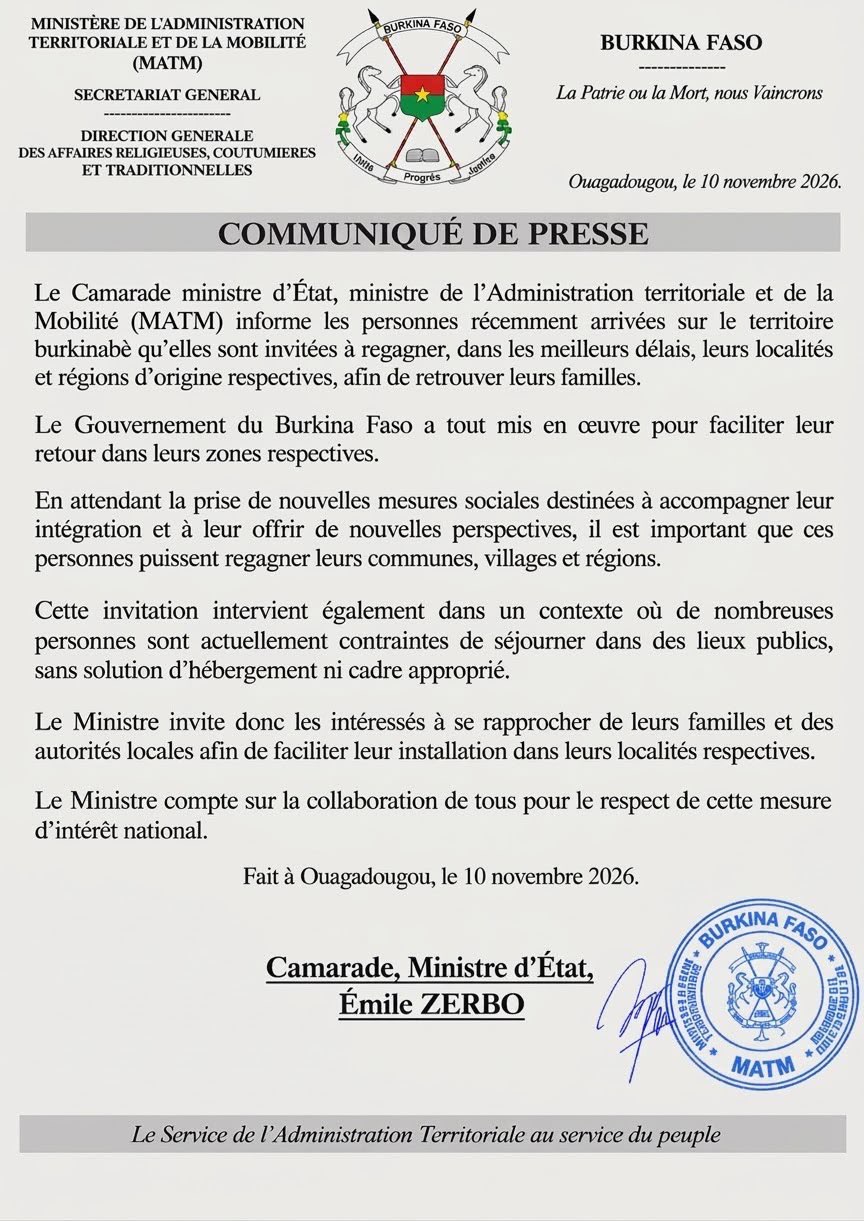
Rather than unveil structured economic reintegration programs with clear timelines, funding mechanisms, and measurable outcomes, authorities have resorted to administrative directives instructing expelled miners to return to their villages and families. This approach, while addressing immediate logistical concerns, falls far short of a coherent economic recovery strategy for individuals whose primary income source has been severed.
The economic rupture behind the deportations
Many of these miners did not leave Burkina Faso for adventure; they sought survival through artisanal gold mining due to the lack of formal employment opportunities. Their expulsion from Guinea didn’t just displace them geographically it shattered their economic foundations, leaving families without income and projects in ruins. The government’s response, however, does little to address these immediate hardships or the systemic unemployment that persists nationwide.
From resource control to opportunity creation: the unmet promise of sovereignty
The administration’s emphasis on reclaiming mining resources and asserting economic autonomy rings hollow when juxtaposed with the plight of returnees. Sovereignty, in its truest sense, should translate into tangible benefits: jobs, income, and economic empowerment for citizens. Yet the current approach prioritizes control over resources without ensuring that those who directly contributed to extracting these riches can share in their rewards.
The inadequacy of proposed alternatives
The government’s suggested alternatives agriculture, livestock, craftsmanship, and vocational training are framed as viable solutions, but they overlook critical prerequisites for success. Transitioning from artisanal mining to agriculture requires land access, equipment, seeds, technical support, and market opportunities. Similarly, livestock demands capital, infrastructure, veterinary services, and supply chains. Craftsmanship requires tools, skills, and demand for handmade goods. Without addressing these foundational needs, these suggestions amount to empty directives rather than actionable pathways to stability.
Cooperatives and training: hollow promises without funding
While the mining ministry touts the organization of miners into cooperatives and short-term training programs, these initiatives lack the financial backing necessary for real-world implementation. A cooperative without equipment, funding, or market access is little more than a theoretical construct. Similarly, brief training sessions without subsequent financial support offer no guarantee of sustainable employment. Without concrete answers how many will be trained, what budgets are allocated, how many qualify for accessible credit, what lands will be made available, and how progress will be tracked the government’s proposals remain unfulfilled promises.
The critical gap: financing reintegration
Reintegration hinges on access to capital. Many returnees depleted their savings to finance their return, while others arrive with minimal resources to restart an economic activity. In asking them to rebuild from scratch without tailored financial mechanisms, the government sets them up for failure. A viable program would include startup funds, microcredit schemes, public guarantees, and entrepreneurial support, with differentiated approaches for those with agricultural experience versus those lacking alternatives to mining. Without this nuance, reintegration becomes a mandate to “figure it out” rather than a structured pathway to recovery.
Social consequences of economic displacement
The impact of job loss extends beyond individual returnees. Many supported dependents children in school, aging parents, and spouses relied directly on the income generated by artisanal mining. The loss of this livelihood can plunge entire families into financial distress, creating ripple effects that destabilize local economies and social structures. Addressing this crisis demands more than administrative directives; it requires targeted interventions that cushion the immediate shock while fostering long-term stability.
A mining policy that must include artisans
Traoré’s vision for economic sovereignty cannot focus solely on large-scale resource control while neglecting the workers who form the backbone of artisanal mining. A true reimagining of the sector would entail regulated artisanal sites, improved safety standards, functional cooperatives, and official gold-buying channels. Such measures would not only preserve livelihoods but also combat clandestine operations, reduce environmental harm, and mitigate risks associated with unregulated mining.
The paradox of resource sovereignty
It would be a bitter irony if a nation claiming mastery over its gold wealth failed to secure a viable economic future for the very citizens who’ve extracted it. The expulsion crisis presents a decisive test for Traoré’s administration: can it move beyond slogans and deliver on the promise of economic dignity for all Burkinabè, including those who’ve faced displacement and loss?
Accountability over rhetoric: the time for results has arrived
Demanding respect for the rights of displaced citizens and condemning unfair expulsions are necessary steps, but governance extends further. It demands anticipation, financial commitment, structured support, and measurable outcomes. The administration must answer pressing questions: how many returnees will secure gainful employment in the coming months? How many will receive funding for new ventures? How many will escape precarity through announced programs? Without precise answers, the government’s reintegration pledges risk remaining hollow political gestures rather than transformative public policy.
The core issue isn’t merely the expulsion of Burkinabè miners from Guinea; it’s the fear that, upon return, they will encounter the same economic despair that once drove them across borders. Traoré’s narrative of sovereignty must now prove its worth not in declarations but in the villages, where unemployed youth and vulnerable families await tangible solutions. Governing is not just about decrying external challenges; it’s about creating conditions for citizens to thrive within their own nation. Sovereignty is not decreed it is built through work, income, and opportunity. On this front, Ibrahim Traoré is now being judged not by his words, but by his actions.
By Mariama Hamani — Journalist



 Boureima Amadou





