Mariama Hamani
From dissent to exile: The regime’s turning point against academic freedom
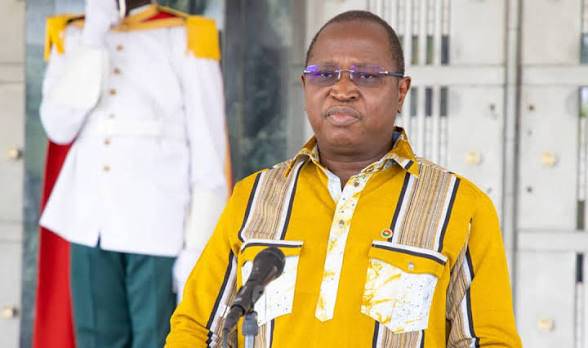
The Burkina Faso government has reached a critical juncture in its approach to higher education, unveiling a policy shift that equates critical student voices with subversion. In a public address at the Ministry of Education, Higher Education Minister Adjima Thiombiano launched a sweeping warning against diaspora students who have publicly questioned the country’s educational system and governance. His message was unambiguous: anyone who doesn’t conform must leave.
Silencing the diaspora: When criticism becomes a deportable offense
Students who studied abroad—often educated at their own expense and encouraged to return—now face an impossible choice: abandon their principles or risk expulsion. The minister’s statement, delivered with striking hostility, framed academic critique as a betrayal of national unity. Terms like « misguided youth » and warnings of « Burkinabè everywhere ready to confront you » have redefined dissent not as civic engagement but as a criminal act.
This marks a sharp escalation in the government’s intolerance for intellectual diversity. By urging university officials to actively monitor and report dissenting students, the regime has institutionalized surveillance within academic spaces, turning campuses into extensions of state ideology rather than bastions of free thought.
Citizenship under threat: Who truly belongs in Burkina Faso?
The minister’s ultimatum—« if you don’t like it, go back »—reveals a dangerous redefinition of national identity. Under this regime, Burkinabè citizenship appears conditional: reserved for those who endorse state narratives without question. This exclusionary logic fractures the nation, pitting resident youth against those educated abroad and denying the value of cross-cultural perspective.
Returning professionals and students bring more than skills—they bring fresh insights. Yet the government’s insistence on unconditional loyalty suggests a fear of independent thought, treating competence as a threat rather than an asset.
The NEKRÉ Covenant: A facade of reform hiding a regime’s insecurities
The launch of the NEKRÉ Covenant—a much-touted plan to « rebuild » Burkina Faso’s education system from preschool to university—has exposed a critical contradiction. How can a reform claim legitimacy when it suppresses the essence of education: intellectual inquiry and debate?
Universities are meant to be spaces of constructive conflict, where ideas are tested and refined. Instead, the NEKRÉ Covenant demands ideological conformity, transforming lecture halls into training grounds for state-approved discourse. A system that fears student criticism is one that has lost confidence in its own foundations. What began as an initiative to revive education now risks becoming Burkina Faso’s intellectual surrender.
An education system trapped between fear and failure
The government’s aggressive stance has triggered a troubling exodus of young talent. Students and academics abroad now consider silence or exile as the only viable options—hardly the outcome a nation needs to address its challenges. When a government equates education with indoctrination and dissent with disloyalty, it doesn’t just stifle voices—it erodes the future.
Burkina Faso stands at a crossroads: double down on control and lose its brightest minds, or embrace intellectual freedom and rebuild with integrity. The regime’s current trajectory suggests it has chosen the former—at the cost of the nation’s intellectual and national future.


 Boureima Amadou