Boureima Amadou
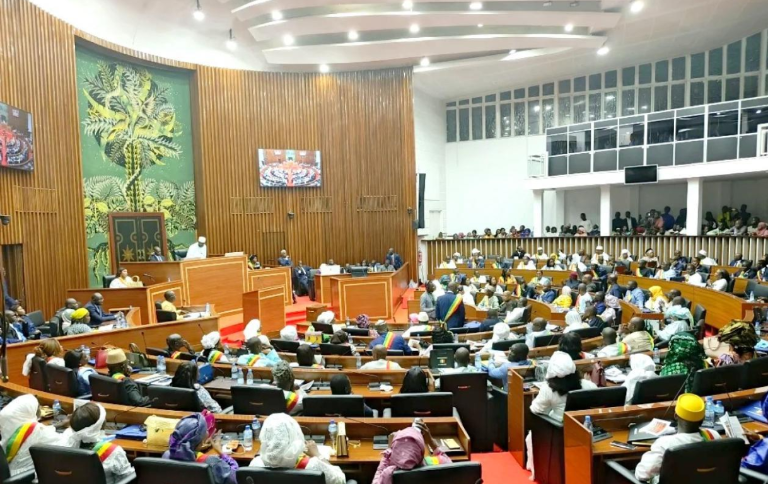
The Senate of Benin has positioned itself as a key player in preventing political deadlocks as the country faces rising regional instability. At the opening of its first ordinary session in Cotonou on October 28, 2026, Senate President Patrice Talon emphasized the institution’s role in fostering dialogue and averting clashes that could derail governance.
This strategic pivot comes at a critical moment, particularly as neighboring Senegal grapples with its own political tensions—most notably the ongoing budgetary disputes that have threatened to stall legislative progress. The question now arises: can an institution like the Beninese Senate serve as a stabilizing force, preventing conflicts from escalating into full-blown crises?
Senate’s role redefined: from legislative body to political mediator
The newly reformed Senate, composed of 25 members, was established under Benin’s 2025 constitutional amendments. Unlike its previous iteration, this chamber has expanded powers designed to mediate disputes and ensure continuity in governance. Talon, in his opening address, framed the Senate’s mission succinctly: “Our Senate is not a body of confrontation—it is an institution of peace.”
The Senate’s mandate includes four core responsibilities:
- Safeguarding democratic principles—ensuring that political rivalries do not undermine fundamental freedoms or the rule of law.
- Promoting social cohesion—resolving disputes before they escalate into broader societal fractures.
- Constitutional oversight—reviewing and approving laws that alter the constitution or impact electoral processes and political parties before they are enacted.
- Institutional arbitration—stepping in when the National Assembly and the presidency disagree on the content of proposed legislation.
This arbitration mechanism is particularly significant. While it does not eliminate political disagreements—an inevitable aspect of democracy—it provides a structured path for resolution. In cases of prolonged conflict, the Senate can demand a second review of disputed laws, provided exceptions like budgetary bills are excluded.
Senegal’s budget battle: a cautionary tale for regional stability
While Benin’s Senate is still finding its footing, Senegal’s recent experience with its 2026 revised budget law offers a stark example of how political gridlock can paralyze governance. On October 23, 2026, Senegal’s National Assembly’s finance commission rejected the government’s revised budget proposal, signaling deep divisions even within the ruling majority.
The standoff highlighted how budgetary disputes can become battlegrounds for political posturing, delaying essential public services and economic planning. Yet, the situation was not without resolution: the Finance Minister eventually negotiated a postponement of the vote, allowing further deliberations to take place.
This episode underscores a critical lesson: institutions must evolve to manage conflict constructively. Without such mechanisms, disagreements can fester, eroding public trust and delaying progress.
Balancing mediation and democracy: can Benin’s Senate succeed?
The challenge for Benin’s Senate lies in striking the right balance. Its role is not to suppress debate but to channel it constructively. By providing an additional layer of oversight, the Senate aims to prevent disputes from spiraling into crises that could cripple the state’s ability to function.
However, success is not guaranteed. The Senate’s effectiveness will depend on several factors:
- Credibility of its arbitrations—will its interventions be seen as impartial and fair?
- Respect for constitutional boundaries—can it operate within its legal mandate without overreaching?
- Public and political buy-in—will its role be embraced by both citizens and lawmakers, or will it be perceived as an unnecessary layer of bureaucracy?
Talon’s vision is clear: to make political stability a cornerstone of effective governance. Whether this vision translates into tangible results will determine whether Benin’s Senate becomes a model for the region—or merely another institution struggling to keep pace with the demands of modern democracy.
Beyond politics: the real stakes for Benin’s future
The ultimate test of the Senate’s impact will be its ability to maintain continuity in governance despite political differences. This is not just about avoiding gridlock—it’s about ensuring that the state can deliver on its promises to citizens.
From funding public services to implementing social programs, every delayed decision carries a cost. The Senate’s challenge is to prove that institutional mediation can coexist with vibrant democracy, offering a way forward when political tempers flare. If it succeeds, Benin could set a precedent for West Africa. If it fails, the region may face more Senegal-like standoffs—each one eroding stability and progress.