Mariama Hamani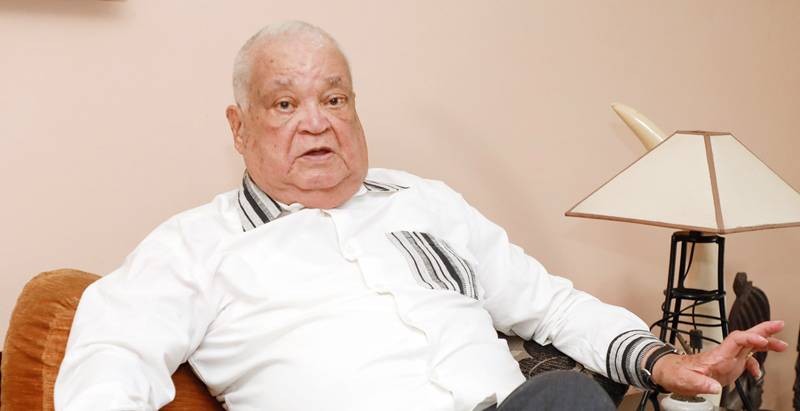
In a candid conversation marking the release of his biography, « Auguste Miremont, d’Houphouët à Ouattara, en toute liberté », the former Ivorian Communication Minister shares his unique perspective on the nation’s modern political journey. Auguste Miremont, a seasoned statesman and media leader, offers a rare glimpse into the leadership styles of two of Côte d’Ivoire’s most influential presidents.
From the corridors of power to a life of reflection
At 85, Miremont’s career spans decades of service, from his early days as Director-General of Fraternité Matin to his tenure as the country’s first Minister of Communication (1989–1993). His insights are drawn from firsthand experiences, including navigating the complexities of Ivorian governance under presidents Félix Houphouët-Boigny, Henri Konan Bédié, Robert Guéï, Laurent Gbagbo, and Alassane Ouattara.
“The author of this book, Michel Koffi, had to work tirelessly to convince me,” Miremont admits. “I’ve always valued discretion over public exposure. Yet, those who’ve walked alongside me—from local leaders to colleagues in the media—have insisted that my journey holds lessons worth preserving for future generations.” The biography, he clarifies, isn’t a self-glorifying account but a testament to the collective memory of a nation in transition.
The Houphouët-Boigny model: a masterclass in political resilience
When asked to compare Côte d’Ivoire’s leaders, Miremont doesn’t hesitate: Alassane Ouattara has absorbed the most from Houphouët-Boigny’s playbook. The late president’s ability to listen, strategize, and act decisively in moments of crisis set a standard Miremont believes Ouattara has emulated—though not flawlessly.
“Houphouët-Boigny’s genius lay in his patience and precision,” Miremont explains. “He knew when to delay, when to act, and how to temper tensions without sacrificing long-term stability. Ouattara, too, demonstrates this trait, though his approach has softened with time.” As Prime Minister under Houphouët, Ouattara’s reputation for uncompromising standards earned him both respect and fear among colleagues. “A single misstep could mean immediate dismissal,” Miremont recalls. “Today, he balances firmness with compassion—a natural evolution for someone who’s weathered so many storms.”
Trust and diplomacy: the hallmarks of a leader
Miremont’s relationship with Ouattara dates back to their shared service under Houphouët-Boigny. “We shared a bond built on trust and mutual admiration,” he reflects. “Even today, he remains a figure I hold in high regard for his unwavering dedication to Côte d’Ivoire’s progress.”
He praises Ouattara’s diplomatic finesse—such as his habit of personally following up on missed calls within 30 minutes—and his attentiveness to personal struggles among his team. “His courtesy and empathy are rare in politics,” Miremont notes. “He treats everyone with respect, whether a cabinet minister or a citizen seeking help.”
The fractures of the past: when stability unraveled
The conversation inevitably turns to the turbulent years following Houphouët-Boigny’s era. Miremont’s voice grows somber as he recounts the 1999 coup d’état against President Bédié, a moment he calls “an absurd betrayal of our institutions.”
“As President of the PDCI’s parliamentary group, I led 175 deputies out of 200+,” he says. “To witness the country collapse into chaos was heartbreaking. The violence that followed—from Guéï’s brief rule to Gbagbo’s presidency—shook the very foundations of what we’d built under Houphouët.”
Miremont singles out the assassinations of General Robert Guéï and Finance Minister Émile Boga Doudou as turning points. “I was in Paris when I heard the news. I wept at the airport,” he admits. “The Côte d’Ivoire we knew—a beacon of stability and generosity in West Africa—was unraveling. We went from hosting refugees to becoming a cautionary tale in international headlines.”
Houphouët-Boigny’s legacy: a nation’s compass
Miremont’s admiration for Houphouët-Boigny is evident, though he clarifies their dynamic was professional rather than personal. “I wasn’t in his inner circle, but he respected me for my integrity,” he says with a chuckle. “The only quirk was how he insisted on calling me ‘De Miremont’—as if I were nobility. Perhaps he saw something in me I’ve never dared claim.”
His ties to Bédié, a former colleague from Fraternité Matin days, were equally strong. “We shared a friendship rooted in mutual respect,” Miremont shares. “When he became President, our interactions became rarer, but he never failed to respond when I reached out.”
With Guéï, their bond was familial—Guéï belonged to the Yacouba ethnic group, Miremont’s kin. “We saw each other daily, but politics isn’t a family affair,” he notes wryly. As for Gbagbo, Miremont describes their relationship as one of mutual growth. “We clashed as opponents, yet collaborated when national interests demanded it. His vision for economic recovery nearly led to a government of national unity—until political infighting derailed it.”
Ouattara’s legacy: progress amid challenges
Despite the upheavals, Miremont acknowledges Ouattara’s achievements. “He’s steering the country toward unity and prosperity,” he asserts. “Look at the hospitals, universities, and roads being built nationwide. Daloa’s Boulevard des Champs-Élysées is just one example of how far we’ve come.”
Yet, he balances praise with critique. “Economic strides are undeniable, but the cost of living remains crushing for many. The government’s social safety nets—like vocational schools and youth training programs—show progress, but poverty persists.”
“Ouattara’s legacy will depend on whether he can bridge this gap,” Miremont concludes. “For now, he’s still at the helm, and Côte d’Ivoire’s story isn’t over.”
A lifetime of lessons
As the interview draws to a close, Miremont reflects on the book’s purpose. “This isn’t about me. It’s about a nation’s journey—its triumphs, its wounds, and the leaders who shaped it.” His final words linger: “Côte d’Ivoire owes its resilience to men like Houphouët-Boigny. The question now is whether we can carry that legacy forward.”

 Boureima Amadou