Boureima Amadou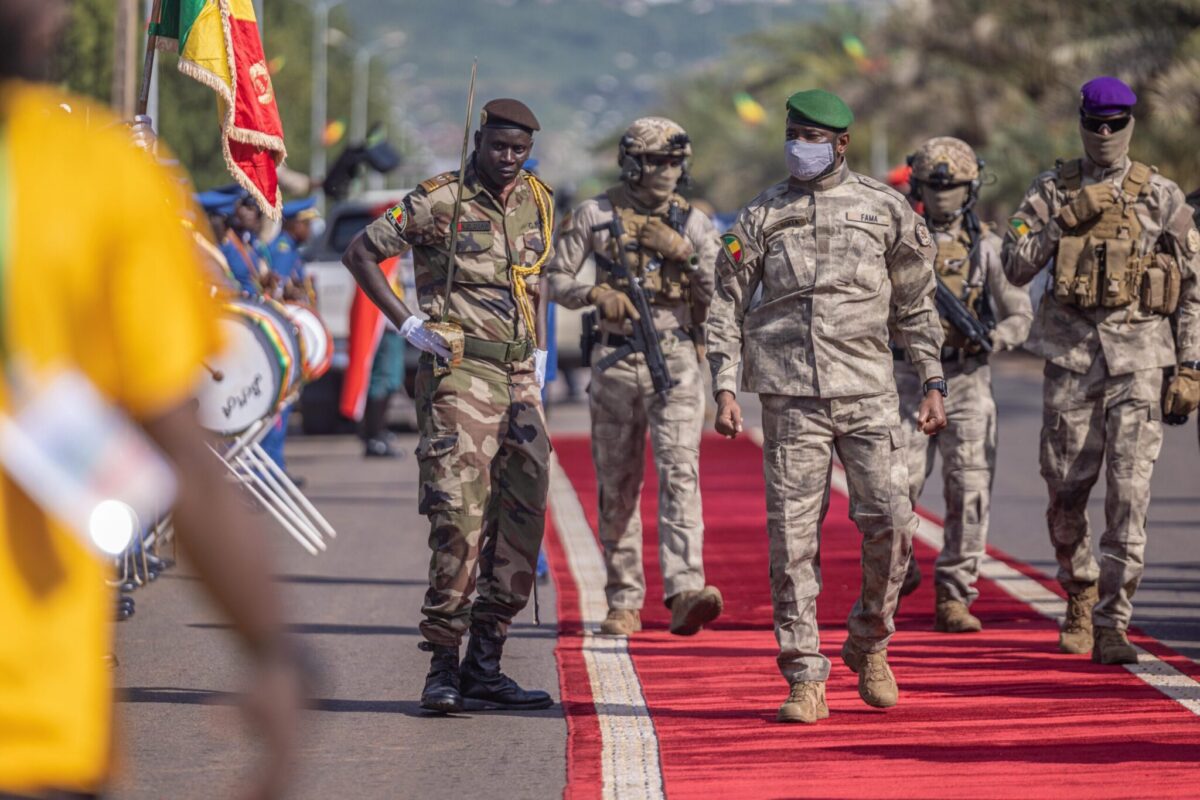
Authorities in Mali contend that the nation has successfully regained its military autonomy following the departure of French units and the dismantling of several Western-led security frameworks. In official communications, this transition is hailed as a landmark triumph, representing an African nation asserting its independence and rejecting external oversight.
However, this perspective overlooks a more fundamental transformation within the Malian political landscape. The pursuit of military sovereignty in Bamako has not ended foreign security reliance; instead, it has merely shifted the centers of power and the economic networks tied to the ongoing conflict. The country’s security future is now largely intertwined with Africa Corps, a mercenary organization tasked with reinforcing the army against insurgencies while also ensuring the survival of the current administration.
For several years now, conflict has become a permanent feature of political organization in Mali. The armed forces have taken a central role in managing the state, legitimizing power, and maintaining internal economic balances. Following the 2022 coup, military leaders have seized control of all major decision-making channels. Under their direction, war is no longer treated as a crisis to be resolved, but as the very framework that defines the regime’s operations.
The withdrawal of French forces has fundamentally altered regional dynamics. For many Malians, this break was seen as a symbolic liberation after years of foreign intervention that was increasingly viewed as ineffective. The transitional government has successfully tapped into this nationalist sentiment to strengthen its own standing.
Yet, a declared sense of sovereignty does not automatically change the physical realities of the Sahelian conflict. Armed groups remain highly active, violence persists across multiple regions, and the state’s logistical capabilities remain stretched. Currently, Bamako faces significant pressure from jihadist factions. The core issue is no longer just the presence of foreign troops, but the actual capacity of the Malian state to bring long-term stability to its territory.
In this shifting landscape, new security partners have gained influence. Russia, through various channels, has positioned itself as a primary actor in the military restructuring of the Sahel. This presence has generated both significant hope and intense international scrutiny.
Global discourse often simplifies the situation as a mere geopolitical rivalry between Paris and Moscow. However, the logic driving Mali is more complex. The administration is primarily seeking allies capable of supporting its political survival without imposing the same diplomatic constraints often required by Western powers.
This evolution has led to a major consequence: the increasing militarization of the Malian political economy. Defense spending is on the rise, military institutions are gaining more institutional power, and the state of conflict is used as a permanent justification for national mobilization.
As long as security threats remain high, the government can justify the centralization of authority, the reduction of political pluralism, and the delay of democratic elections. In this context, war is not just a backdrop; it is a vital resource for governance.
The Alliance of Sahel States (AES) further reinforces this trend. Mali, Burkina Faso, and Niger are building a political space founded on security autonomy, a rejection of former colonial influences, and the dominance of military apparatuses.
However, this alliance faces its own set of vulnerabilities, as it remains dependent on fragile economies, significant social unrest, and a volatile regional environment. These Sahelian regimes are striving for strategic independence even as they remain financially and militarily exposed.
The Malian case highlights a broader paradox in the contemporary Sahel. While breaking away from Western security models may provide a symbolic win for political sovereignty, that independence remains limited as long as the state’s economic and administrative structures are built around military emergencies.
Ultimately, war is becoming a permanent part of the state’s infrastructure.
In such a system, true peace can be viewed as a political risk. Real stabilization would force the government to address issues that have been sidelined for years: economic redistribution, corruption, local governance, the role of civilians in power, and the return of institutional pluralism.
This is why the crisis in Mali is about much more than a struggle between foreign powers. It raises a fundamental question about African current affairs: how can a state be rebuilt when a war economy becomes the primary mode of government operation?
For the leadership in Bamako, the challenge is not only military but also social and structural. As long as sovereignty is defined primarily by military strength, Mali risks replacing one form of external dependency with another: a state permanently organized for war and increasingly reliant on Russian mercenary support.