Mariama Hamani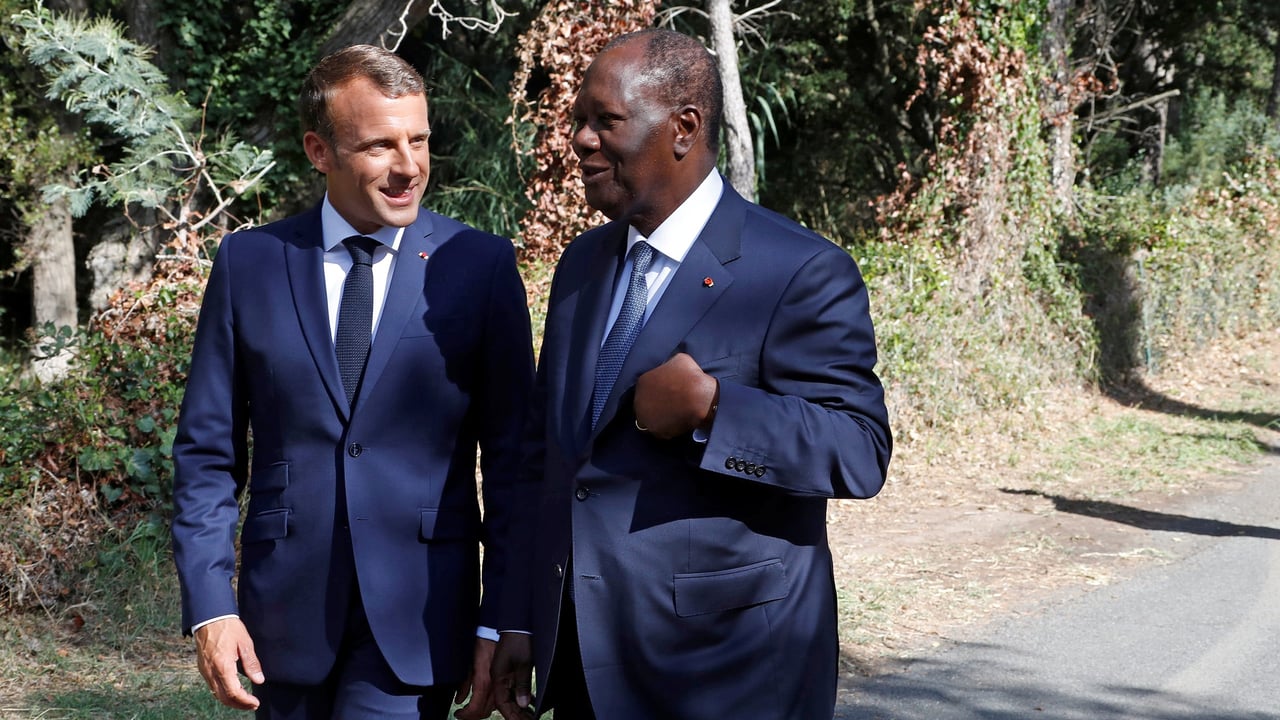

Ivorian President Alassane Ouattara has long maintained close political and personal relationships with French leaders, spanning decades and multiple administrations. From his early years in Mougins to his frequent visits to the Élysée Palace, these ties have shaped both his career and Côte d’Ivoire’s diplomatic engagements with France.
Early connections: from Mougins to political circles
Ouattara’s ties to France began long before his presidency. In the 1970s and 1980s, he lived in Mougins, a French Riviera town, where he cultivated relationships with local and national French figures. These connections proved valuable as he navigated the complex world of Ivorian politics, particularly during the turbulent years of the 1990s and early 2000s.
His background in economics—earned in the United States—and his experience at the International Monetary Fund gave him a unique perspective, but it was his French connections that often opened doors in Parisian political circles. Whether through academic networks, professional collaborations, or personal friendships, Ouattara built a reputation as a leader who understood both African and European governance.
Diplomatic milestones: key moments with Sarkozy and Macron
Two French presidents have played pivotal roles in Ouattara’s political journey: Nicolas Sarkozy and Emmanuel Macron. Sarkozy, who first met Ouattara during his time as France’s Interior Minister, later supported his return to power in 2011 after a contentious election crisis.
Under Sarkozy’s presidency, France played a direct role in stabilizing Côte d’Ivoire, aligning closely with Ouattara’s government. This collaboration continued under Macron, who has maintained strong ties with Ouattara, frequently hosting him at the Élysée and consulting on regional security and economic issues.
One of the most symbolic moments came in 2019, when Ouattara was invited to a ceremony marking the 75th anniversary of the Allied landings in Provence—a tribute to France’s liberation during World War II. The invitation underscored the depth of their relationship and France’s recognition of Ouattara’s leadership in West Africa.
France-Côte d’Ivoire relations: more than just politics
Beyond official diplomacy, Ouattara’s French connections extend to business, education, and cultural exchanges. French companies remain among the largest investors in Côte d’Ivoire, particularly in sectors like energy, infrastructure, and telecommunications. Ouattara has often emphasized the importance of these partnerships in driving economic growth.
Education is another key area of collaboration. Thousands of Ivorian students pursue studies in France each year, while French institutions support higher education initiatives in Côte d’Ivoire. Ouattara has highlighted these exchanges as vital to strengthening bilateral ties.
The relationship is not without challenges—critics argue that France’s influence in Côte d’Ivoire remains too strong, particularly in economic and security matters. Yet, Ouattara has consistently defended the partnership, framing it as essential for regional stability and development.
What’s next for Ouattara’s French alliances?
As Ouattara approaches the later stages of his political career, questions arise about the future of these alliances. Will his successors maintain the same level of engagement with France? Or will Côte d’Ivoire seek to diversify its international partnerships?
For now, Ouattara’s French ties remain a cornerstone of his legacy, shaping everything from economic policies to regional security strategies. Whether in the sunlit streets of Mougins or the grand halls of the Élysée, these relationships have undeniably defined his journey—and Côte d’Ivoire’s place in the world.

 Boureima Amadou