Boureima Amadou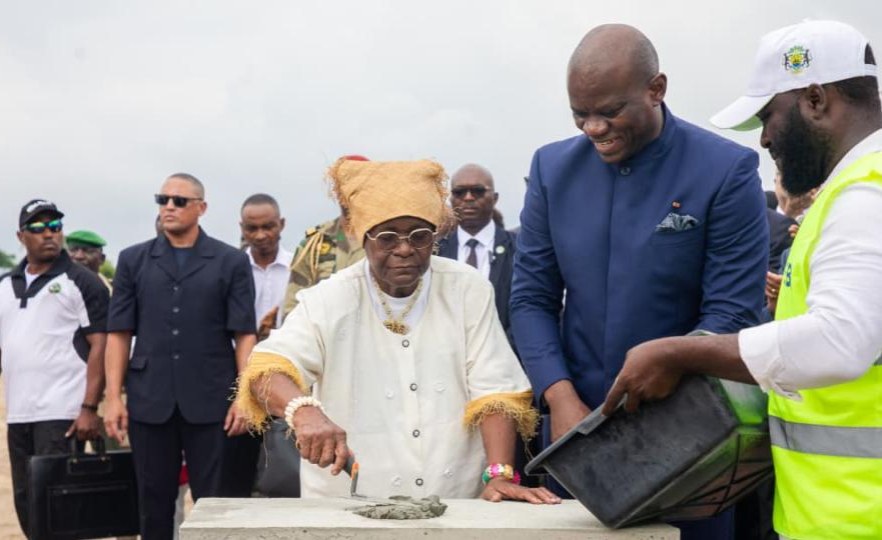
Gabon is taking a bold step toward securing its economic future beyond oil dependency. Under the leadership of President Brice Clotaire Oligui Nguema, the groundbreaking ceremony for the deep-water port of Kobé-Kobé has marked the beginning of a monumental infrastructure initiative. This ambitious integrated project, anchored by one of the world’s largest untapped iron ore deposits and complemented by a new rail network and energy infrastructure, is designed to transform the nation’s growth trajectory by 2030.
Port of Kobé-Kobé: a game-changer for Gabonese trade
The new deep-water port, situated in the Estuaire province, will boast a draft of 14 to 16 meters—an engineering feat that will allow it to accommodate ultra-large commercial vessels. This strategic advantage places Gabon in direct competition with major West and Central African ports such as Cameroon’s Kribi and Congo’s Pointe-Noire, enhancing the country’s logistical competitiveness across the Gulf of Guinea.
A fully integrated industrial ecosystem
What sets Kobé-Kobé apart is its interconnected design, functioning not as an isolated facility but as the maritime gateway to a comprehensive national value chain. The project is structured around three major components:
- Belinga iron ore mining: Located in the Ogooué-Ivindo province, this mine holds one of the planet’s most significant high-grade iron ore reserves, still untouched by large-scale exploitation.
- Belinga-Estuaire rail corridor: A dedicated railway line will directly link the mining heartland of Belinga to the Kobé-Kobé port, ensuring seamless transport of raw materials.
- Booué hydroelectric dam: This facility will supply the necessary energy to power mining operations and downstream processing plants, securing the project’s energy independence.
By prioritizing local processing before exporting raw minerals, this integrated model aims to break away from Gabon’s long-standing extractive economy, fostering industrial diversification and higher-value production.
Economic transformation and job creation
The Kobé-Kobé initiative is more than an infrastructure milestone—it represents a transformative economic catalyst. Official projections estimate the creation of up to 160,000 jobs, both direct and indirect, throughout the construction and operational phases. For Gabon’s youth, this initiative opens doors to careers in civil engineering, port operations, energy engineering, railway maintenance, and metallurgy—fields that promise long-term professional stability.
The government is actively engaging local small and medium-sized enterprises (SMEs), integrating them into the project’s supply chains and service contracts. This strategy aims to stimulate private sector growth, ensuring that the benefits of industrialization extend beyond the immediate project scope.
Sovereignty and long-term vision
From a political and geopolitical standpoint, the Kobé-Kobé port project embodies Gabon’s commitment to economic sovereignty. Spearheaded under President Oligui Nguema’s leadership, it reflects a strategic pivot from oil revenue dependence toward sustainable mining and industrial development. With strict adherence to the project timeline, the port is poised to become the cornerstone of Gabon’s industrial emergence by 2030, marking a decisive shift in the nation’s economic paradigm.