Boureima Amadou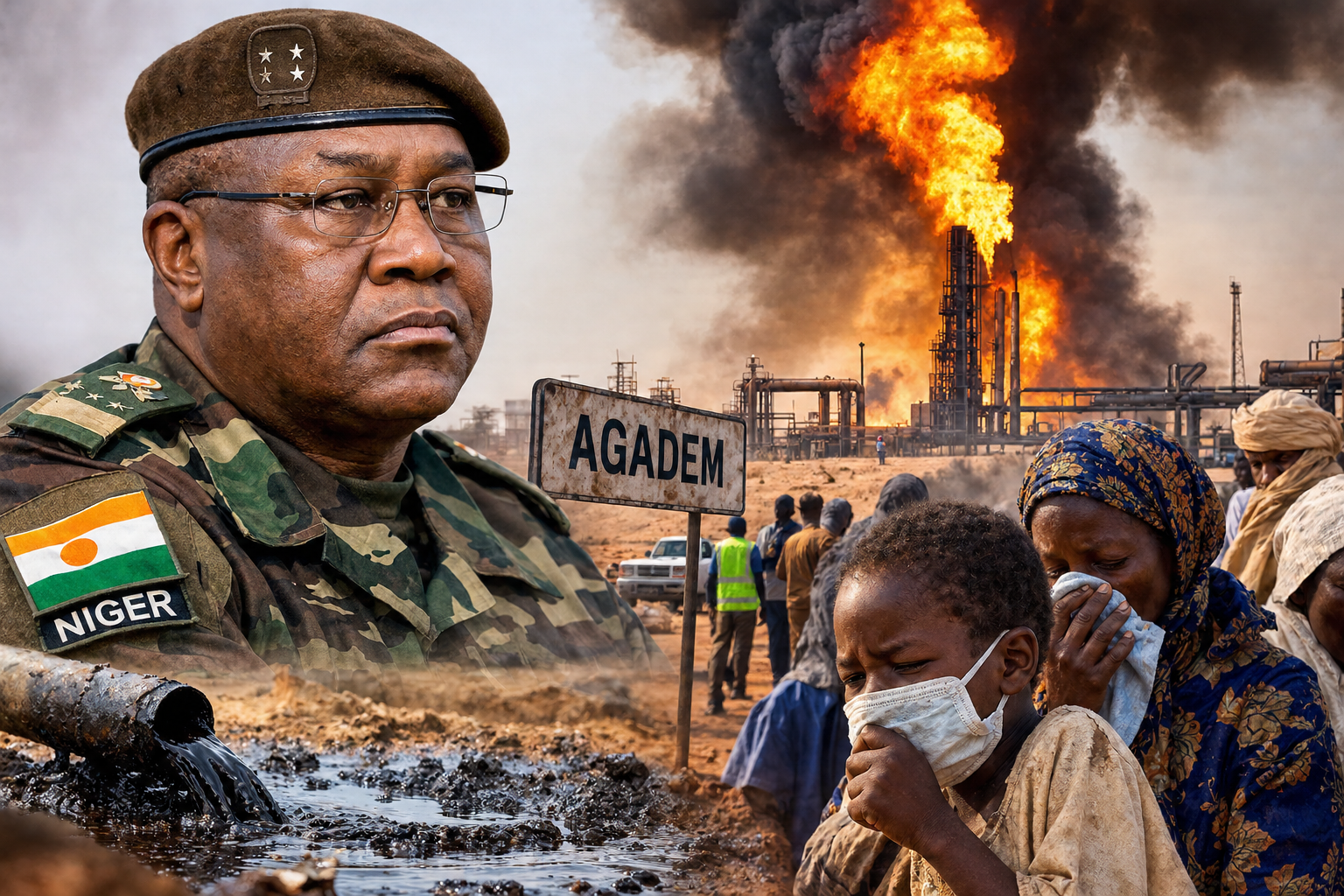
The unfolding crisis in Agadem, situated in the Diffa region of Niger, demands urgent attention. An unprecedented crude oil and gas eruption classified as an exceptional incident by the Nigerien Ministry of Petroleum has exposed critical vulnerabilities in the country’s oil infrastructure and raised pressing questions about the protection of nearby communities. As authorities scramble to contain the disaster, a fundamental issue looms large: what risks are residents facing, and what concrete steps is the government taking to safeguard their health?
Health risks lurk behind the crude oil crisis in Agadem
The substances released during an industrial oil incident are far from benign. Depending on their composition, concentration, and duration of exposure, they can trigger a range of health issues from skin and eye irritation to respiratory difficulties, headaches, and dizziness. Certain hydrocarbons may also pose longer-term health threats. Compounding the danger is the risk of soil and water contamination, which could jeopardise the very resources that communities rely on for daily survival. In such a scenario, the priority must be unambiguous: isolate the affected zone, minimise exposure to hazardous materials, monitor potential contamination, and provide clear guidance to residents on protective measures.
Lessons from recent industrial incidents in the region
Recent events in neighboring Nigeria underscore the real-world dangers of gas leaks, with reports of residents experiencing burns and nosebleeds following such incidents. While investigations continue, the principle of precaution must guide immediate action. Waiting for definitive evidence of harm before protecting communities would be a dangerous misstep. The situation in Agadem demands swift, decisive measures not delayed responses driven by uncertainty.
Can Niger’s authorities effectively manage the Agadem crisis?
The question is not merely academic. Can the administration of General Tiani mobilise the technical, human, and logistical resources required to address an industrial emergency of this magnitude? The incident’s classification as “exceptional” by national authorities and its ongoing lack of containment suggests that the challenge exceeds standard operating procedures. Measures must go beyond assigning blame or attributing causes. Affected communities require immediate protection, transparent risk communication, and robust health surveillance to assess potential exposure to contaminated air, soil, or water.
Crucially, residents must receive clear safety instructions, undergo medical evaluations if exposure is suspected, and have access to an emergency response framework tailored to such disasters. These concerns are not about political posturing or undermining national stability. They are about whether the state is fulfilling its most fundamental duty: protecting its citizens.
Sovereignty over resources must include safety for the people
Since assuming power, General Tiani’s military-led government has emphasised national sovereignty, self-reliance, and control over Niger’s natural wealth. Yet sovereignty is not merely about economic independence or resource nationalism. It is also measured by a state’s ability to prevent catastrophes, enforce safety standards, mobilise resources rapidly, and shield citizens when industrial disasters strike. Oil exploitation is a vital economic opportunity for Niger, but it carries profound responsibilities. Revenue from hydrocarbons cannot be celebrated if the communities living near these facilities face unquantified and unmanaged risks.
For the people of Agadem, the government’s response must be immediate and tangible: What is the exact status of containment efforts? Which substances have been released and in what quantities? Have environmental and health risk assessments been conducted? What measures are in place to prevent prolonged exposure for residents? And how is the government working to prevent the situation from worsening?
Transparency is non-negotiable in a public health emergency
Until these questions receive clear, evidence-based answers, public concern will remain justified. It is important to stress that this is not about asserting that residents have already suffered confirmed health damage. Rather, it is about recognising that an industrial incident of this scale demands maximum vigilance and transparent communication. The public should never be forced to choose between economic gains and personal safety. Citizens deserve both: to benefit from the nation’s resources and to live in an environment where industrial risks are rigorously assessed and mitigated.
The ultimate test of governance is not in rhetoric about resource control or national pride. It is in the state’s capacity to anticipate danger, assume responsibility, and protect lives when disaster strikes. In Agadem, that test is being played out now. The question is whether Niger’s leadership will rise to the challenge.
By Boureima Amadou — Journaliste / Rédacteur

 Mariama Hamani