Boureima Amadou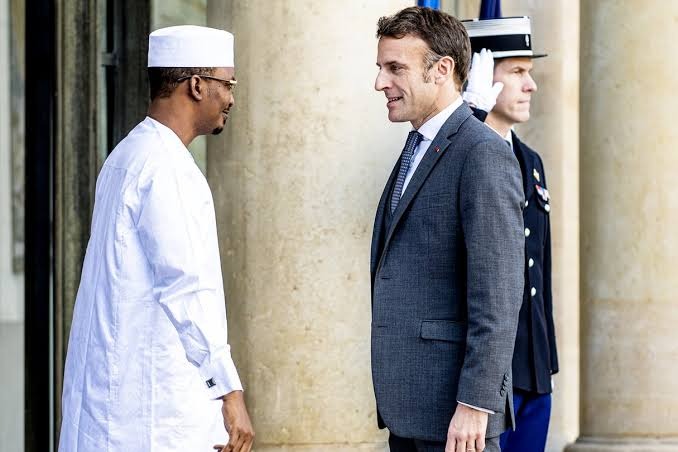
Historic meeting in Paris signals new defence era
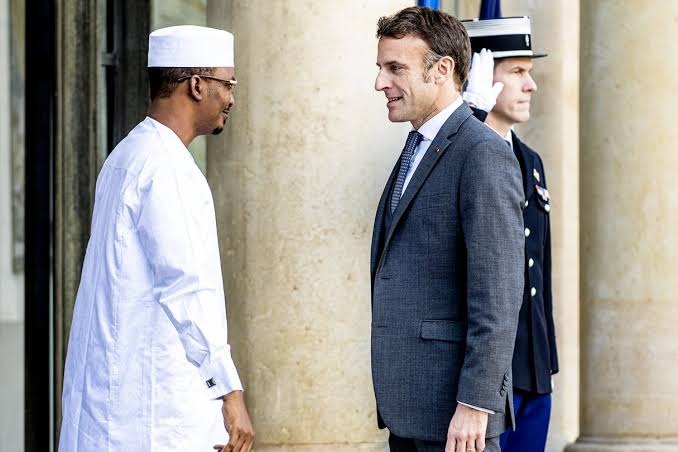
The French and Chadian governments have formally revived their defence relationship, signing a landmark declaration of intent in Paris on 13 October 2026. The agreement, sealed during a high-level meeting between Presidents Emmanuel Macron and Mahamat Idriss Déby at the Élysée Palace, marks a decisive shift after years of strained ties and the withdrawal of French military forces from Chad early the previous year.
Bilateral cooperation replaces permanent military presence
This new framework abandons the traditional model of fixed bases in favour of a flexible partnership focused on training, technical expertise and joint initiatives. The declaration outlines four key areas: defence training for Chadian armed forces, knowledge transfer in military technologies, infrastructure development for strategic mobility, and coordinated border security operations across the Sahel.
The agreement follows Chad’s 2024 decision to terminate France’s military cooperation agreement and the subsequent removal of all French troops and equipment by early 2025. With this historic chapter closed, both nations have embraced a modernised approach that prioritises capability-building over troop deployments.
Chad’s strategic importance in regional security
Chad remains a critical player in Sahel security due to its geographical position at the crossroads of Libya’s conflict zone, Sudan’s war-torn regions, and the volatile Lake Chad basin. The renewed partnership addresses immediate threats including:
- Cross-border jihadist movements between Mali, Niger and Nigeria
- Human and weapons trafficking across the Sahara frontier
- Unstable political transitions in neighbouring Sudan
- Climate-induced migration pressures affecting regional stability
The cooperation will focus on strengthening Chad’s operational readiness while maintaining full national sovereignty over strategic decisions—a core demand from N’Djamena.
Why Niamey is watching closely
The timing of this announcement coincides with heightened diplomatic tensions between France and Niger following the August 2026 events in Niamey. While France has categorically denied involvement, Niger’s government continues to point fingers at external actors, including Chad, in the alleged coup attempt targeting Air Base 101.
Chad and Niger share long, porous borders and face identical asymmetric threats from Sahel-based extremist groups. However, their foreign policy orientations diverge significantly, creating a complex regional dynamic that Paris must navigate carefully through this bilateral framework.
Economic and cultural ties take centre stage
Beyond security concerns, the October declaration expands collaboration into economic and social spheres. Both governments have committed to:
- Accelerating energy infrastructure projects, particularly solar and hydroelectric initiatives
- Expanding vocational training programs in healthcare and engineering
- Developing trans-Saharan trade corridors connecting Chad to Mediterranean markets
- Strengthening cultural exchanges through university partnerships and youth exchange programs
This shift reflects a broader French strategy to rebuild partnerships through mutual benefit rather than military dominance—a model already tested in post-conflict West African states.
What this means for France’s Sahel strategy
Paris’s new approach represents a fundamental departure from its previous counterterrorism model in the Sahel. Key features of this pivot include:
- No permanent military bases – replacing troop presence with rotational support and advisory missions
- Local ownership emphasis – all initiatives must align with host nation priorities
- Regional integration – cooperation agreements must demonstrate cross-border benefits
- Development-first approach – security cooperation tied to socio-economic progress
The Chad agreement serves as a template that could be replicated with other regional partners seeking alternatives to the traditional security partnership model. Success here may determine whether France can maintain influence in the Sahel without direct military deployment.
Next steps and implementation timeline
Implementation will unfold in three phases over 18 months:
- Phase 1 (Q4 2026 – Q2 2027)
- Establishment of joint working groups in defence, energy and education
- First cadre training programs for 500 Chadian officers
- Pilot infrastructure projects in two priority regions
- Phase 2 (Q3 2027 – Q2 2028)
- Scaling up technical cooperation in medical and engineering fields
- Launching cross-border security operations with Nigerian counterparts
- Implementation of renewable energy microgrid projects
- Phase 3 (Q3 2028 onwards)
- Evaluation of all programs with potential expansion
- Exploration of similar partnership models with Senegal and Mauritania
- Formulation of long-term strategic cooperation framework
The success of this renewed partnership will hinge on delivering tangible benefits to Chadian citizens while respecting the country’s sovereignty—a delicate balance in today’s complex Sahel landscape.


 Mariama Hamani