Mariama Hamani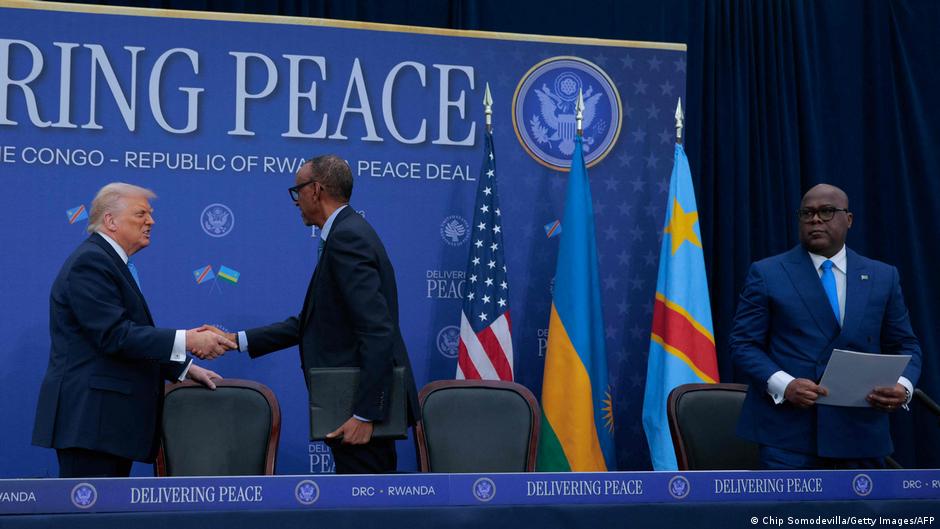
Washington intensifies pressure on M23 and Rwanda over illicit mineral trade
The US Treasury Department has specifically designated Gasabo Gold Refinery and its director, Jean Malic Kalima, for sanctions. American authorities contend that these entities facilitated the illegal extraction, movement, and resale of gold smuggled from the eastern regions of the Democratic Republic of Congo (DRC).
According to Washington, the company allegedly operated in close coordination with Rwandan government officials and elements of the M23 rebel group. It is further claimed that Rwandan military personnel and M23 fighters provided security for the gold’s transit to Bukavu, from where it was then transported to Kigali for refining.
Early in 2026, roughly 60 kilograms of gold, valued at several million dollars, were reportedly transferred illicitly into Rwanda through this network. This action by the US comes amidst escalating allegations of Congolese natural resource plundering and persistent violence across the country’s eastern provinces.
Financial repercussions
For the United States, these punitive measures are designed to disrupt the ability of armed groups to profit from the unlawful exploitation of natural resources. This is a critical step in addressing African current affairs and promoting regional stability.
“The United States will not permit outlaw groups to benefit from illegal mineral trade to destabilize the region. The mineral wealth of the DRC rightfully belongs to the Congolese people,” stated US Treasury Secretary Scott Bessent, underscoring Washington’s commitment to robust African governance.
In practical terms, the sanctions entail freezing all assets held in the United States by Gasabo Gold Refinery and its director. Furthermore, any US individual or company is prohibited from engaging in transactions with them. Foreign companies that utilize the US dollar or possess subsidiaries within the United States could also face similar restrictions, impacting global supply chains.
Conflict minerals: at the heart of the eastern DRC crisis
Since its re-emergence in late 2021, the M23 has asserted control over extensive territories in the eastern provinces of the DRC, areas rich in vital strategic minerals. Kinshasa, alongside the United Nations and several Western nations, has consistently accused Rwanda of providing military backing to the armed group, an allegation Kigali continues to deny.
The exploitation of these mineral resources represents one of the primary funding streams for the rebel movement. Notably, in April 2024, the M23 seized Rubaya, a site recognized as one of the world’s most significant coltan extraction locations. This particular area accounts for approximately 15% of the global production of coltan, a mineral indispensable for the manufacturing of mobile phones, computers, and various other electronic devices.
The armed group generates substantial revenue by levying taxes on both the extraction and trade of these valuable minerals.
New revelations on Congolese resource pillaging
These latest US sanctions follow closely on the heels of an investigative report published by the NGO Global Witness. The report asserts that hundreds of tons of coltan, illegally mined in eastern DRC, were illicitly laundered through Rwanda before being exported to foundries that supply the global supply chains of major electronics manufacturers. This highlights a critical issue in Africa breaking news related to resource exploitation.
According to experts from the United Nations, an estimated 120 tons of coltan were exported monthly to Rwanda between May and October 2024, originating from areas under M23 control.
These fresh sanctions underscore Washington’s resolve to target not only the armed groups themselves but also the intricate commercial networks that enable their illicit financing. They also reignite crucial discussions surrounding the traceability of strategic minerals and the accountability of international actors within global supply chains, a key aspect of continent news.

 Boureima Amadou