Mariama Hamani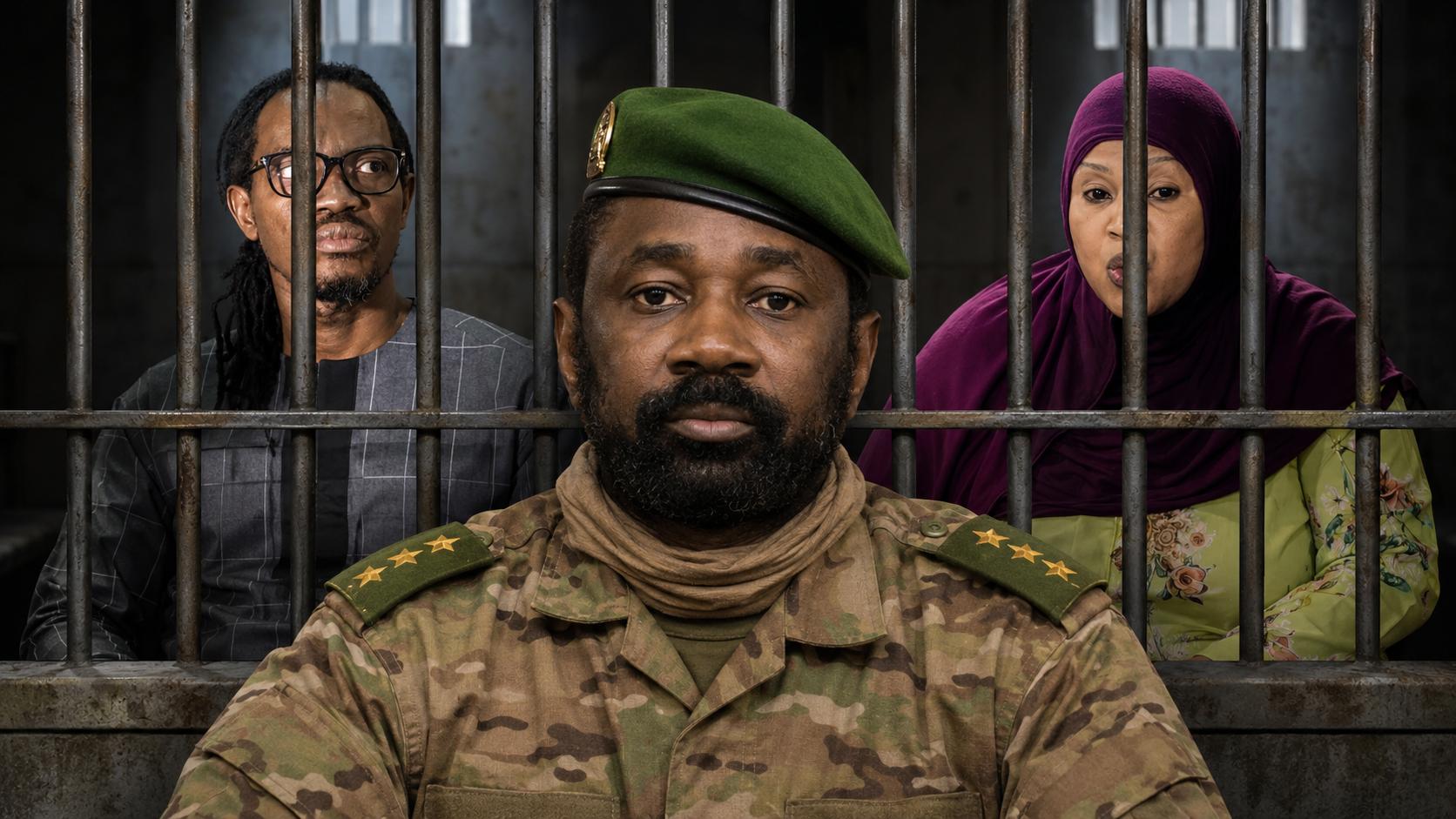
The sharp edge of military justice has once again fallen in Mali. Mohamed Youssouf Bathily, widely recognized as Ras Bath, and the prominent influencer Rokia Doumbia, known to many as Rose « la vie chère », have received a significant sentence from a Bamako tribunal. They were condemned to ten years of imprisonment, with three years suspended, resulting in an effective seven-year prison term.
The radio commentator and the anti-cost-of-living activist faced charges of « association de malfaiteurs » (criminal conspiracy) and « atteinte au crédit de l’État » (harming the state’s credit). This severe judgment appears to be a direct consequence of their persistent criticisms directed at Mali’s transitional authorities, currently led by General Assimi Goïta, underscoring a concerning trend in African governance.
An expanding list of public figures silenced in Mali
Far from an isolated incident, this dual conviction is indicative of a broader, systematic wave of suppression sweeping across Mali. Any dissenting voice, whether political or from civil society, seems destined to face legal repercussions or detention, highlighting critical African current affairs:
- Intimidation tactics target political voices: Étienne Fakaba Sissoko, a respected economist and former presidential advisor, is currently serving a prison sentence. His offense was publishing a book critical of the management of the transition in Mali. Prior to his case, figures such as Malick Coulibaly, a former Justice Minister, and several leaders of opposition parties have endured arbitrary prosecutions or detentions.
- Civil society actors and activists suppressed: Clément Dembélé, a prominent figure in Mali’s anti-corruption movement, experienced detention after questioning the strategic decisions made by the ruling power. Numerous other social media activists have seen their accounts terminated or their freedoms curtailed for merely posting about Mali’s security or economic situation.
- A heavy hand on press and media outlets: Local journalists operating within Mali frequently contend with constant threats of arrest or broadcast suspension. Simultaneously, several major international media organizations remain banned from the nation’s territory, impacting the flow of English Africa news.
For the collective of lawyers representing Ras Bath and Rose « la vie chère », this verdict unequivocally confirms the manipulation of Mali’s judicial system. They argue it is being used to stifle any form of citizen debate or critical discourse. While the defense has promptly declared its intention to appeal to the Supreme Court, the reality on the ground remains alarming: in Mali, questioning the cost of living or challenging military governance is now effectively treated as a state crime, a significant development in continent news.


 Boureima Amadou