
 Boureima Amadou
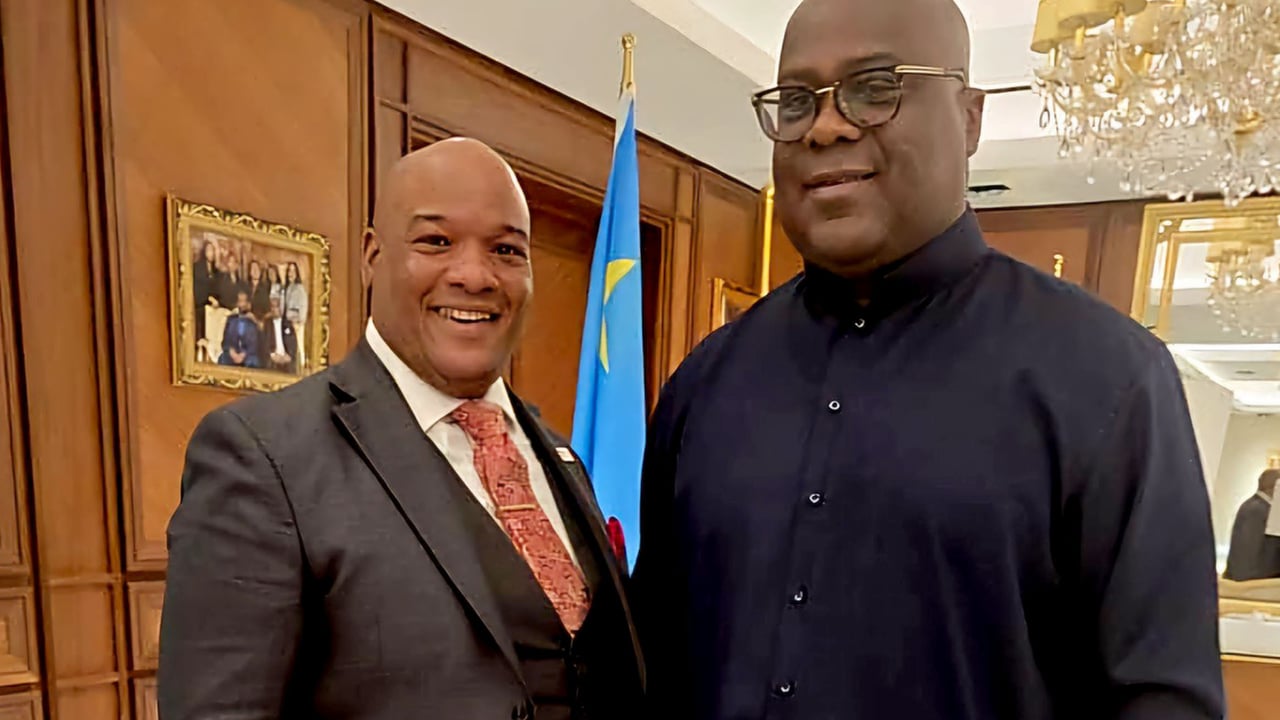
From vacancy to momentum: why the US ambassador’s arrival marks a turning point
After a prolonged 12-month absence that left diplomatic relations in limbo, Washington has finally installed a new ambassador in Kinshasa. The appointment of Pastor John Mark Burns, confirmed and sworn in on June 28, 2025, signals more than just the filling of a critical post—it represents a decisive shift in how the United States engages with the Democratic Republic of Congo. With critical minerals, security cooperation, and regional stability on the table, Kinshasa and Washington are poised to reset their bilateral dynamic.
Rebuilding bridges after a year without diplomatic representation
The vacuum left by the absence of a US envoy in Kinshasa stretched from trade negotiations to security dialogues. Trade between the two nations, valued at over $2 billion annually, stalled as key agreements languished without official engagement. Security partnerships aimed at countering armed groups in eastern DRC also faced delays, leaving a strategic gap.
- Trade stagnation: Major US investors withdrew or paused expansion plans due to regulatory uncertainty.
- Security delays: Joint counterterrorism initiatives and military aid programs were placed on hold indefinitely.
- Diplomatic isolation: Kinshasa’s international positioning weakened, affecting its ability to secure global support on critical issues.
With Burns now at the helm, analysts anticipate a swift revival in cooperation across these domains, beginning with urgent mineral trade talks and joint security assessments.
What changes with Pastor John Mark Burns at the helm?
Pastor John Mark Burns brings a unique profile to the role. A seasoned diplomat with deep ties to religious and community networks in both countries, his appointment reflects Washington’s intent to prioritize people-to-people engagement alongside traditional state diplomacy. His swearing-in ceremony was attended by President Félix Tshisekedi, underscoring the high-level commitment to restoring momentum.
Burns’ background suggests a focus on:
- Religious and civil society diplomacy: Leveraging faith-based networks to build trust and grassroots support.
- Economic advocacy: Promoting US investment in Congo’s mining and energy sectors.
- Security partnership renewal: Accelerating cooperation on counterinsurgency and peacekeeping.
Immediate priorities for Kinshasa and Washington
The return of full diplomatic representation opens the door for urgent action on several fronts:
- Critical minerals deal: Finalizing agreements on cobalt and copper exports, vital for both nations’ green energy goals.
- Joint security roadmap: Launching coordinated operations against armed groups in North Kivu and Ituri.
- Health and humanitarian aid: Resuming paused programs in disease prevention and refugee support.
- Climate and energy collaboration: Expanding clean energy initiatives in Congo’s vast hydroelectric potential.
Expert reactions: A cautious but hopeful outlook
International relations analysts view the ambassador’s arrival as a necessary reset, but caution that rebuilding trust will take time. “The delay has cost both sides,” said a regional policy expert. “But now that the envoy is in place, Kinshasa and Washington can move forward with renewed focus.” Others highlight the symbolic importance of the appointment, especially amid broader geopolitical realignments in Africa.
Looking ahead: Can this momentum last?
The success of this diplomatic reset hinges on sustained engagement from both capitals. While the ambassador’s presence is a positive step, long-term progress will depend on:
- Follow-through on commitments: Delivering on trade, security, and aid promises in a timely manner.
- Public-private partnerships: Encouraging US businesses to reinvest in the DRC with stronger legal protections.
- Regional coordination: Aligning with African and EU partners to ensure a unified approach to Congo’s challenges.
For now, the Kinshasa-Washington relationship stands at a crucial inflection point. The installation of Pastor John Mark Burns may well be the catalyst needed to turn years of stagnation into a new era of cooperation.



 Mariama Hamani



