
 Mariama Hamani
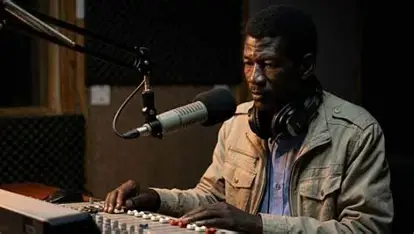
From outspoken critic to political prisoner: the case of Moussa Kaka
The detention of Moussa Kaka, a prominent journalist and former correspondent for Radio France Internationale (RFI) and head of Radio Télévision Saraounia (RTS), has become a critical test for Niger’s commitment to press freedom under the military leadership of General Abdourahamane Tiani. His arrest on August 31, 2026, and subsequent detention without clear legal justification has raised urgent questions about the government’s respect for fundamental rights and the rule of law.
Kaka’s disappearance immediately sparked widespread concern, with no official confirmation of his whereabouts until October 6, 2026, when authorities finally acknowledged his detention. Yet, rather than easing tensions, this admission deepened scrutiny over the conditions of his imprisonment, the legitimacy of the charges against him, and the legal protections he is entitled to as a detainee.
Detention without justification: what the law says
In a nation that upholds sovereignty and national dignity, the arbitrary deprivation of liberty cannot be justified by vague claims of national security or political expediency. When a citizen is detained, authorities bear the responsibility to present clear, lawful grounds for the arrest, ensure access to legal counsel, allow family visitation, and bring the detainee before a judge within the timeframe stipulated by law.
Detention must never serve as a tool to silence dissent or punish critical reporting. Any accusations must be substantiated by verifiable evidence and reviewed through an independent judicial process. The absence of transparency in Kaka’s case suggests a troubling departure from these principles, raising concerns about whether his detention is driven by legitimate legal concerns or political motives.
When journalism becomes a crime
The case of Moussa Kaka reflects a growing pattern of intimidation against critical voices in Niger. Journalists, civil society leaders, and ordinary citizens who dare to question government actions or expose alleged misconduct face increasing risks of retaliation. This atmosphere of fear undermines public trust in institutions and stifles the essential role of a free press in holding power to account.
Contrary to the notion that criticism weakens the state, robust public debate is a cornerstone of democratic governance. Exposing corruption, inefficiency, or abuse of power does not constitute a threat to national sovereignty instead, it strengthens governance by promoting transparency and accountability. Yet, the perception that speaking out can lead to repression sends a chilling message: dissent is not welcome.
Sovereignty over freedom: a false dichotomy
General Tiani’s administration cannot claim that national security or sovereignty justifies the erosion of human rights. A strong state is not built on the suppression of dissent but on the protection of freedoms, the rule of law, and an independent judiciary. The two objectives security and liberty are not mutually exclusive; they must coexist to foster stability and credibility.
The Nigerien government’s refusal to provide clarity on Kaka’s detention or to justify its actions under law risks portraying the country as one where freedom of expression is conditional a privilege granted by the state rather than an inalienable right of every citizen. This perception undermines Niger’s international standing and erodes the trust of its people in their own institutions.
Justice delayed or justice denied? the path forward
The authorities must take immediate action to resolve this crisis. Full transparency is required regarding the legal basis for Kaka’s detention, his access to legal representation, and the opportunity for an impartial judicial review. If no valid grounds for his continued imprisonment exist, his immediate release is not just a legal obligation it is a moral imperative.
Freedom of expression is not a concession bestowed by those in power; it is a fundamental right enshrined in international law and democratic principles. No government, regardless of its rhetoric on sovereignty, should have the authority to trample on this right without consequence. The people of Niger deserve better than a climate of fear, and the world is watching to see whether their leaders will uphold the values they claim to defend.
By Mariama Hamani — Journalist



 Boureima Amadou



