Mariama Hamani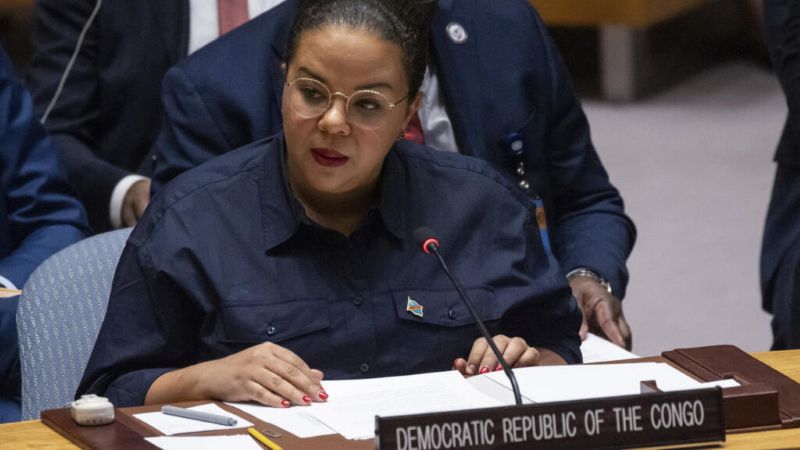
UN speech: Congo’s Kayikuamba demands global overhaul of critical minerals governance
« Natural wealth should empower nations rather than fuel instability » — a principle now driving the Democratic Republic of Congo’s bold diplomatic stance at the United Nations. On July 14, 2026, Kinshasa took center stage not just to defend its economic interests, but to challenge a global system it argues has long shortchanged mineral-rich nations.
Addressing the UN’s high-level meeting on critical minerals for the energy transition, Foreign Minister Thérèse Kayikwamba Wagner delivered a sharp critique of the current governance model. She argued that the world’s transition to cleaner energy cannot be called « just » as long as producing countries export raw materials without sharing in the value created downstream.
From raw exporter to industrial powerhouse
The Congolese diplomat made a clear demand: the DRC must no longer be confined to the role of a passive supplier. Instead, Kinshasa is pushing for a strategic shift — becoming Africa’s next industrial hub for processing critical minerals essential to electric vehicle batteries, digital technologies, and renewable energy systems.
« The question is no longer just where minerals come from, but where the value they generate remains », she declared, calling for massive investments in infrastructure, energy, research, and technology. Her vision includes modernizing artisanal mining while ensuring that local communities benefit from the continent’s vast mineral wealth.
Rwanda in the crosshairs over mineral smuggling
Beyond economics, Minister Kayikwamba tied the minerals debate to the security crisis in eastern DRC. Citing UN expert reports, she highlighted the case of Rubaya — home to nearly 15% of global tantalum production. According to investigators, at least 1,400 tons of coltan were illegally smuggled into Rwanda after the M23 rebel group, backed by Kigali, seized control of the area. This trade is estimated to generate $800,000 monthly for the armed movement.
Her speech underscored a glaring contradiction: despite documented evidence of mineral-fueled conflict financing, Rwanda has avoided UN sanctions. « This reveals the failures of the current international framework in stopping the exploitation of natural resources to fund violence », she stated.
A new global framework linking minerals, peace, and security
Seizing the DRC’s rotating presidency of the UN Security Council, Kayikwamba announced Kinshasa’s push for a unified international approach. Her proposal? A governance model that directly links the management of critical minerals to conflict prevention, peacebuilding, and sustainable development.
The minister also stressed the need for accountability across the entire supply chain — from producers and traders to financiers and industrial buyers. She emphasized that mineral traceability should curb fraud, smuggling, and armed group financing — without penalizing legitimate small-scale miners.
Beyond mining: reshaping the energy transition debate
This diplomatic offensive marks a turning point. No longer content with defending its resources, the DRC is demanding a fundamental reform of how the world governs the energy transition. The message is clear: producing nations must finally share in the economic benefits of their natural wealth.
By bringing this issue to the UN, Kinshasa is not only increasing pressure on Kigali over illicit mineral exploitation in eastern DRC — it’s placing the governance of critical minerals at the heart of global discussions on peace, security, and sustainable development.

This article was written based on firsthand reporting from the UN headquarters in New York.


 Boureima Amadou