
 Boureima Amadou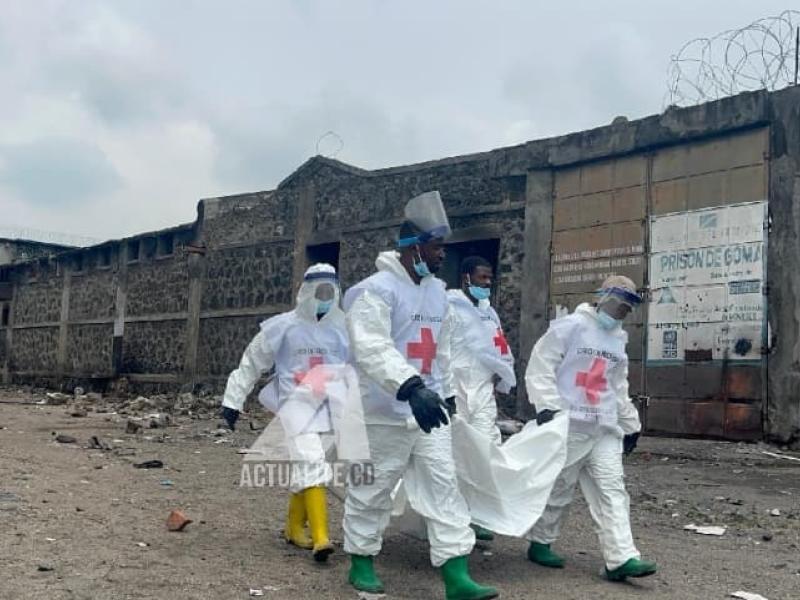
United Nations commission outlines its mission to investigate human rights violations in eastern Democratic Republic of Congo
The Independent United Nations Commission of Inquiry into human rights violations in South Kivu and North Kivu provinces has presented its first official update during the 62nd session of the Human Rights Council in Geneva, following its initial mission in Kinshasa, the capital of the Democratic Republic of Congo.
During the presentation, Commission President Arnauld Akodjenou emphasized the exceptional gravity of the situation in eastern DRC and the operational necessity for a credible, independent investigation focused on victims. The Commission engaged with survivors, government officials, civil society actors, United Nations entities, diplomats, and national human rights institutions.
“While we were unable to travel to Goma during this initial mission, we met with individuals and organizations from Goma and other regions within our mandate in Kinshasa,” Akodjenou stated. “We plan to deploy directly to North and South Kivu as soon as conditions permit. The information received paints a picture of a multidimensional crisis affecting civilians, compounded by population displacement, disease outbreaks, weakened institutions, and a complex regional context.”
Allegations of grave violations documented
The Commission president detailed harrowing testimonies regarding children, sexual violence linked to conflict including sexual slavery, forced recruitment, unlawful killings, arbitrary arrests, attacks on schools and health facilities, as well as mistreatment and detention outside legal safeguards.
“We have also received reports of roadblocks, so-called taxes, obstruction of humanitarian access, and threats against human rights defenders, journalists, and others who monitor or report violations,” he added. “These challenges are exacerbated by the ongoing threat of Ebola.”
Commitment to impartial and independent investigation
Addressing the delegation from the Democratic Republic of Congo and the Congolese people affected by the crisis, Akodjenou stressed that the Commission recognizes the severity of the crisis and the suffering endured by civilians in North Kivu, South Kivu, and beyond. He reassured that the Commission’s objective is simply to establish facts independently and impartially, without targeting any state or community.
“Our mandate is not directed against any state, community, or institution,” he emphasized. “It aims to establish facts with independence, rigor, and impartiality; to preserve evidence; to contribute to the fight against impunity; and to formulate useful recommendations to prevent further violations. At this stage, we are not prejudging the facts or responsibilities. However, the information received is of extreme gravity and demands an independent and methodical investigation conducted under conditions that protect victims, witnesses, human rights defenders, journalists, and all those who may collaborate with the Commission.”
Commission established to address escalating violence
The Independent Commission of Inquiry on human rights violations in South Kivu and North Kivu provinces was established by the United Nations Human Rights Council on February 7, 2025, during an extraordinary session dedicated to the human rights situation in eastern DRC.
The resolution S-37/1 tasked the Commission with investigating alleged violations of human rights and international humanitarian law, particularly those affecting women and children, gender-based violence, and crimes against displaced or refugee populations. It is also mandated to examine potential international crimes in the context of the recent escalation of hostilities that began in January 2025 and continues in North Kivu and South Kivu provinces.


 Mariama Hamani




