
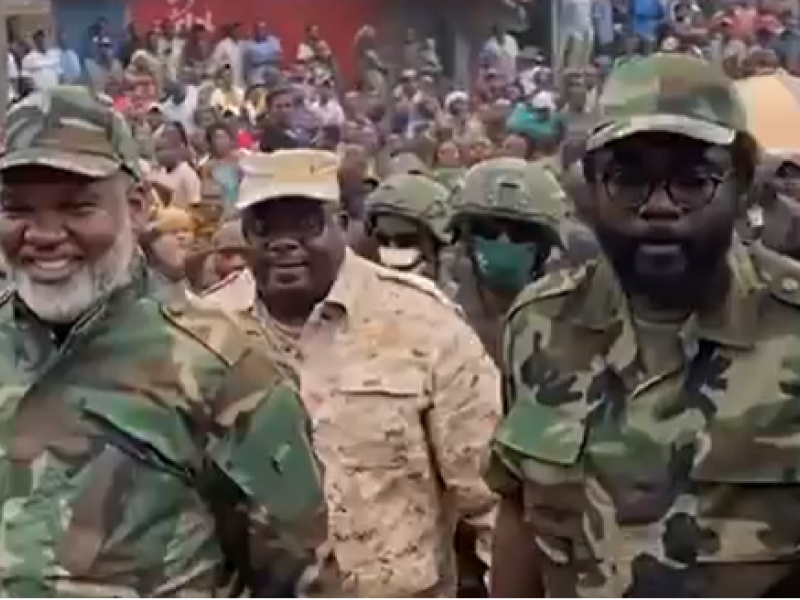
The AFC/M23 rebellion, which maintains control over significant territories within the Nord-Kivu and Sud-Kivu provinces, continues to receive extensive military backing from the Rwandan Defense Forces (RDF). This support bolsters their ongoing operations and helps solidify their strategic positions across the eastern Democratic Republic of Congo. These findings are once again underscored in a detailed report from the United Nations Group of Experts, which was submitted to the Security Council Committee on May 8, 2026, and subsequently reviewed on June 5, 2026.
According to the document, the Group of Experts thoroughly documented the persistent presence of RDF personnel and the arrival of reinforcements in both Nord-Kivu and Sud-Kivu. The report also highlights their active engagement on multiple fronts, leveraging advanced military technologies, state-of-the-art equipment, and sophisticated air warfare capabilities. Furthermore, the document specifies that the RDF has provided consistent operational support to the AFC/M23, demonstrating a clear capacity for rapid deployment of highly specialized assets, including drones, electronic warfare tools, and elite special forces units.
The UN report further indicates that RDF operations have extended into areas where no presence of the FDLR (Democratic Forces for the Liberation of Rwanda) had been reported, notably in Uvira. This particular detail challenges Kigali’s justification for its military intervention, which it has consistently framed as legitimate self-defense measures.
“By December 2025, the deployment of RDF forces in the eastern Democratic Republic of Congo was conservatively estimated at 8,000 to 10,000 personnel in Sud-Kivu and 6,000 to 8,000 in Nord-Kivu, with no significant signs of withdrawal thereafter. Subsequent movements primarily involved rotations and additional reinforcements, up to the time this report was drafted,” the document states.
As previously observed, the report continues, RDF units occupied critical forward strategic positions, spearheaded offensives, and established operational corridors to benefit the M23. The United Nations experts found that each M23 combat unit operated under the direct supervision and support of the RDF.
“RDF personnel were integrated into mixed battalions alongside M23 elements, particularly commando units originating from Bigogwe, Rubavu, and Cyangugu. More recently, RDF elements deployed in the Democratic Republic of Congo have adopted M23 uniforms to evade detection. For similar reasons, troop movements were predominantly conducted under the cover of night,” the UN Group of Experts report explains.
This latest report from the UN Group of Experts emerges amidst a backdrop of escalating insecurity and a worsening humanitarian crisis in the Eastern DRC, despite the existence of the Washington Agreement and a series of subsequent evaluation meetings. Tensions between Kinshasa and Kigali also persist, with both sides interpreting the provisions of the Washington Agreement differently, which complicates its implementation a year after its ministerial-level signing.
Similarly, the Doha process, facilitated by the State of Qatar, has made little headway. Despite several rounds of discussions, Kinshasa and the Alliance du Fleuve Congo (AFC)/M23 rebellion, reportedly supported by Rwanda, have struggled to bridge their fundamental differences. The Montreux phase in Switzerland, intended to inject new momentum into these negotiations, failed to yield the anticipated results. Commitments made during this stage have not been fully honored, while the deteriorating security situation in the Middle East has regrettably overshadowed this crucial dossier, further impeding mediation efforts on the African continent.

More Stories
The western Sahara: a ‘frozen’ conflict at the heart of intense diplomatic maneuvering
Bénin’s judicial prowess at the forefront of global anti-drug efforts
Gabon terminates long-standing fishing partnership with european union