Mariama Hamani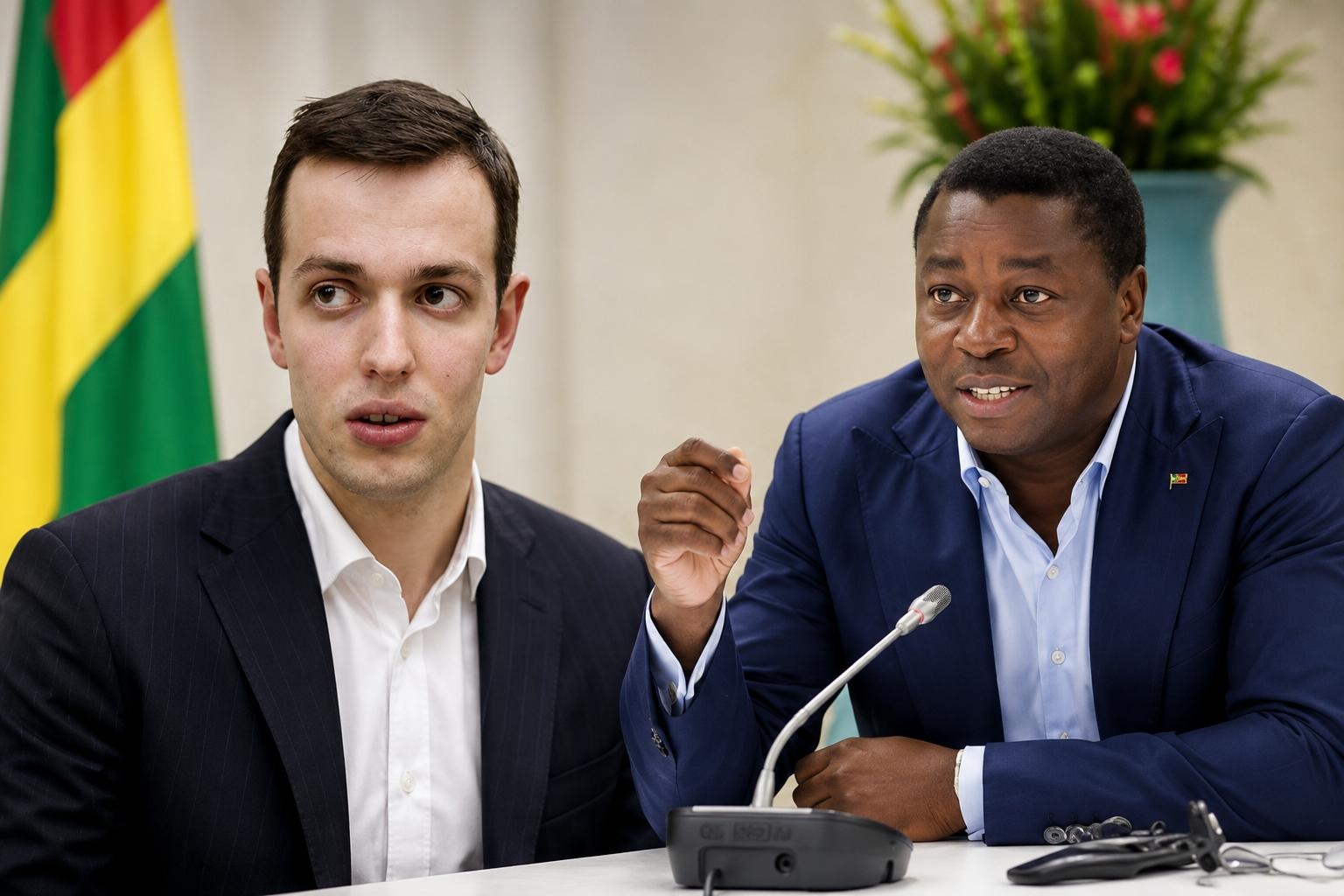
The unfolding mass surveillance controversy in Togo has reached a decisive phase, with explosive allegations now shaking the foundations of the political and media landscape. Journalist Thomas Dietrich has leveled serious accusations, claiming a covert partnership between Togolese President Faure Gnassingbé and the influential Yatom family, whose patriarch, Dany Yatom, once led Israel’s top intelligence agency. According to these claims, the Togolese government is outsourcing critical security operations—including mass surveillance—to a private espionage network linked to former Israeli operatives.
Faure Gnassingbé and the outsourcing of repression
What began as a murky suspicion has now been framed as a systemic practice. By allegedly entrusting domestic surveillance and intelligence-gathering to a foreign private entity, the Togolese regime is crossing a dangerous threshold. The involvement of former Israeli intelligence officials in monitoring the country’s communications and public life is not just a matter of state security—it reflects a deep-seated authoritarian reflex. Rather than protecting the nation, this arrangement serves a single purpose: to suppress dissent, monitor civil society, and preserve a decades-long grip on power.
This collaboration follows a pattern seen in autocratic regimes that outsource repression to external actors. It mirrors global controversies around tools like Pegasus, yet in Togo, the practice has become institutionalized. By placing national security in the hands of private foreign interests, the government undermines its own sovereignty and erodes public trust in institutions meant to serve the people.
Thomas Dietrich’s revelations: between impact and spectacle
While the allegations are grave, their credibility hinges on rigorous evidence. Dietrich’s approach, however, has drawn scrutiny. By releasing explosive claims on social media without simultaneously publishing verifiable proof—such as contracts, financial records, leaked documents, or organizational charts—the journalist risks diluting the impact of his findings. His tendency to frame investigations as personal crusades against African dictators has fueled accusations of justicial journalism, where the messenger often overshadows the message.
The danger is twofold: first, sensationalized reporting can be dismissed as foreign manipulation, giving the regime ammunition to dismiss the scandal as a Western conspiracy. Second, it diverts attention from the real victims—local journalists and activists who risk their lives documenting abuses in silence, without the luxury of viral exposure.
A toxic cycle of provocation and denial
Lomé’s response to the scandal has been predictable: authorities frame the allegations as an attempt to destabilize the country and justify further crackdowns on dissent. Meanwhile, Dietrich’s narrative thrives on the figure of an all-powerful, hyper-connected dictator—ideal fodder for both high-impact storytelling and digital outrage.
But amid this tug-of-war between international journalists and a paranoid regime, a critical audience remains unheard: the Togolese people. Trapped between foreign surveillance technologies and a shrinking civic space, citizens face a grim reality—one where freedom of expression is curtailed, and democratic debate is stifled. The fight for transparency cannot be won through sensational leaks or political theatrics. It demands unassailable facts, irrefutable evidence, and a commitment to truth that both sides in this confrontation seem to overlook.


 Boureima Amadou