
 Mariama Hamani
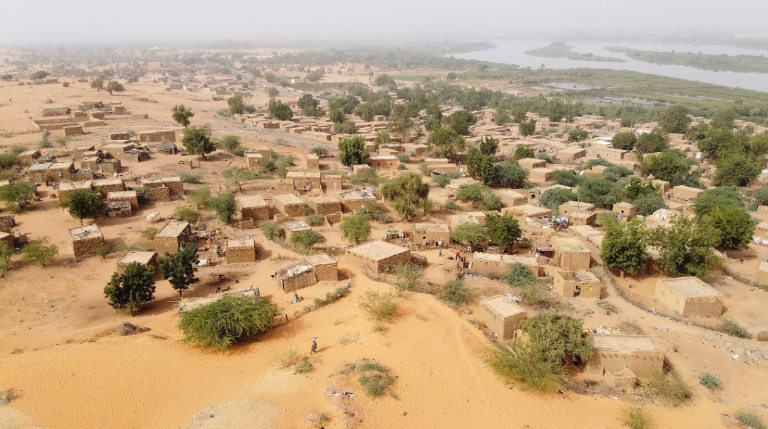
Thirty-seven civilians from Tillim in Niger’s Tillabéri region lost their lives in a brazen attack attributed to the Islamic State in the Greater Sahel (EIS) on Thursday, near the town of Téra in western Niger. The victims were traveling in a convoy under the protection of local militia groups known as Domol Leydi when they were ambushed by armed militants.
From market run to massacre: the turning point in Tillim
The tragic event marks a significant escalation in violence in the region, where daily routines like traveling to local markets have become high-risk activities. Despite being accompanied by Domol Leydi militia—community-based defense groups formed to protect civilians from armed incursions—the convoy fell victim to a well-coordinated assault by Islamic State-affiliated fighters.
This incident is not an isolated one. It follows a ten-day period of intensified violence in the Téra area, during which local communities have faced relentless attacks. These assaults have disrupted economic activities, agricultural operations, and the movement of people and livestock, leaving residents in a state of constant fear.
Desperate measures: Domol Leydi and the limits of local defense
The Domol Leydi militia have been a vital but insufficient line of defense for rural communities. Formed to fill gaps in state security presence, these local defense groups operate with limited resources and capabilities. Yet, their presence in the convoy did not prevent the ambush, exposing critical vulnerabilities in the protection of civilians.
For local authorities and residents alike, the attack raises urgent questions about the sustainability of relying solely on community-based militias for security. While Domol Leydi plays a crucial role in safeguarding villages, the attack underscores the need for more robust, long-term security solutions—particularly for civilians traveling between villages and markets.
Economic toll: markets, trade, and livelihoods under threat
The ongoing violence has forced many residents to reconsider their daily activities. Farmers struggle to tend to their fields, traders avoid certain markets, and herders face difficulties moving their livestock. The consequences are dire: disrupted supply chains, economic stagnation, and growing food insecurity in already vulnerable communities.
In Tillim and surrounding areas, the attack near Téra has become a stark reminder of how insecurity can paralyze local economies. Markets that once thrived as hubs of commerce and social interaction now stand as symbols of vulnerability—places where the cost of survival may be too high for many.
Tillabéri’s unrelenting jihadist threat
Tillabéri remains one of the most volatile regions in Niger, situated along the borders with Mali and Burkina Faso—a notorious hotspot for jihadist violence. Groups like the Islamic State in the Greater Sahel (EIS) and the Group for the Support of Islam and Muslims (JNIM) continue to exploit the region’s porous borders and weak state presence to launch attacks.
The consequences for civilians are devastating. Displacements, loss of livelihoods, and the erosion of traditional community support systems have left many families grappling with trauma and uncertainty. The attack near Téra is just the latest example of how jihadist groups operate with impunity, targeting those least equipped to defend themselves.
A wake-up call for Niger’s security strategy
The massacre of 37 civilians in Tillim has reignited discussions about the protection of rural communities in Niger. With civilians bearing the brunt of jihadist violence, authorities face mounting pressure to implement more effective security measures. Yet, the challenge is monumental: securing vast, remote areas while ensuring that essential movements—like traveling to markets—do not become death sentences.
For the families of the victims, the attack is a devastating loss. For their neighbors, it is a stark warning: until decisive action is taken, the cycle of violence will continue to claim lives, leaving behind a trail of grief and shattered communities in its wake.



 Boureima Amadou





