Mariama Hamani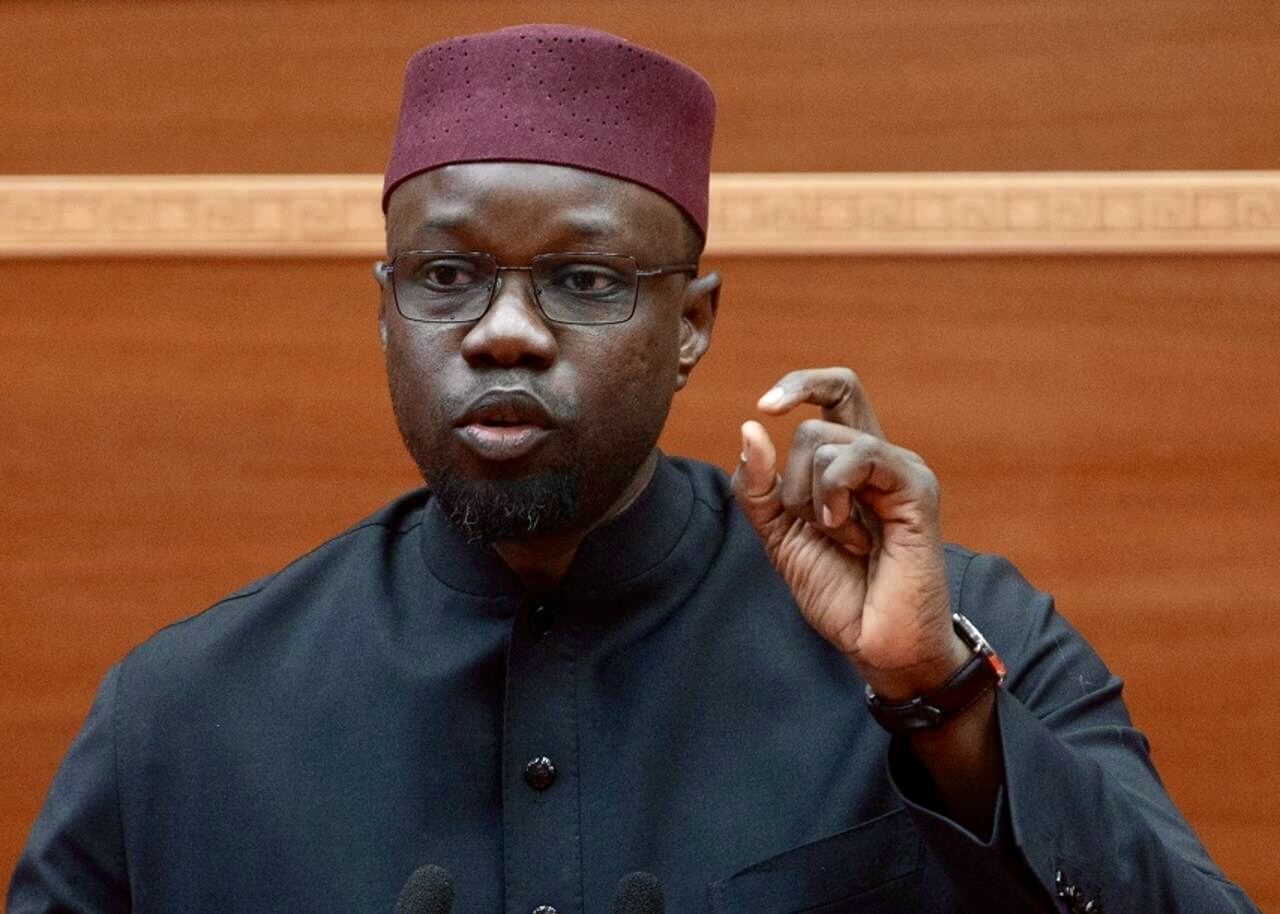
The eve of the highly anticipated France-Senegal football clash was marked not by anticipation for the game itself, but by a controversy ignited by remarks from Ousmane Sonko, President of Senegal’s National Assembly. His statement that « regardless of the outcome, it will be Africa defeating Africa » rehashed a long-debated narrative: one that questions the French identity of Black players in the French national team by emphasizing their African ancestry over their nationality.
Who exactly are we talking about here?
The French team competing in this World Cup is composed entirely of French citizens. Many were born and raised in France. Kylian Mbappé hails from Paris, Ousmane Dembélé from Vernon, Aurélien Tchouaméni from Rouen, William Saliba from Bondy, Dayot Upamecano from Évreux, Ibrahima Konaté from Paris, Rayan Cherki from Lyon, Bradley Barcola from Villeurbanne, Désiré Doué from Angers, and Warren Zaïre-Emery from Montreuil. These athletes trained in French academies, played for French clubs, and earned their spots through the French football system. Their success is a testament to the development of French football infrastructure, which they have benefited from their entire careers.
France’s diversity extends beyond metropolitan borders. Players like Jocelyn Angloma (Guadeloupe), Dimitri Payet (Réunion), and others with roots in Martinique, French Guiana, or Réunion are just as French as those born in Paris or Marseille. To claim that a French victory would also be an African victory is to imply that these players’ identities are defined first by their ancestry and only second by their nationality—an assertion that overlooks their lived experience as French citizens and their commitment to representing France.
A familiar but flawed argument
This line of reasoning is not new. In 1996, Jean-Marie Le Pen, the far-right politician, criticized the French team for allegedly fielding « foreign players who had been naturalized, » claiming they didn’t sing the national anthem. His comments sparked outrage, but Aimé Jacquet, the team’s coach, dismissed the controversy, stating that the players were « defending the jersey beautifully. » Didier Deschamps, then captain and later coach, dismissed the remarks as « nonsense. » Even the Prime Minister at the time, Alain Juppé, publicly supported the team, affirming their pride in representing France.
The debate, however, persisted. Éric Zemmour, a commentator with a history of controversial statements, has repeatedly questioned the composition of the French team, suggesting that its diversity reflects a fundamental shift in national identity. The argument remains consistent: some French citizens, particularly those of African descent, are framed as less French due to their heritage. This narrative resurfaced during Argentina’s chants after defeating France in the 2018 and 2022 World Cup finals, where some fans claimed the French team was « full of Africans. » These chants were widely condemned as racist, denying the French identity of players based solely on their skin color.
Ousmane Sonko’s remarks, while not identical in tone, echo this problematic logic. If a European far-right figure suggested that Kylian Mbappé or Aurélien Tchouaméni were not truly French, outrage would be swift. Yet when a prominent African leader adopts a similar line—albeit couched in panafricanist language—the issue demands equal scrutiny. The underlying message remains unchanged: Black players in the French team are seen as African first, French second.
The inconsistency is glaring. If Didier Deschamps were to announce tomorrow that he would select more white players to better reflect a certain vision of France, the backlash would be immediate—and rightly so. Sonko himself would likely condemn such a decision as discriminatory. So why is the reverse acceptable? Why is it permissible to assign an African identity to French players based solely on their ancestry? Football does not select players based on ethnicity. It selects the best available talent. Mbappé and Tchouaméni are not chosen because of their race; they are chosen because they are among the finest players of their generation. The French Football Federation has never asked its players to choose between their heritage and their nationality. It has asked them to represent their country.
Sonko is neither Jean-Marie Le Pen nor Éric Zemmour, but his statement inadvertently perpetuates a narrative that reduces the identity of French players to their origins rather than their nationality. For a figure of his stature—a former Prime Minister and current President of Senegal’s National Assembly—such remarks carry significant weight. The danger lies in the unintended consequence: celebrating Africa by erasing the individual identities of French citizens who proudly play for France.
One final question arises. During the 2002 World Cup, Senegal defeated France, with 20 of the 23 players in their squad having trained in French clubs and some even born in France. Bruno Metsu, a French coach, led the team. If Sonko’s logic were applied then, would Senegal’s victory have also been a partial victory for France? The answer is a resounding no. Those players represented Senegal, just as the current French team represents France. Perhaps this is the fundamental flaw in Sonko’s statement: it conflates heritage with nationality in a way that denies the complexity of identity.

 Boureima Amadou