
 Boureima Amadou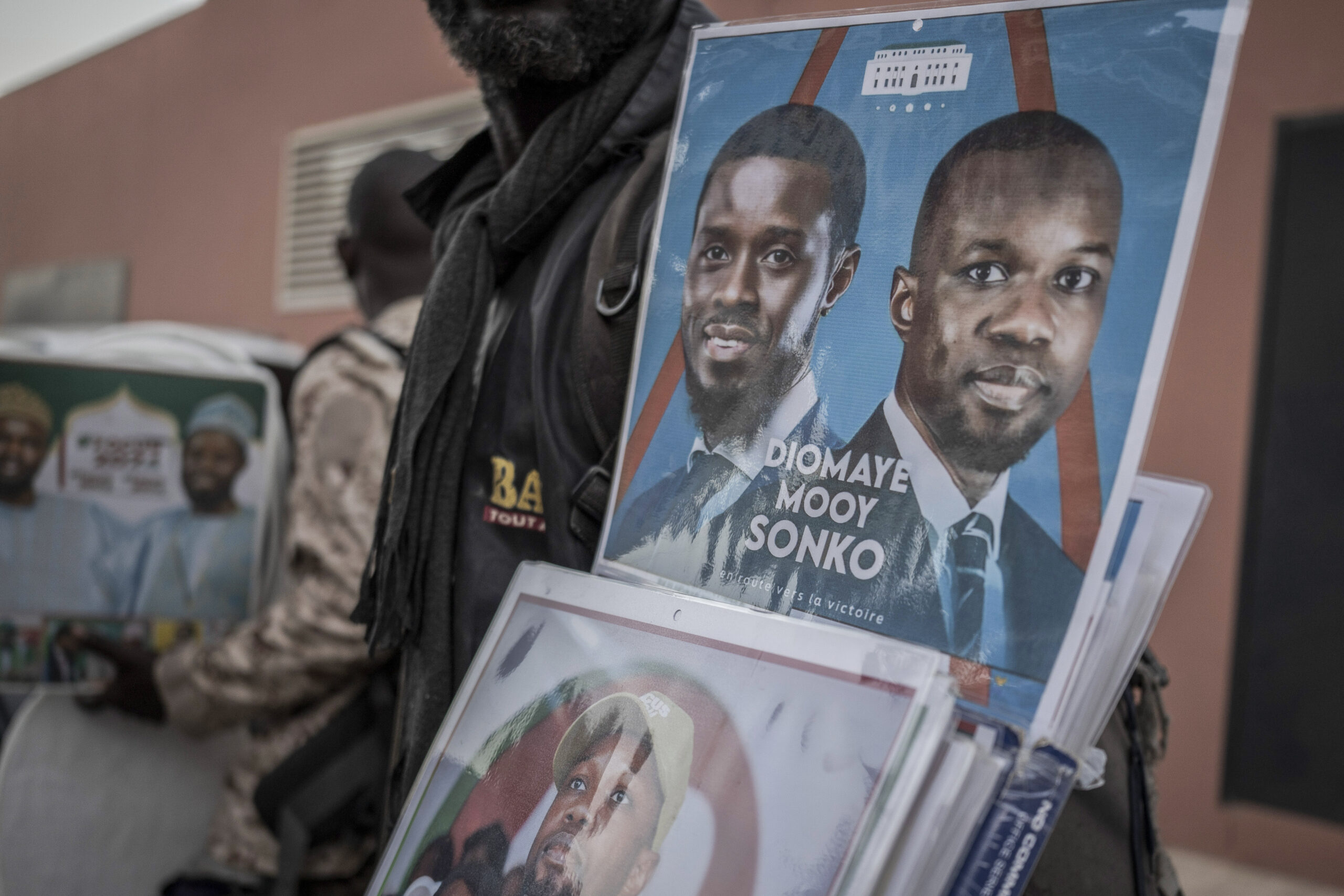
On Friday, May 22, Ousmane Sonko was relieved of his duties as Prime Minister, a move that signals the potential for a significant political upheaval in Senegal. For several months, Sonko had characterized their working relationship as a “soft cohabitation” – a peculiar description given the deep personal and political bonds he shared with President Bassirou Diomaye Faye, both emerging from the same political sphere and exhibiting profound closeness just two years prior.
A bond once thought unbreakable
The political journey of these two men, who often referred to each other as “brothers” and were close companions in their personal lives and political struggles, began with great promise. For a considerable period, their destinies appeared intertwined, almost indistinguishable. Their connection formed during their student years, solidified at the National School of Administration (ENA), and continued as they embarked on identical careers as tax and property inspectors. In 2014, their shared ideological and political vision led them to co-found PASTEF, the African Patriots of Senegal for Work, Ethics, and Fraternity party. By 2022, Bassirou Diomaye Faye assumed the role of Secretary-General, while Sonko set his sights on the presidency.
The triumphant smiles shared on March 24, 2024, remain vivid memories. Their victory was resounding, a sweet vindication after a challenging path to the highest offices of the state. Their ascent to power was arduous, improbable, and nearly obstructed by former President Macky Sall’s tenacious grip on authority. Both men had endured imprisonment in Cap Manuel, with their political futures seemingly sealed. Yet, in a dramatic turn of events over mere days, public outcry surged, international journalists converged on Dakar, and Sall, facing immense pressure, was forced to concede.
Released from prison, the duo spearheaded a lightning-fast campaign under the powerful slogan: “Diomaye mooy Sonko, Sonko mooy Diomaye” (Diomaye is Sonko, Sonko is Diomaye). With Ousmane Sonko’s presidential candidacy disqualified, he strategically endorsed his most loyal associate, Bassirou Diomaye Faye, for the nation’s top office.
Their victory was decisive and undeniable. At that moment, nothing seemed capable of fracturing their bond. However, many observers believed that the true victor of the presidential election was Sonko, not Faye, who remained largely unknown to the broader public at the time.
It is important to acknowledge Ousmane Sonko’s significant impact on the political arena since 2019, where he emerged as a surprise third-place finisher in the presidential race. Despite facing legal challenges and the *Sweet Beauty* affair, he maintained immense popularity, especially among the youth, who viewed him as a role model and an idol. Over the years, he cultivated a unique political and emotional connection with a segment of the Senegalese population, fueled by a narrative of radical change, resistance, and political alternation.
In this context, Diomaye Faye’s political trajectory seemed challenging. Without the overwhelming popular endorsement driven by Sonko, his path to the presidency would likely have remained elusive. Nevertheless, he embraced the mantle of leadership.
The tradition of political tandems unravelling in Senegal
History reveals a recurring pattern in Senegalese politics: alliances, even those initially characterized by strong, seemingly unshakeable loyalties, often crumble under the pressures of power. This phenomenon is a notable aspect of African current affairs and African governance within the continent news cycle.
A prime illustration is the partnership between Léopold Sédar Senghor and Mamadou Dia. These companions, united since the late 1940s, collaboratively shaped independent Senegal. Following the dissolution of the Mali Federation in August 1960, Senghor became President of the Republic, with Dia as President of the Council. Initially portrayed as complementary leaders, their visions diverged over the organization of power, economic policies, and relations with France. The institutional crisis of December 1962 culminated in Dia’s arrest on charges of attempted coup d’état, leading to his imprisonment for over a decade.
Similarly, the alliance between Abdou Diouf and Moustapha Niasse, a partnership nurtured by Senghor, dissolved within a mere few months.
However, it was arguably under Abdoulaye Wade’s presidency that conflicts of loyalty and subsequent imprisonments resurfaced with particular intensity. Wade and Idrissa Seck jointly championed the call for change (sopi). Seck, long considered Wade’s political heir, witnessed their relationship deteriorate, leading to his political marginalization and eventual incarceration in 2005 over the Thiès construction projects affair. He was acquitted months later, prompting thousands to flood Dakar’s streets, chanting “Idi,” as if lamenting a betrayal by a father figure.
The recent separation between Faye and Sonko, at first glance, appears to follow these historical precedents. Yet, their initial configuration was unique: the individual holding electoral legitimacy was not necessarily the one who commanded the most significant political capital.
Emerging fault lines
Undoubtedly, some of the underlying disagreements between President Faye and Ousmane Sonko remain unseen. As noted by historical accounts, the influence of political entourages, often underestimated by observers, frequently plays a considerable role in such rifts. This dynamic is a crucial element in understanding Africa breaking news.
Beyond the initial imbalance of political capital, Faye and Sonko, frequently pressured by the media to affirm their friendship, ultimately succumbed to animosity.
Resentments and grievances had steadily accumulated over the past two years.
The initial point of contention often centered on methodology. Several political commentators highlighted tensions regarding the implementation of campaign pledges: the pace of reforms, how to address figures from the previous regime, and judicial reform. In essence, the scale of change anticipated by the militant base constantly raised questions. Sonko, for his part, publicly voiced his impatience on numerous policy matters.
Debates surrounding national debt, the relationship with the IMF – from which Sonko reportedly wished to distance Senegal – the allocation of political funds, and broader economic strategy progressively revealed divergent approaches to governance. Beneath these disagreements lay a more profound philosophical divide: should the nation pursue immediate, radical rupture, or should it navigate within existing institutional and international constraints?
The first public display of this growing rivalry likely occurred during Ousmane Sonko’s “Tera Meeting” on November 8, 2025, held at the Léopold Sédar Senghor stadium. The term “tera,” borrowed from units of measurement, was intended to underscore the unprecedented scale of the mobilization. Buses from across the country converged on the capital, accompanied by popular marches, all under the watchful eyes of the press and international observers.
The fervor and organizational capacity demonstrated that day served as a stark reminder that the movement’s political capital remained largely concentrated around Ousmane Sonko.
Officially presented as a review of the first eighteen months in power, a political clarification, and a relaunch of the PASTEF project, the gathering was, in reality, a powerful demonstration of political strength.
The message resonated with the highest echelons of power, and President Faye’s response was swift. He chose to bolster the “Diomaye Président” coalition by assigning a central role to Aminata (Mimi) Touré. This decision was widely interpreted, and likely correctly so, as a clear signal of the President’s assertion of autonomy.
A former Prime Minister under Macky Sall and later an opposition figure, Mimi Touré is a controversial personality within some factions of PASTEF – certain militants criticize her past association with the previous regime and her perceived late embrace of the rupture project.
Regardless, Faye intended to demonstrate that he was not beholden to his Prime Minister.
For several months, Faye appeared constrained, unable to fully embody the presidency, seemingly cohabiting with a Prime Minister who himself harbored presidential ambitions. This created an untenable equation.
Throughout this period, Sonko and his supporters asserted their political superiority, frequently reminding others of what they were owed. Notably, in Pascal Boniface’s work Les maîtres du monde, it was Sonko who was featured, not Faye.
What lies ahead for Senegal?
Sonko has been dismissed from his role as Prime Minister. On May 22, he posted on Facebook, expressing a sense of relief to be sleeping at his home in Keur Gorgui.
However, this relief may be short-lived.
El Malick Ndiaye, the President of the National Assembly, has since resigned, and Sonko, leading the majority party with 130 out of 165 deputies, has already succeeded him as of May 26.
This places him back in a prominent opposition role, a position in which he previously excelled and built much of his public support.
Such a configuration introduces an unprecedented scenario for Senegal: a president stripped of his primary political backing, facing a parliament now controlled by his former ally. This situation raises concerns about potential, unparalleled tensions between the executive and legislative branches of government, impacting African governance.
Can Diomaye Faye successfully solidify his legitimacy without Sonko? It remains uncertain. Will Sonko attempt to initiate impeachment proceedings against the President? The question is currently open.
Yet, this escalating fratricidal duel risks overshadowing the nation’s pressing challenges: critical issues in healthcare, a struggling economy, and, most importantly, a large youth population desperately seeking employment. This situation is a key focus for English Africa news and The African Tribune.
Two years post-transition, several promised reforms remain incomplete or delayed, fueling growing public expectations. Beyond the rivalry between the two leaders, it is the social demands – from the youth, the voters, and a populace grappling with unemployment, declining purchasing power, and failing public services – that stand to bear the brunt of this evolving political crisis.
Did Senegal truly need this political turmoil at such a critical juncture? The question demands serious consideration.


 Mariama Hamani




