Boureima Amadou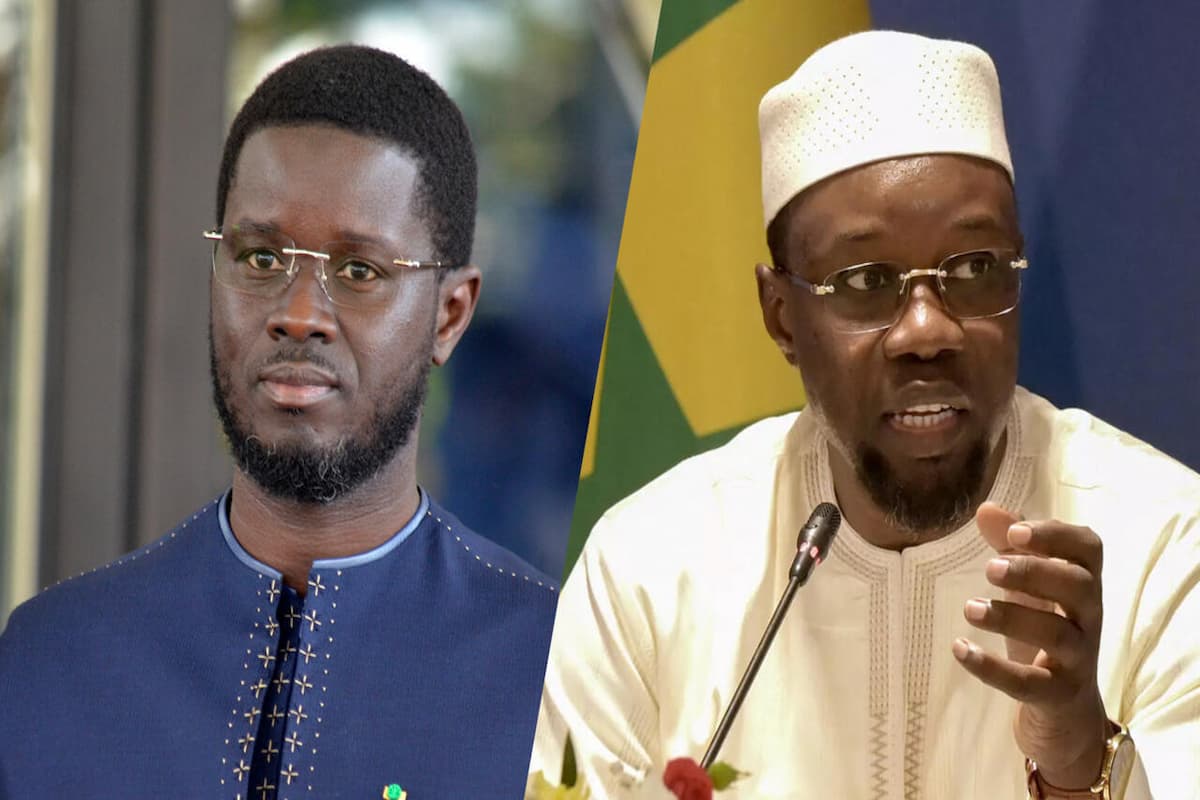
What began as an unprecedented alliance in Francophone Sub-Saharan Africa, a political partnership that many considered too perfect to last, has now dramatically fractured. In Senegal, the formidable duo of Ousmane Sonko and Bassirou Diomaye Faye – with Sonko as the seasoned mentor to his protégé Faye, both fervent opponents of former President Macky Sall – transitioned from a united front for the 2024 presidential election into an open rivalry, culminating in a seismic shift during the night of May 22, 2026.
Indeed, on that significant Friday, just before 10 PM, the Senegalese populace was taken aback by a concise address broadcast by the Radiotélévision Sénégalaise (RTS) directly from the Presidential Palace in Dakar. Oumar Samba Ba, the Secretary General of the Presidency, delivered the startling news: Prime Minister Ousmane Sonko had been relieved of his duties. Concurrently, every member of the government also saw their positions terminated.
“By decree n°2026-1128 of May 22, 2026, the President of the Republic, Bassirou Diomaye Faye, has ended the functions of Ousmane Sonko, Prime Minister, and consequently, those of the ministers and secretaries of state, members of the government. The outgoing government members are tasked with handling current affairs,” Oumar Samba Ba formally announced.
Upon learning of his dismissal, Ousmane Sonko promptly took to Facebook, sharing a remarkably composed reaction: “This evening, I will sleep with a light heart.”
Just hours prior, Sonko had made a telling statement before the National Assembly while responding to parliamentary inquiries: “I am not a Prime Minister who blindly obeys and acquiesces to everything.” This remark now takes on profound significance in light of recent events.
It is important to recall that underlying tensions have visibly escalated in recent months between the two executive leaders, who together assumed power in 2024. Their political disagreements have increasingly come to light. For instance, weeks ago, during a press conference with local media, President Bassirou Diomaye Faye had indicated, among other things, his prerogative to “terminate the functions of his Prime Minister if he no longer had confidence in him.” The crossing of this political Rubicon has now become a reality.
The immediate question now revolves around the future trajectory of power in Senegal. With local elections not anticipated until 2027 and the next presidential contest in 2029, how will this dramatic reconfiguration of African governance reshape the nation’s political landscape?